Find PDB structures and Computed Structure Models (CSM) by combining queries from tools in this suite: Attribute Search, Sequence Similarity, Sequence Motif, 3D Similarity, and 3D Motif with 'AND' logic.
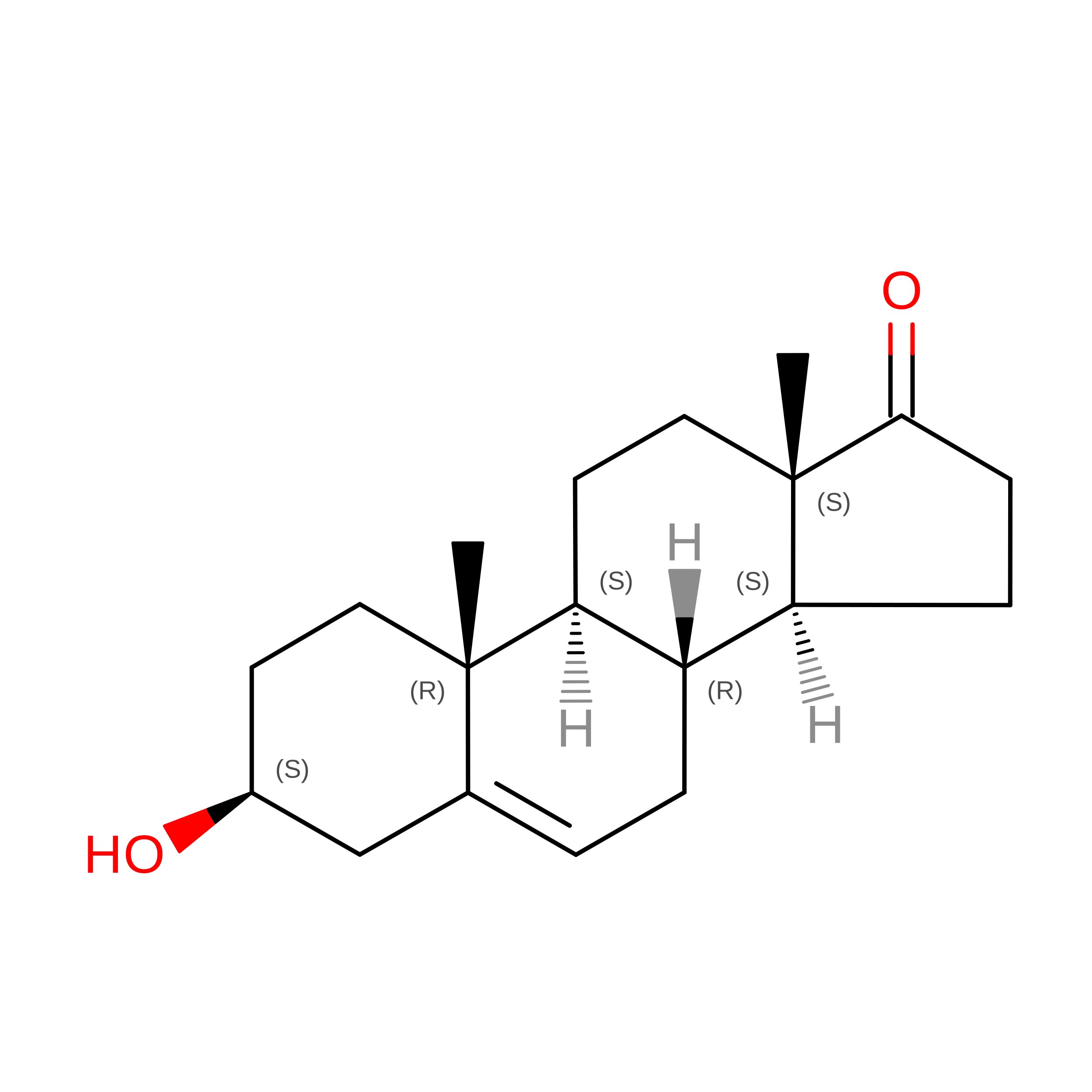
Allosteric modulation of receptor responses to endogenous agonists has therapeutic value, maintaining ligand profiles, reducing side effects and restoring mutant responses. Adhesion G-protein-coupled receptors (aGPCRs), with large N termini, are ideal for allosteric modulator development. We designed a nanobody strategy targeting ADGRG2 N-terminal fragments and got a specific nanobody Nb23-bi, which promoted dehydroepiandrosterone (DHEA)-induced ADGRG2 activation and reversed mutant-induced dysfunctions. By combining structural characterization, crosslinking mass spectrometry, mutational analysis and molecular dynamics simulations, we clarified the allosteric mechanism of how the Nb23-bi modulates conformational changes in the DHEA-binding pocket. Animal studies showed that Nb23-bi promoted the response of DHEA in alleviating testicular inflammation and reversing mutant defects. In summary, we developed an allosteric nanobody of ADGRG2 and gained insights into its functions in reversing disease-associated dysfunctions. Our study may serve as a template for developing allosteric modulators of other aGPCRs for biological and therapeutic purposes.
Organizational Affiliation:
Department of Physiology and Pathophysiology, School of Basic Medical Sciences, State Key Laboratory of Vascular Homeostasis and Remodeling, Peking University, Beijing, China.
Department of Biochemistry and Molecular Biology, School of Basic Medical Sciences, Cheeloo College of Medicine, Shandong University, Jinan, China.
New Cornerstone Science Laboratory, Advanced Medical Research Institute, Cheeloo College of Medicine, Shandong University, Jinan, China.
Key Laboratory of Infection and Immunity of Shandong Province, Department of Pharmacology, School of Basic Medical Sciences, Shandong University, Jinan, China.
State Key Laboratory of Bioactive Molecules and Druggability Assessment, Jinan University, Guangzhou, China.
Department of Urology, Peking University Third Hospital, Peking University, Beijing, China.
Center for Reproductive Medicine, Department of Obstetrics and Gynecology, Peking University Third Hospital, Peking University, Beijing, China.
School of Pharmacy, Binzhou Medical University, Yantai, China.
Key Laboratory Experimental Teratology of the Ministry of Education and Department of Physiology, School of Basic Medical Sciences, Cheeloo College of Medicine, Shandong University, Jinan, China.
Center of Drug Analysis and Test, School of Pharmaceutical Sciences, Shandong University, Jinan, China.
Department of Orthopedics, Qilu Hospital of Shandong University, Cheeloo College of Medicine, Shandong University, Jinan, China.
Department of Otorhinolaryngology, Qilu Hospital, NHC Key Laboratory of Otorhinolaryngology, Shandong University, Jinan, China.
Department of Otolaryngology, Shandong Provincial Hospital Affiliated to Shandong First Medical University, Jinan, China.
State Key Laboratory of Reproductive Medicine and Offspring Health, Center for Reproductive Medicine, Institute of Women, Children and Reproductive Health, Shandong University, Jinan, China.
Department of Clinical Pharmacology, Hunan Key Laboratory of Pharmacogenetics, Xiangya Hospital, Central South University, Changsha, China.
State Key Laboratory of Discovery and Utilization of Functional Components in Traditional Chinese Medicine, Jinan, China.
Department of Periodontology and Tissue Engineering and Regeneration, School and Hospital of Stomatology, Cheeloo College of Medicine, Shandong University, Jinan, China.
Key Laboratory Experimental Teratology of the Ministry of Education and Department of Physiology, School of Basic Medical Sciences, Cheeloo College of Medicine, Shandong University, Jinan, China. yuxiao@sdu.edu.cn.
Department of Periodontology and Tissue Engineering and Regeneration, School and Hospital of Stomatology, Cheeloo College of Medicine, Shandong University, Jinan, China. linhui131302@163.com.
Department of Biophysics, School of Basic Medical Sciences, Peking University Health Science Center, Beijing, China. linhui131302@163.com.
Department of Biochemistry and Molecular Biology, School of Basic Medical Sciences, Cheeloo College of Medicine, Shandong University, Jinan, China. pengxiao@sdu.edu.cn.
New Cornerstone Science Laboratory, Advanced Medical Research Institute, Cheeloo College of Medicine, Shandong University, Jinan, China. pengxiao@sdu.edu.cn.
Center for Structural Biology, School of Basic Medical Sciences, Cheeloo College of Medicine, Shandong University, Jinan, China. pengxiao@sdu.edu.cn.
State Key Laboratory of Microbial Technology, Shandong University, Jinan, China. pengxiao@sdu.edu.cn.
Department of Physiology and Pathophysiology, School of Basic Medical Sciences, State Key Laboratory of Vascular Homeostasis and Remodeling, Peking University, Beijing, China. sunjinpeng@bjmu.edu.cn.
Department of Biochemistry and Molecular Biology, School of Basic Medical Sciences, Cheeloo College of Medicine, Shandong University, Jinan, China. sunjinpeng@bjmu.edu.cn.
New Cornerstone Science Laboratory, Advanced Medical Research Institute, Cheeloo College of Medicine, Shandong University, Jinan, China. sunjinpeng@bjmu.edu.cn.
Department of Orthopedics, Qilu Hospital of Shandong University, Cheeloo College of Medicine, Shandong University, Jinan, China. shiqingfeng@sdu.edu.cn.
The Second Hospital of Shandong University, Cheeloo College of Medicine, Shandong University, Jinan, China. shiqingfeng@sdu.edu.cn.

 Download Mendeley