Download Mendeley
Phase separation-based HTS identifies cobimetinib as a YAP-TEAD inhibitor that suppresses hyperactivated YAP-induced cancer progression.
Yang, R., Hu, L., Wang, J., Wang, J., Yuan, L., Wu, M., He, L., Yu, W., Chen, P., Lu, X., Hu, F., Zhang, H., Gao, H., Wang, X., Zhang, H., Sun, Y., Xu, J., Huang, J., Zhou, H., Zhu, J., Wei, F., Jin, Y., Gao, Y., Fu, Q., Qi, X., Yu, J., Li, P., He, X., Zhang, L.(2026) Sci Transl Med 18: eadu0814-eadu0814
- PubMed: 42018668 Search on PubMed
- DOI: https://doi.org/10.1126/scitranslmed.adu0814
- Primary Citation Related Structures:
8YGQ - PubMed Abstract:
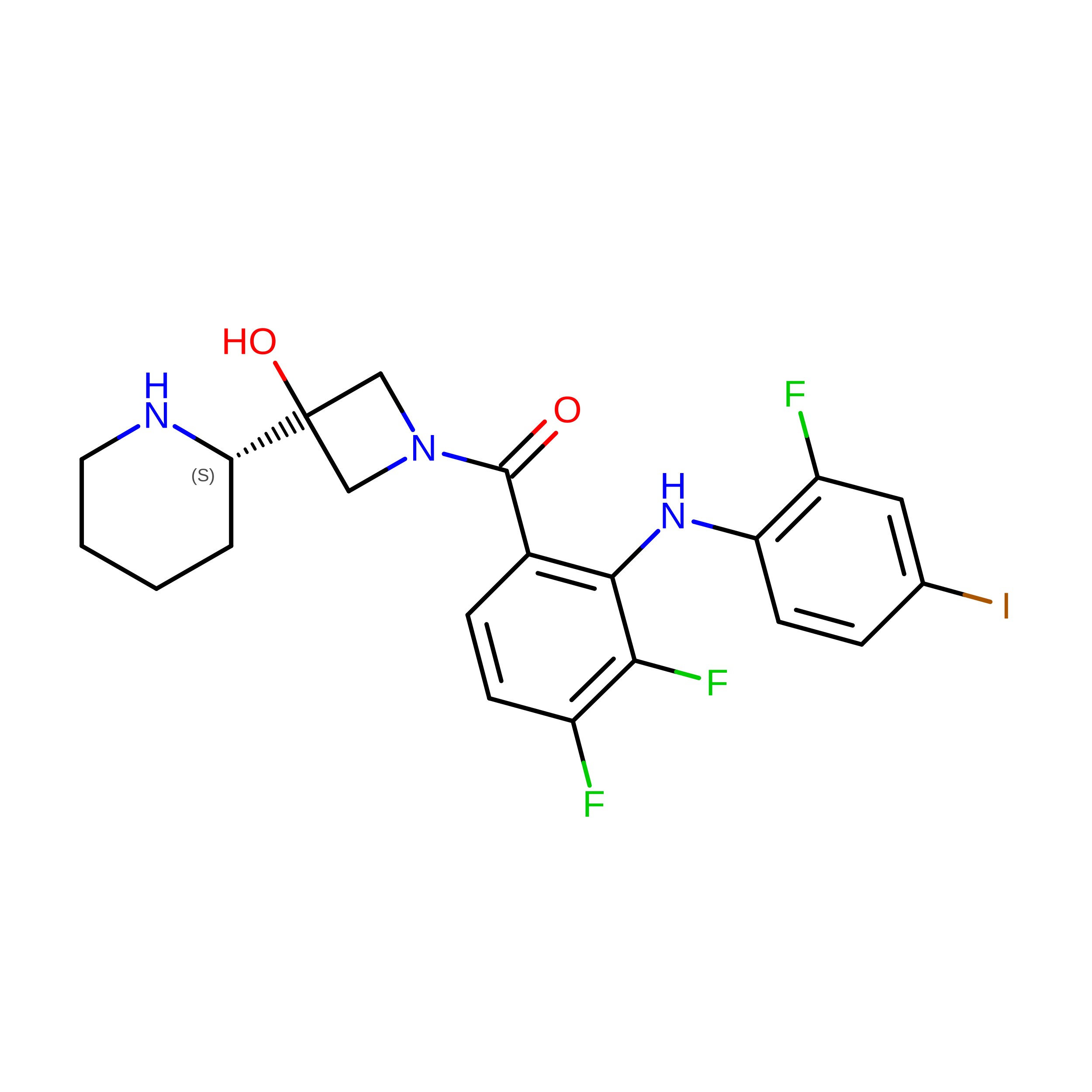
The Hippo signaling pathway prevents unchecked cell growth, coordinates apoptosis, and preserves proper organ function. Dysregulation of this pathway has been implicated in a myriad of diseases, particularly in cancer. The YAP (Yes-associated protein)-TEAD (TEA domain transcription factor) complex, the key transcriptional downstream effector of the Hippo pathway, hence stands out as an appealing target for therapeutic intervention. In this study, we developed a high-throughput screening (HTS) assay leveraging phase separation principles and found that the US Food and Drug Administration-approved clinical drug cobimetinib is a potent inhibitor of the YAP-TEAD complex. Cocrystallization studies of cobimetinib with TEAD showed that cobimetinib bound to the TEAD lipid pocket and disrupted TEAD palmitoylation. Cobimetinib could overcome resistance to mitogen-activated protein kinase kinase 1/2 inhibitors and to the first-line drug sorafenib in vivo. In addition, cobimetinib suppressed tumor growth and tumorigenesis associated with hyperactivated YAP-TEAD activities in a mouse model of lung cancer. Furthermore, it bolstered the efficacy of the first-line drugs sorafenib and lenvatinib in inhibiting both hepatocellular carcinoma tumor growth and tumorigenesis. These findings establish a strategy for identifying and refining inhibitors of the YAP-TEAD complex in the treatment of cancers driven by aberrant YAP-TEAD activity.
- Department of Urology, Shanghai Sixth People' s Hospital Affiliated to Shanghai Jiao Tong University School of Medicine, Shanghai Eastern Institute of Urologic Reconstruction, Shanghai Jiao Tong University, Shanghai 200233, China.
Organizational Affiliation: