Download Mendeley
Synthetic ramoplanin analogues are accessible by effective incorporation of arylglycines in solid-phase peptide synthesis.
Marschall, E., Cass, R.W., Prasad, K.M., Swarbrick, J.D., McKay, A.I., Payne, J.A.E., Cryle, M.J., Tailhades, J.(2023) Chem Sci 15: 195-203
- PubMed: 38131086 Search on PubMedSearch on PubMed Central
- DOI: https://doi.org/10.1039/d3sc01944f
- Primary Citation Related Structures:
8V4B - PubMed Abstract:
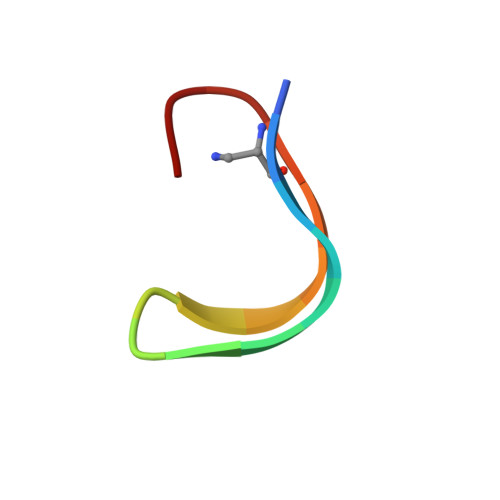
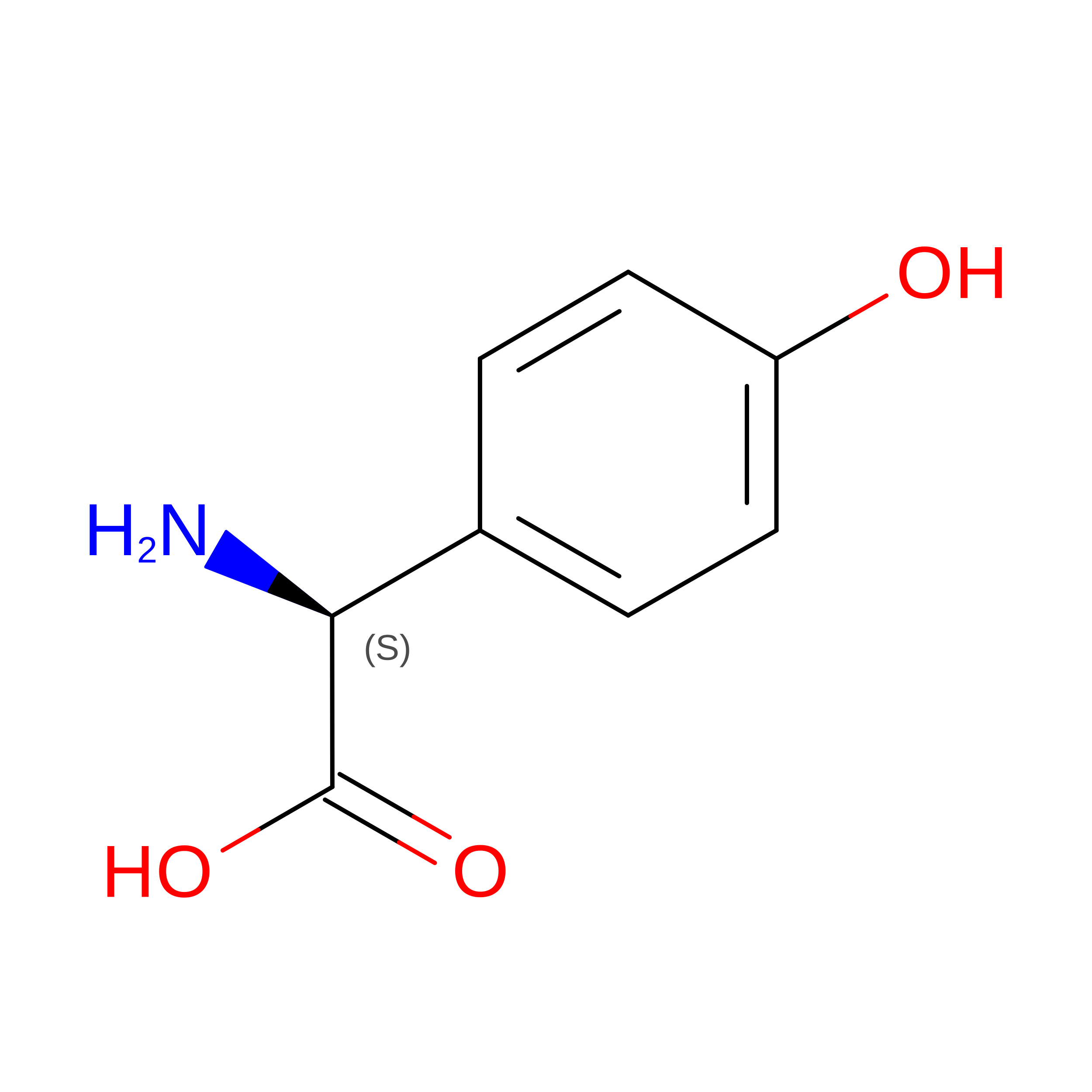
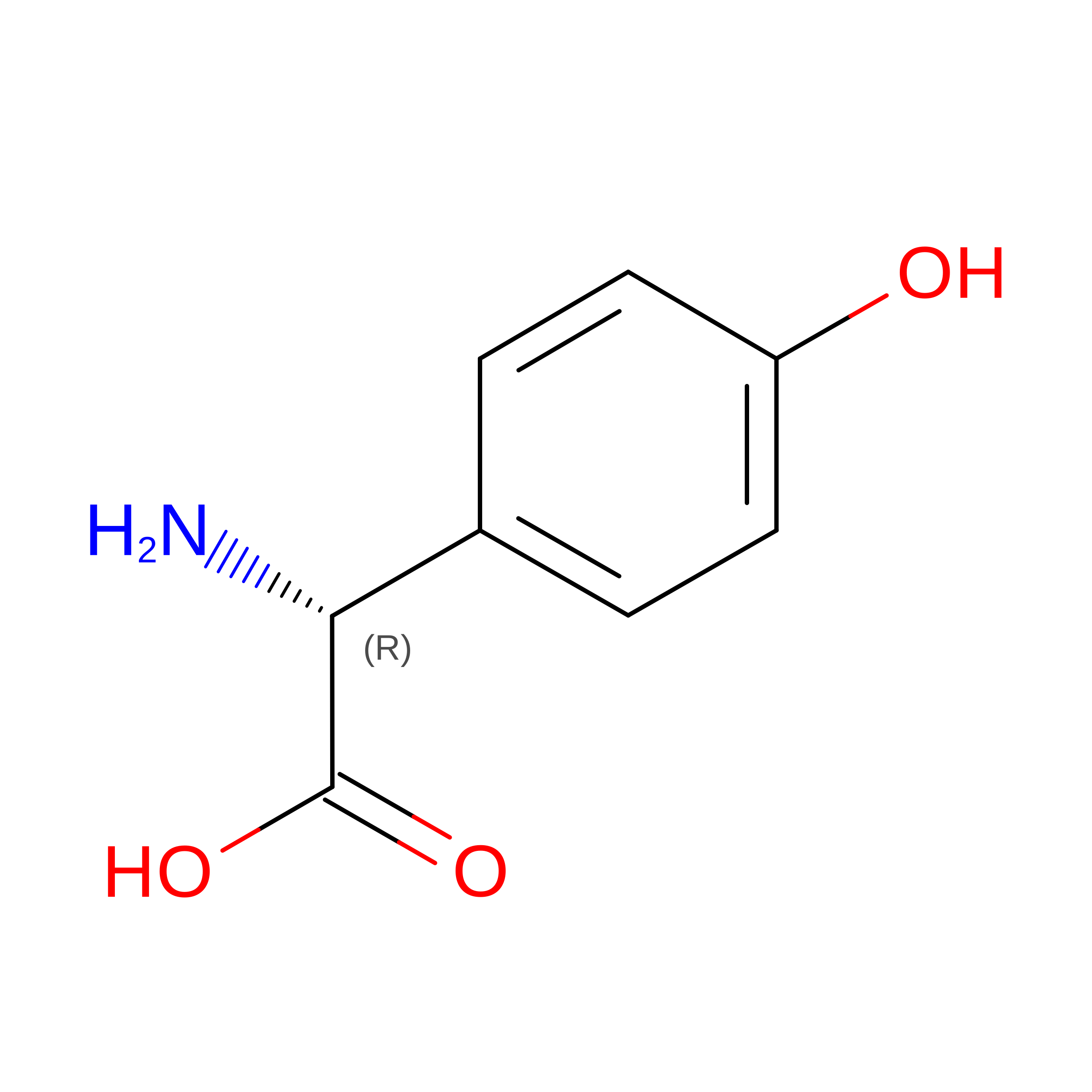
The threat of antimicrobial resistance to antibiotics requires a continual effort to develop alternative treatments. Arylglycines (or phenylglycines) are one of the signature amino acids found in many natural peptide antibiotics, but their propensity for epimerization in solid-phase peptide synthesis (SPPS) has prevented their use in long peptide sequences. We have now identified an optimized protocol that allows the synthesis of challenging non-ribosomal peptides including precursors of the glycopeptide antibiotics and an analogue of feglymycin (1 analogue, 20%). We have exploited this protocol to synthesize analogues of the peptide antibiotic ramoplanin using native chemical ligation/desulfurization (1 analogue, 6.5%) and head-to-tail macrocyclization in excellent yield (6 analogues, 3-9%), with these compounds extensively characterized by NMR (U-shaped structure) and antimicrobial activity assays (two clinical isolates). This method significantly reduces synthesis time (6-9 days) when compared with total syntheses (2-3 months) and enables drug discovery programs to include arylglycines in structure-activity relationship studies and drug development.
- Department of Biochemistry and Molecular Biology, The Monash Biomedicine Discovery Institute, Monash University Clayton VIC 3800 Australia max.cryle@monash.edu julien.tailhades@monash.edu.
Organizational Affiliation: