8S6I | pdb_00008s6i

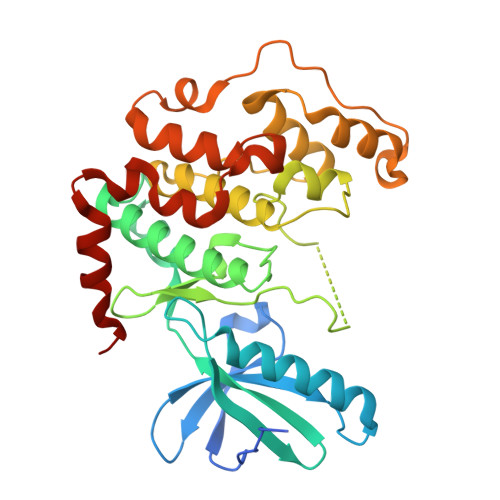
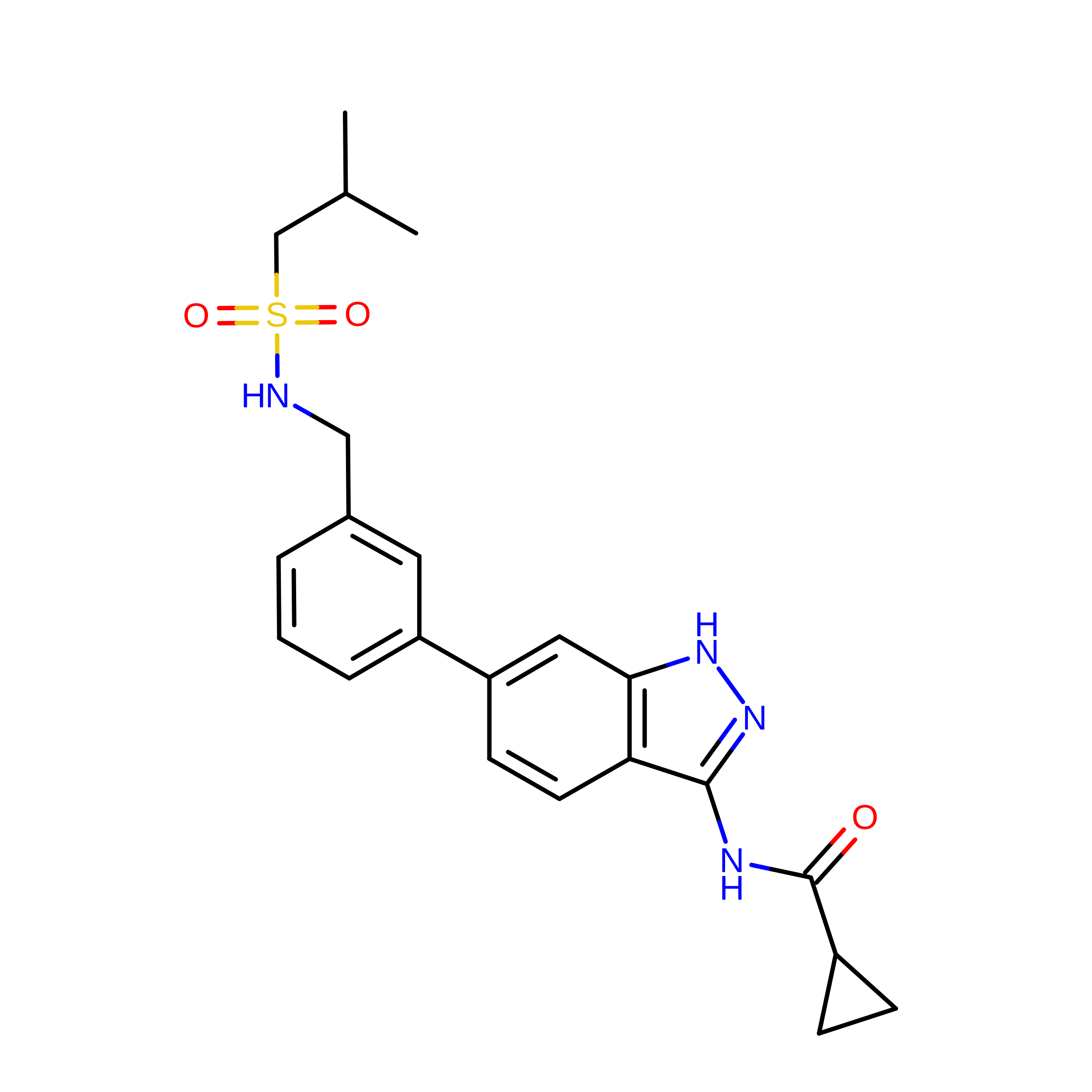
Crystal structure of the human CDKL2 kinase domain with Compound 9


Experimental Data Snapshot

  • Method: X-RAY DIFFRACTION
  • Resolution: 1.72 Å
  • R-Value Free: 
    0.222 (Depositor), 0.225 (DCC) 
  • R-Value Work: 
    0.205 (Depositor), 0.207 (DCC) 
  • R-Value Observed: 
    0.205 (Depositor) 

Starting Model: experimental
View more details

wwPDB Validation 3D Report Full Report

Validation slider image for 8S6I

Ligand Structure Quality Assessment 


This is version 1.0 of the entry. See complete history

Literature

Discovery and Characterization of a Chemical Probe for Cyclin-Dependent Kinase-Like 2.

Bashore, F.M.Min, S.M.Chen, X.Howell, S.Rinderle, C.H.Morel, G.Silvaroli, J.A.Wells, C.I.Bunnell, B.A.Drewry, D.H.Pabla, N.S.Ultanir, S.K.Bullock, A.N.Axtman, A.D.

(2024) ACS Med Chem Lett 15: 1325-1333

  • DOI: https://doi.org/10.1021/acsmedchemlett.4c00219
  • Primary Citation Related Structures: 
    8S6I

  • PubMed Abstract: 

    Acylaminoindazole-based inhibitors of CDKL2 were identified via analyses of cell-free binding and selectivity data. Compound 9 was selected as a CDKL2 chemical probe based on its potent inhibition of CDKL2 enzymatic activity, engagement of CDKL2 in cells, and excellent kinome-wide selectivity, especially when used in cells. Compound 16 was designed as a negative control to be used alongside compound 9 in experiments to interrogate CDKL2-mediated biology. A solved cocrystal structure of compound 9 bound to CDKL2 highlighted key interactions it makes within its ATP-binding site. Inhibition of downstream phosphorylation of EB2, a CDKL2 substrate, in rat primary neurons provided evidence that engagement of CDKL2 by compound 9 in cells resulted in inhibition of its activity. When used at relevant concentrations, compound 9 does not impact the viability of rat primary neurons or certain breast cancer cells nor elicit consistent changes in the expression of proteins involved in epithelial-mesenchymal transition.


  • Organizational Affiliation
    • Structural Genomics Consortium (SGC), UNC Eshelman School of Pharmacy, University of North Carolina at Chapel Hill, Chapel Hill, North Carolina 27599, United States.

Macromolecule Content 

  • Total Structure Weight: 39.04 kDa 
  • Atom Count: 2,627 
  • Modeled Residue Count: 302 
  • Deposited Residue Count: 331 
  • Unique protein chains: 1

Macromolecules

Find similar proteins by:|  3D Structure
Entity ID: 1
MoleculeChains  Sequence LengthOrganismDetailsImage
Cyclin-dependent kinase-like 2331Homo sapiensMutation(s): 0 
Gene Names: CDKL2
EC: 2.7.11.22
UniProt & NIH Common Fund Data Resources
Find proteins for Q92772 (Homo sapiens)
Explore Q92772 
Go to UniProtKB:  Q92772
PHAROS:  Q92772
GTEx:  ENSG00000138769 
Entity Groups
Sequence Clusters30% Identity50% Identity70% Identity90% Identity95% Identity100% Identity
UniProt GroupQ92772
Sequence Annotations
Expand
Reference Sequence

Experimental Data & Validation

Experimental Data

  • Method: X-RAY DIFFRACTION
  • Resolution: 1.72 Å
  • R-Value Free:  0.222 (Depositor), 0.225 (DCC) 
  • R-Value Work:  0.205 (Depositor), 0.207 (DCC) 
  • R-Value Observed: 0.205 (Depositor) 
Space Group: P 32
Unit Cell:
Length ( Å )Angle ( ˚ )
a = 58.093α = 90
b = 58.093β = 90
c = 104.261γ = 120
Software Package:
Software NamePurpose
PHENIXrefinement
xia2.multiplexdata reduction
DIALSdata scaling
PHENIXphasing

Structure Validation

View Full Validation Report


Ligand Structure Quality Assessment 


Entry History 

& Funding Information

Deposition Data


Funding OrganizationLocationGrant Number
Innovative Medicines InitiativeSwitzerland875510

Revision History  (Full details and data files)

  • Version 1.0: 2025-02-26
    Type: Initial release