8QWA | pdb_00008qwa

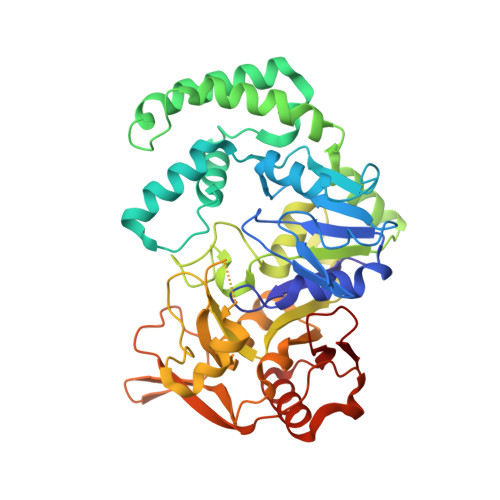
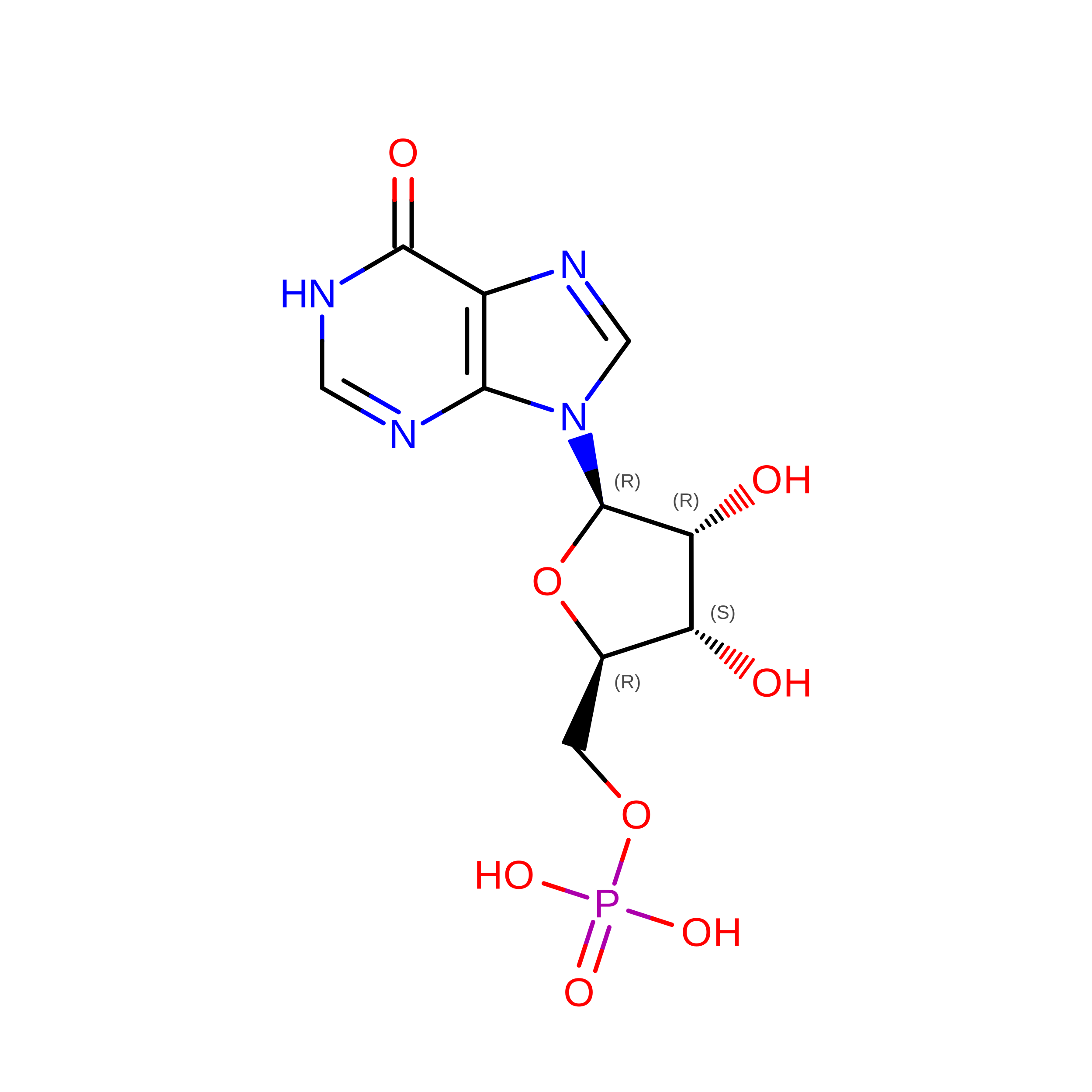
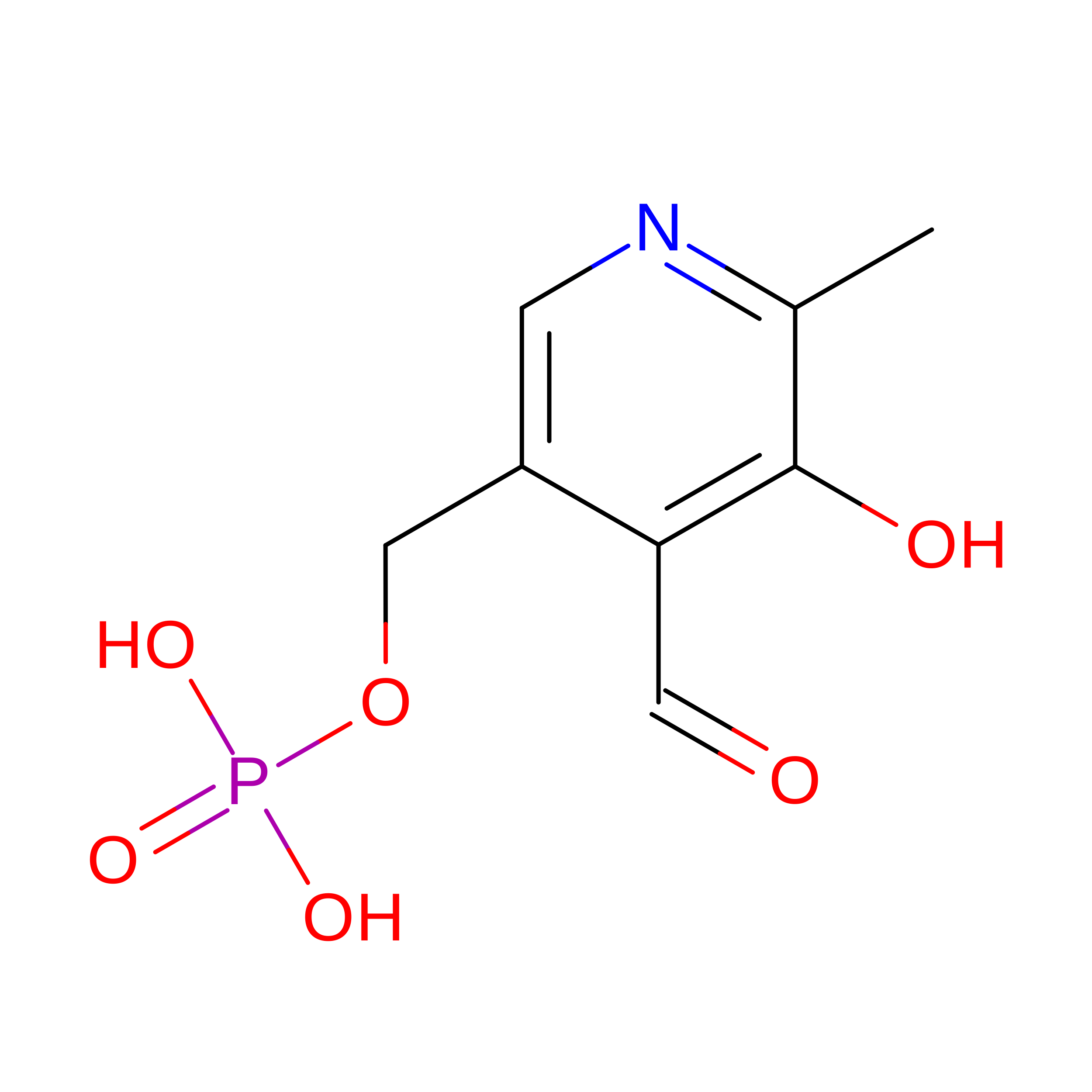
Adenylosuccinate Synthetase from H. pylori in complex with PLP and IMP


Experimental Data Snapshot

  • Method: X-RAY DIFFRACTION
  • Resolution: 1.85 Å
  • R-Value Free: 
    0.201 (Depositor), 0.193 (DCC) 
  • R-Value Work: 
    0.167 (Depositor), 0.161 (DCC) 

Starting Model: experimental
View more details

wwPDB Validation 3D Report Full Report

Validation slider image for 8QWA

Ligand Structure Quality Assessment 


This is version 1.0 of the entry. See complete history

Literature

Vitamin B6 inhibits activity of Helicobacter pylori adenylosuccinate synthetase and growth of reference and clinical, antibiotic-resistant H. pylori strains.

Wojtys, M.I.Maksymiuk, W.Narczyk, M.Bubic, A.Asler, I.L.Krzyzek, P.Gosciniak, G.Jagusztyn-Krynicka, E.K.Bzowska, A.

(2024) J Enzyme Inhib Med Chem 39: 2372734-2372734

  • DOI: https://doi.org/10.1080/14756366.2024.2372734
  • Primary Citation Related Structures: 
    8QWA

  • PubMed Abstract: 

    The current therapies against gastric pathogen Helicobacter pylori are ineffective in over 20% of patients. Enzymes belonging to the purine salvage pathway are considered as novel drug targets in this pathogen. Therefore, the main aim of the current study was to determine the antibacterial activity of pyridoxal 5'-phosphate (PLP), an active form of vitamin B6, against reference and clinical strains of H. pylori . Using a broad set of microbiological, physicochemical (UV absorption, LC-MS, X-ray analysis) and in silico experiments, we were able to prove that PLP inhibits adenylosuccinate synthetase (AdSS) from H. pylori by the competition with GTP (IC 50 eq ∼30 nM). This behaviour was attributed to formation of a Schiff base with a lysine residue (a covalent bond with Lys322 in the GTP binding site of AdSS) and was potentiated by the presence of vitamin C. This antibacterial activity of PLP gives hope for its future use against H. pylori .


  • Organizational Affiliation
    • Division of Biophysics, Institute of Experimental Physics, Faculty of Physics, University of Warsaw, Warsaw, Poland.

Macromolecule Content 

  • Total Structure Weight: 46.59 kDa 
  • Atom Count: 3,496 
  • Modeled Residue Count: 406 
  • Deposited Residue Count: 411 
  • Unique protein chains: 1

Macromolecules

Find similar proteins by:|  3D Structure
Entity ID: 1
MoleculeChains  Sequence LengthOrganismDetailsImage
Adenylosuccinate synthetase411Helicobacter pylori 26695Mutation(s): 0 
Gene Names: purAHP_0255
EC: 6.3.4.4
UniProt
Find proteins for P56137 (Helicobacter pylori (strain ATCC 700392 / 26695))
Explore P56137 
Go to UniProtKB:  P56137
Entity Groups
Sequence Clusters30% Identity50% Identity70% Identity90% Identity95% Identity100% Identity
UniProt GroupP56137
Sequence Annotations
Expand
Reference Sequence

Experimental Data & Validation

Experimental Data

  • Method: X-RAY DIFFRACTION
  • Resolution: 1.85 Å
  • R-Value Free:  0.201 (Depositor), 0.193 (DCC) 
  • R-Value Work:  0.167 (Depositor), 0.161 (DCC) 
Space Group: I 1 2 1
Unit Cell:
Length ( Å )Angle ( ˚ )
a = 68.897α = 90
b = 61.124β = 98.905
c = 119.254γ = 90
Software Package:
Software NamePurpose
REFMACrefinement
REFMACrefinement
CrysalisProdata collection
CrysalisProdata reduction
Aimlessdata scaling
PHASERphasing

Structure Validation

View Full Validation Report


Ligand Structure Quality Assessment 


Entry History 

& Funding Information

Deposition Data


Funding OrganizationLocationGrant Number
Polish National Science CentrePolandHarmonia 2015/18/M/NZ1/00776
Ministry of Science and Higher Education (Poland)PolandIDUB PSP-501-D111-20-0004316

Revision History  (Full details and data files)

  • Version 1.0: 2024-09-04
    Type: Initial release