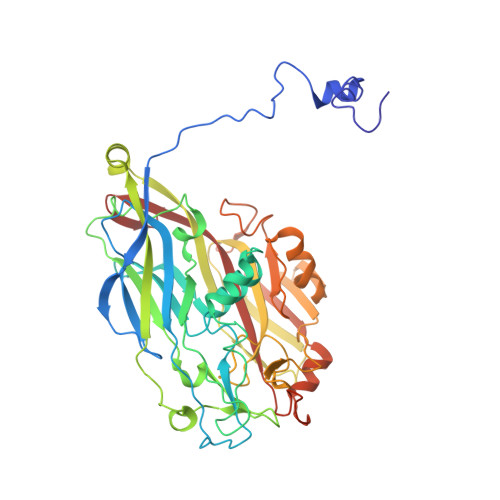
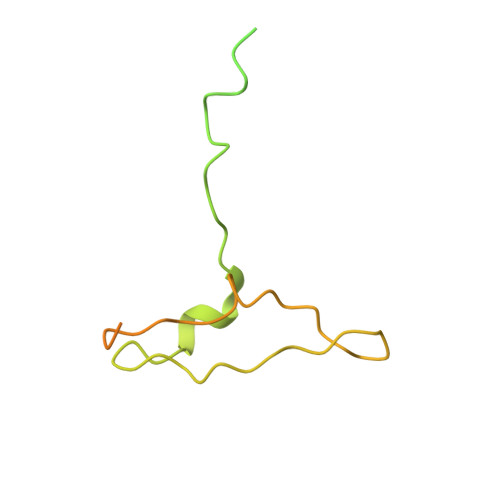
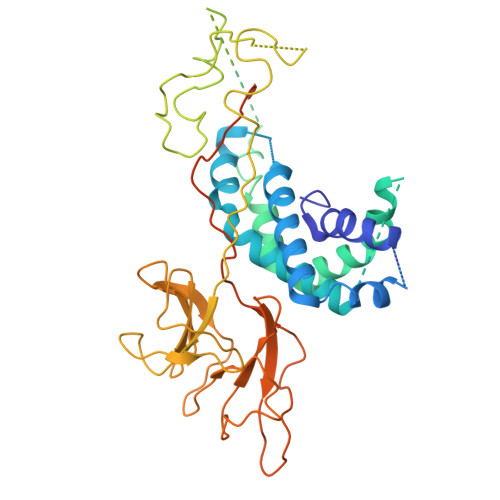
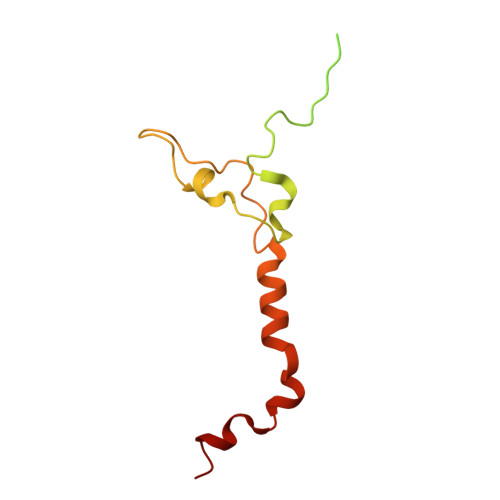
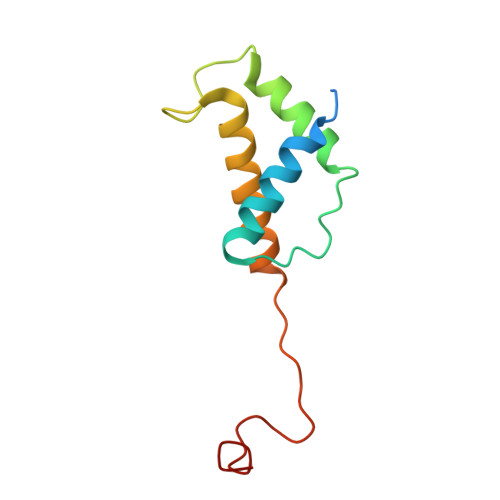
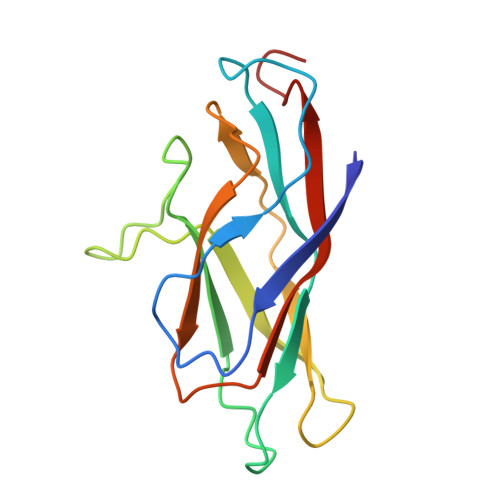
Singapore grouper iridovirus (SGIV), one of the nucleocytoviricota viruses (NCVs), is a highly pathogenic iridovirid. SGIV infection results in massive economic losses to the aquaculture industry and significantly threatens global biodiversity. In recent years, high morbidity and mortality in aquatic animals have been caused by iridovirid infections worldwide. Effective control and prevention strategies are urgently needed. Here, we present a near-atomic architecture of the SGIV capsid and identify eight types of capsid proteins. The viral inner membrane-integrated anchor protein colocalizes with the endoplasmic reticulum (ER), supporting the hypothesis that the biogenesis of the inner membrane is associated with the ER. Additionally, immunofluorescence assays indicate minor capsid proteins (mCPs) could form various building blocks with major capsid proteins (MCPs) before the formation of a viral factory (VF). These results expand our understanding of the capsid assembly of NCVs and provide more targets for vaccine and drug design to fight iridovirid infections.
Organizational Affiliation:
CAS Key Laboratory of Pathogen Microbiology and Immunology, Institute of Microbiology, Chinese Academy of Sciences, Beijing, 100101, China.
College of Marine Sciences, South China Agricultural University, Guangdong Laboratory for Lingnan Modern Agriculture, Guangzhou, 510642, China.
Cryo-EM Center, Department of Biology, Southern University of Science and Technology, Shenzhen, 518055, China.
Institute for Hepatology, National Clinical Research Center for Infectious Disease, Shenzhen Third People's Hospital, Shenzhen, 518112, China.
School of Life Science, University of Science and Technology of China, Hefei, 230026, China.
National Laboratory of Biomacromolecules, Institute of Biophysics, Chinese Academy of Sciences, Beijing, 100101, China.
Clinical Research Institute, State Key Laboratory of Complex Severe and Rare Diseases, Peking Union Medical College Hospital, Chinese Academy of Medical Science & Peking Union Medical College, Beijing, 100730, China.
Department of Human Sciences & James Comprehensive Cancer Center, The Ohio State University, Columbus, 43210, USA.
Perelman School of Medicine, University of Pennsylvania, Philadelphia, 19104, USA.
CAS Key Laboratory of Pathogen Microbiology and Immunology, Institute of Microbiology, Chinese Academy of Sciences, Beijing, 100101, China. qijx@im.ac.cn.
University of Chinese Academy of Sciences, Beijing, 100049, China. qijx@im.ac.cn.
Beijing Life Science Academy, Beijing, 102209, China. qijx@im.ac.cn.
Clinical Research Institute, State Key Laboratory of Complex Severe and Rare Diseases, Peking Union Medical College Hospital, Chinese Academy of Medical Science & Peking Union Medical College, Beijing, 100730, China. catclw321@126.com.
National Laboratory of Biomacromolecules, Institute of Biophysics, Chinese Academy of Sciences, Beijing, 100101, China. xzzhang@ibp.ac.cn.
University of Chinese Academy of Sciences, Beijing, 100049, China. xzzhang@ibp.ac.cn.
Cryo-EM Center, Department of Biology, Southern University of Science and Technology, Shenzhen, 518055, China. wangpy@sustech.edu.cn.
College of Marine Sciences, South China Agricultural University, Guangdong Laboratory for Lingnan Modern Agriculture, Guangzhou, 510642, China. qinqw@scau.edu.cn.
CAS Key Laboratory of Pathogen Microbiology and Immunology, Institute of Microbiology, Chinese Academy of Sciences, Beijing, 100101, China. gaof@im.ac.cn.
University of Chinese Academy of Sciences, Beijing, 100049, China. gaof@im.ac.cn.








 Download Mendeley