Download Mendeley
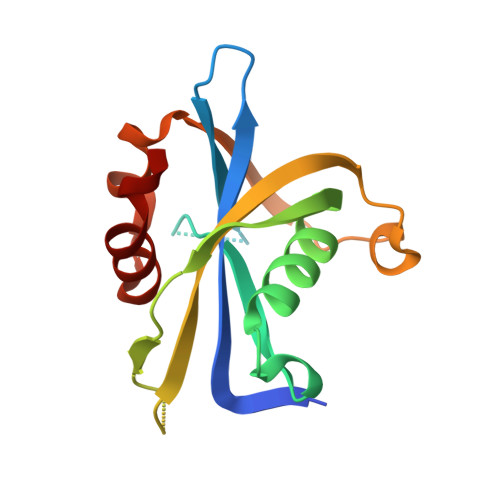
A rust-fungus Nudix hydrolase effector decaps mRNA in vitro and interferes with plant immune pathways.
McCombe, C.L., Catanzariti, A.M., Greenwood, J.R., Desai, A.M., Outram, M.A., Yu, D.S., Ericsson, D.J., Brenner, S.E., Dodds, P.N., Kobe, B., Jones, D.A., Williams, S.J.(2023) New Phytol 239: 222-239
- PubMed: 36631975 Search on PubMed
- DOI: https://doi.org/10.1111/nph.18727
- Primary Citation Related Structures:
8DP8, 8DP9, 8DPA - PubMed Abstract:
To infect plants, pathogenic fungi secrete small proteins called effectors. Here, we describe the catalytic activity and potential virulence function of the Nudix hydrolase effector AvrM14 from the flax rust fungus (Melampsora lini). We completed extensive in vitro assays to characterise the enzymatic activity of the AvrM14 effector. Additionally, we used in planta transient expression of wild-type and catalytically dead AvrM14 versions followed by biochemical assays, phenotypic analysis and RNA sequencing to unravel how the catalytic activity of AvrM14 impacts plant immunity. AvrM14 is an extremely selective enzyme capable of removing the protective 5' cap from mRNA transcripts in vitro. Homodimerisation of AvrM14 promoted biologically relevant mRNA cap cleavage in vitro and this activity was conserved in related effectors from other Melampsora spp. In planta expression of wild-type AvrM14, but not the catalytically dead version, suppressed immune-related reactive oxygen species production, altered the abundance of some circadian-rhythm-associated mRNA transcripts and reduced the hypersensitive cell-death response triggered by the flax disease resistance protein M1. To date, the decapping of host mRNA as a virulence strategy has not been described beyond viruses. Our results indicate that some fungal pathogens produce Nudix hydrolase effectors with in vitro mRNA-decapping activity capable of interfering with plant immunity.
- Plant Sciences Division, Research School of Biology, The Australian National University, Canberra, ACT, 2601, Australia.
Organizational Affiliation: