8CDN | pdb_00008cdn

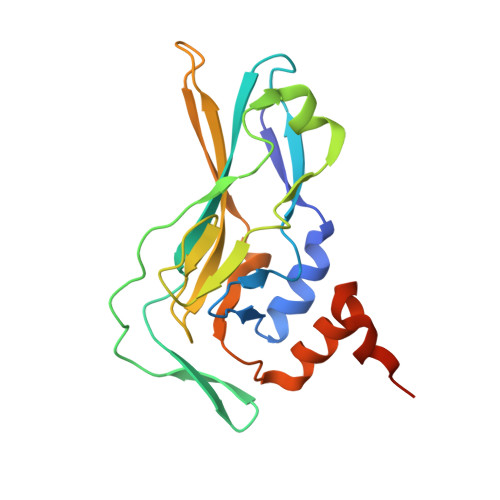
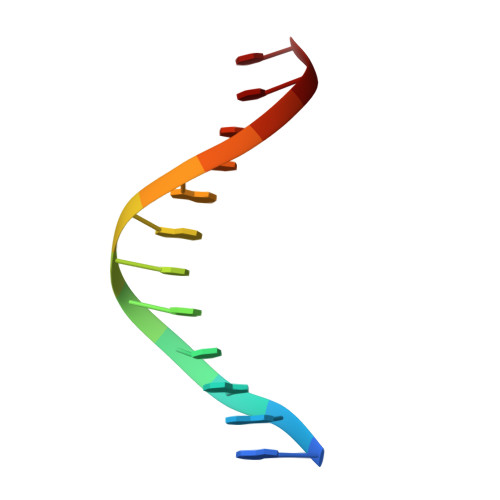
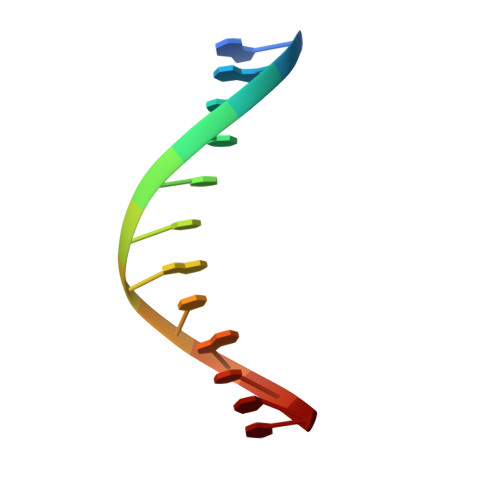
Crystal structure of human Brachyury in complex with a single T box binding element DNA


Experimental Data Snapshot

  • Method: X-RAY DIFFRACTION
  • Resolution: 2.55 Å
  • R-Value Free: 
    0.302 (Depositor), 0.307 (DCC) 
  • R-Value Work: 
    0.273 (Depositor), 0.279 (DCC) 
  • R-Value Observed: 
    0.275 (Depositor) 

Starting Model: experimental
View more details

wwPDB Validation 3D Report Full Report

Validation slider image for 8CDN

This is version 1.2 of the entry. See complete history

Literature

Structural insights into human brachyury DNA recognition and discovery of progressible binders for cancer therapy.

Newman, J.A.Gavard, A.E.Imprachim, N.Aitkenhead, H.Sheppard, H.E.Te Poele, R.Clarke, P.A.Hossain, M.A.Temme, L.Oh, H.J.Wells, C.I.Davis-Gilbert, Z.W.Workman, P.Gileadi, O.Drewry, D.H.

(2025) Nat Commun 16: 1596-1596

  • DOI: https://doi.org/10.1038/s41467-025-56213-1
  • Primary Citation Related Structures: 
    6F58, 6F59, 7ZK2, 7ZKF, 7ZL2, 8A10, 8A7N, 8CDN

  • PubMed Abstract: 

    Brachyury is a transcription factor that plays an essential role in tumour growth of the rare bone cancer chordoma and is implicated in other solid tumours. Brachyury is minimally expressed in healthy tissues, making it a potential therapeutic target. Unfortunately, as a ligandless transcription factor, brachyury has historically been considered undruggable. To investigate direct targeting of brachyury by small molecules, we determine the structure of human brachyury both alone and in complex with DNA. The structures provide insights into DNA binding and the context of the chordoma associated G177D variant. We use crystallographic fragment screening to identify hotspots on numerous pockets on the brachyury surface. Finally, we perform follow-up chemistry on fragment hits and describe the progression of a thiazole chemical series into binders with low µM potency. Thus we show that brachyury is ligandable and provide an example of how crystallographic fragment screening may be used to target protein classes that are difficult to address using other approaches.


  • Organizational Affiliation
    • Centre for Medicines Discovery, University of Oxford, Oxford, UK. Joseph.newman@cmd.ox.ac.uk.

Macromolecule Content 

  • Total Structure Weight: 29.35 kDa 
  • Atom Count: 1,937 
  • Modeled Residue Count: 205 
  • Deposited Residue Count: 216 
  • Unique protein chains: 1
  • Unique nucleic acid chains: 2

Macromolecules


Find similar proteins by:|  3D Structure
Entity ID: 1
MoleculeChains  Sequence LengthOrganismDetailsImage
T-box transcription factor T192Homo sapiensMutation(s): 0 
Gene Names: TBXTT
UniProt & NIH Common Fund Data Resources
Find proteins for O15178 (Homo sapiens)
Explore O15178 
Go to UniProtKB:  O15178
PHAROS:  O15178
GTEx:  ENSG00000164458 
Entity Groups
Sequence Clusters30% Identity50% Identity70% Identity90% Identity95% Identity100% Identity
UniProt GroupO15178
Sequence Annotations
Expand
Reference Sequence
Find similar nucleic acids by:  Sequence
Entity ID: 2
MoleculeChains LengthOrganismImage
DNA (5'-D(*AP*GP*GP*TP*GP*TP*GP*AP*GP*CP*CP*T)-3')B [auth C]12Homo sapiens
Sequence Annotations
Expand
Reference Sequence
Find similar nucleic acids by:  Sequence
Entity ID: 3
MoleculeChains LengthOrganismImage
DNA (5'-D(*AP*GP*GP*CP*TP*CP*AP*CP*AP*CP*CP*T)-3')C [auth D]12Homo sapiens
Sequence Annotations
Expand
Reference Sequence

Experimental Data & Validation

Experimental Data

  • Method: X-RAY DIFFRACTION
  • Resolution: 2.55 Å
  • R-Value Free:  0.302 (Depositor), 0.307 (DCC) 
  • R-Value Work:  0.273 (Depositor), 0.279 (DCC) 
  • R-Value Observed: 0.275 (Depositor) 
Space Group: P 61 2 2
Unit Cell:
Length ( Å )Angle ( ˚ )
a = 63.018α = 90
b = 63.018β = 90
c = 218.579γ = 120
Software Package:
Software NamePurpose
PHENIXrefinement
DIALSdata reduction
DIALSdata scaling
PHENIXphasing

Structure Validation

View Full Validation Report


Entry History 

& Funding Information

Deposition Data


Funding OrganizationLocationGrant Number
The Mark FoundationUnited States--

Revision History  (Full details and data files)

  • Version 1.0: 2023-03-22
    Type: Initial release
  • Version 1.1: 2024-06-19
    Changes: Data collection
  • Version 1.2: 2025-02-26
    Changes: Database references, Structure summary