7VP5 | pdb_00007vp5

Structure of a transcription factor and DNA complex


Experimental Data Snapshot

  • Method: X-RAY DIFFRACTION
  • Resolution: 2.99 Å
  • R-Value Free: 
    0.267 (Depositor), 0.270 (DCC) 
  • R-Value Work: 
    0.209 (Depositor), 0.210 (DCC) 

Starting Model: experimental
View more details

wwPDB Validation   3D Report Full Report


This is version 1.2 of the entry. See complete history


Literature

DNA-TCP complex structures reveal a unique recognition mechanism for TCP transcription factor families.

Zhang, Y.Xu, Y.P.Nie, J.K.Chen, H.Qin, G.Wang, B.Su, X.D.

(2023) Nucleic Acids Res 51: 434-448

  • DOI: https://doi.org/10.1093/nar/gkac1171
  • Primary Citation of Related Structures:  
    7VP1, 7VP2, 7VP3, 7VP4, 7VP5, 7VP6, 7VP7

  • PubMed Abstract: 

    Plant-specific TCP transcription factors are key regulators of diverse plant functions. TCP transcription factors have long been annotated as basic helix-loop-helix (bHLH) transcription factors according to remote sequence homology without experimental validation, and their consensus DNA-binding sequences and protein-DNA recognition mechanisms have remained elusive. Here, we report the crystal structures of the class I TCP domain from AtTCP15 and the class II TCP domain from AtTCP10 in complex with different double-stranded DNA (dsDNA). The complex structures reveal that the TCP domain is a distinct DNA-binding motif and the homodimeric TCP domains adopt a unique three-site recognition mode, binding to dsDNA mainly through a central pair of β-strands formed by the dimer interface and two basic flexible loops from each monomer. The consensus DNA-binding sequence for class I TCPs is a perfectly palindromic 11 bp (GTGGGNCCCAC), whereas that for class II TCPs is a near-palindromic 11 bp (GTGGTCCCCAC). The unique DNA binding mode allows the TCP domains to display broad specificity for a range of DNA sequences even shorter than 11 bp, adding further complexity to the regulatory network of plant TCP transcription factors.


  • Organizational Affiliation
    • State Key Laboratory of Protein and Plant Gene Research, School of Life Sciences, and Biomedical Pioneering Innovation Center (BIOPIC), Peking University, Beijing, 100871, China.

Macromolecules

Find similar proteins by:  (by identity cutoff)  |  3D Structure
Entity ID: 1
MoleculeChains Sequence LengthOrganismDetailsImage
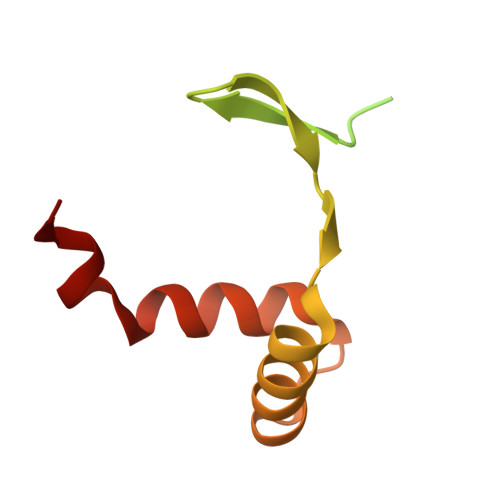
Transcription factor TCP10
A, B, E, F, I
A, B, E, F, I, J
107Arabidopsis thalianaMutation(s): 0 
Gene Names: TCP10At2g31070T16B12.12
UniProt
Find proteins for O82277 (Arabidopsis thaliana)
Explore O82277 
Go to UniProtKB:  O82277
Entity Groups  
Sequence Clusters30% Identity50% Identity70% Identity90% Identity95% Identity100% Identity
UniProt GroupO82277
Sequence Annotations
Expand
  • Reference Sequence

Find similar nucleic acids by:  Sequence   |   3D Structure  

Entity ID: 2
MoleculeChains LengthOrganismImage
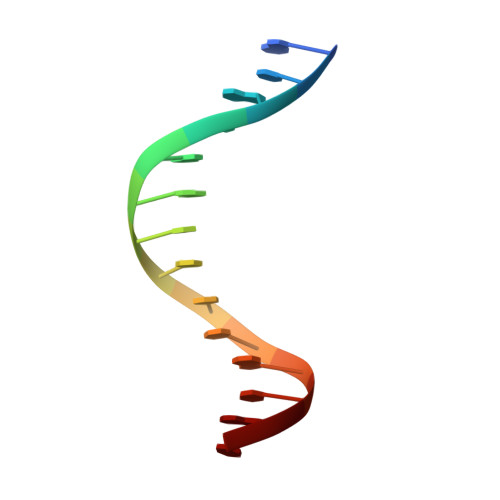
DNA (5'-D(*AP*TP*GP*TP*GP*GP*TP*CP*CP*CP*GP*TP*GP*T)-3')
C, G, K
14synthetic construct
Sequence Annotations
Expand
  • Reference Sequence

Find similar nucleic acids by:  Sequence   |   3D Structure  

Entity ID: 3
MoleculeChains LengthOrganismImage
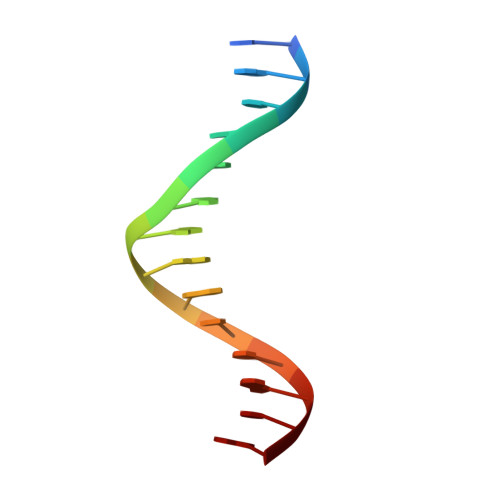
DNA (5'-D(*AP*TP*GP*TP*GP*GP*TP*CP*CP*CP*GP*TP*GP*T)-3')
D, H, L
14synthetic construct
Sequence Annotations
Expand
  • Reference Sequence
Experimental Data & Validation

Experimental Data

  • Method: X-RAY DIFFRACTION
  • Resolution: 2.99 Å
  • R-Value Free:  0.267 (Depositor), 0.270 (DCC) 
  • R-Value Work:  0.209 (Depositor), 0.210 (DCC) 
Space Group: P 1 21 1
Unit Cell:
Length ( Å )Angle ( ˚ )
a = 78.766α = 90
b = 76.896β = 113.85
c = 83.078γ = 90
Software Package:
Software NamePurpose
PHENIXrefinement
PDB_EXTRACTdata extraction
PHENIXmodel building
HKL-2000data scaling
PHENIXphasing

Structure Validation

View Full Validation Report


Entry History & Funding Information

Deposition Data


Funding OrganizationLocationGrant Number
National Science Foundation (NSF, China)China31670740
National Science Foundation (NSF, China)China31270803

Revision History  (Full details and data files)

  • Version 1.0: 2022-10-19
    Type: Initial release
  • Version 1.1: 2023-11-29
    Changes: Data collection, Refinement description
  • Version 1.2: 2026-02-11
    Changes: Database references, Structure summary