Download Mendeley
Cancer mutations rewire the RNA methylation specificity of METTL3-METTL14.
Zhang, C., Scott, R.L., Tunes, L., Hsieh, M.H., Wang, P., Kumar, A., Khadgi, B.B., Yang, Y.Y., Doxtader Lacy, K.A., Herrell, E., Zhang, X., Evers, B., Wang, Y., Xing, C., Zhu, H., Nam, Y.(2024) Sci Adv 10: eads4750-eads4750
- PubMed: 39705353 Search on PubMedSearch on PubMed Central
- DOI: https://doi.org/10.1126/sciadv.ads4750
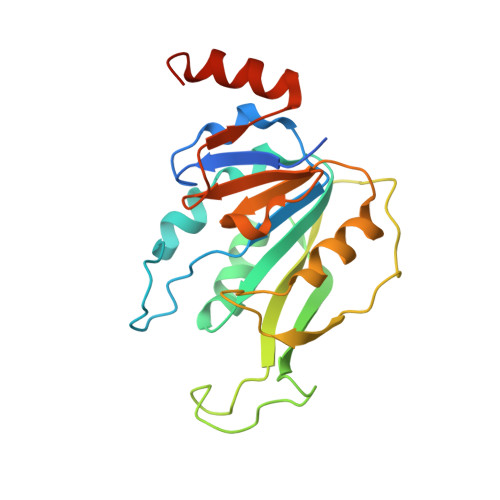
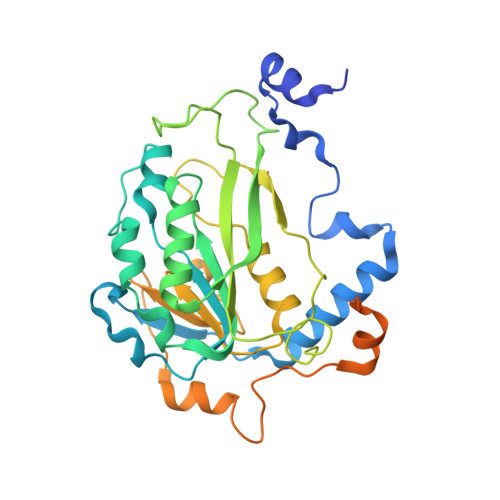
- Primary Citation Related Structures:
7RX6, 7RX7, 7RX8 - PubMed Abstract:
Chemical modification of RNAs is important for posttranscriptional gene regulation. The METTL3-METTL14 complex generates most N 6 -methyladenosine (m 6 A) modifications in messenger RNAs (mRNAs), and dysregulated methyltransferase expression has been linked to cancers. Here we show that a changed sequence context for m 6 A can promote oncogenesis. A gain-of-function missense mutation from patients with cancer, METTL14 R298P , increases malignant cell growth in culture and transgenic mice without increasing global m 6 A levels in mRNAs. The mutant methyltransferase preferentially modifies noncanonical sites containing a GGAU motif, in vitro and in vivo. The m 6 A in GGAU context is detected by the YTH family of readers similarly to the canonical sites but is demethylated less efficiently by an eraser, ALKBH5. Combining the biochemical and structural data, we provide a model for how the cognate RNA sequences are selected for methylation by METTL3-METTL14. Our work highlights that sequence-specific m 6 A deposition is important and that increased GGAU methylation can promote oncogenesis.
- Department of Biochemistry, Department of Biophysics, Simmons Comprehensive Cancer Center, University of Texas Southwestern Medical Center, Dallas, TX 75390, USA.
Organizational Affiliation: