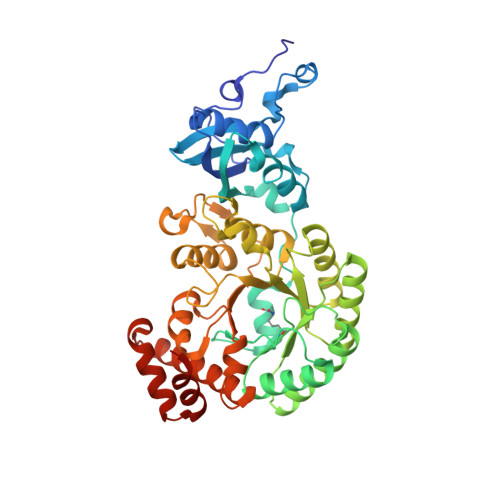
7QVI | pdb_00007qvi

Fiber-forming RubisCO derived from ancestral sequence reconstruction and rational engineering


Experimental Data Snapshot

  • Method: ELECTRON MICROSCOPY
  • Resolution: 3.00 Å
  • Aggregation State: 2D ARRAY 
  • Reconstruction Method: SINGLE PARTICLE 

wwPDB Validation 3D Report Full Report

Validation slider image for 7QVI

This is version 1.1 of the entry. See complete history

Literature

Evolution of increased complexity and specificity at the dawn of form I Rubiscos.

Schulz, L.Guo, Z.Zarzycki, J.Steinchen, W.Schuller, J.M.Heimerl, T.Prinz, S.Mueller-Cajar, O.Erb, T.J.Hochberg, G.K.A.

(2022) Science 378: 155-160

  • DOI: https://doi.org/10.1126/science.abq1416
  • Primary Citation Related Structures: 
    7QSV, 7QSW, 7QSX, 7QSY, 7QSZ, 7QT1, 7QVI

  • PubMed Abstract: 

    The evolution of ribulose-1,5-bisphosphate carboxylase/oxygenases (Rubiscos) that discriminate strongly between their substrate carbon dioxide and the undesired side substrate dioxygen was an important event for photosynthetic organisms adapting to an oxygenated environment. We use ancestral sequence reconstruction to recapitulate this event. We show that Rubisco increased its specificity and carboxylation efficiency through the gain of an accessory subunit before atmospheric oxygen was present. Using structural and biochemical approaches, we retrace how this subunit was gained and became essential. Our work illuminates the emergence of an adaptation to rising ambient oxygen levels, provides a template for investigating the function of interactions that have remained elusive because of their essentiality, and sheds light on the determinants of specificity in Rubisco.


  • Organizational Affiliation
    • Department of Biochemistry and Synthetic Metabolism, Max Planck Institute for Terrestrial Microbiology, 35043 Marburg, Germany.

Macromolecule Content 

  • Total Structure Weight: 825.24 kDa 
  • Atom Count: 56,600 
  • Modeled Residue Count: 7,128 
  • Deposited Residue Count: 7,312 
  • Unique protein chains: 1

Macromolecules

Find similar proteins by:|  3D Structure
Entity ID: 1
MoleculeChains  Sequence LengthOrganismDetailsImage
RubisCO large subunit
A, B, C, D, E
A, B, C, D, E, F, G, H, I, J, K, L, M, N, O, P
457synthetic constructMutation(s): 0 

Small Molecules

Ligands 2 Unique
IDChains Name / Formula / InChI Key2D Diagram3D Interactions
CAP
(Subject of Investigation/LOI)

Query on CAP


Download:Ideal Coordinates CCD File
AA [auth F]
CA [auth G]
EA [auth H]
GA [auth I]
IA [auth J]
AA [auth F],
CA [auth G],
EA [auth H],
GA [auth I],
IA [auth J],
KA [auth K],
MA [auth L],
OA [auth M],
Q [auth A],
QA [auth N],
S [auth B],
SA [auth O],
U [auth C],
UA [auth P],
W [auth D],
Y [auth E]
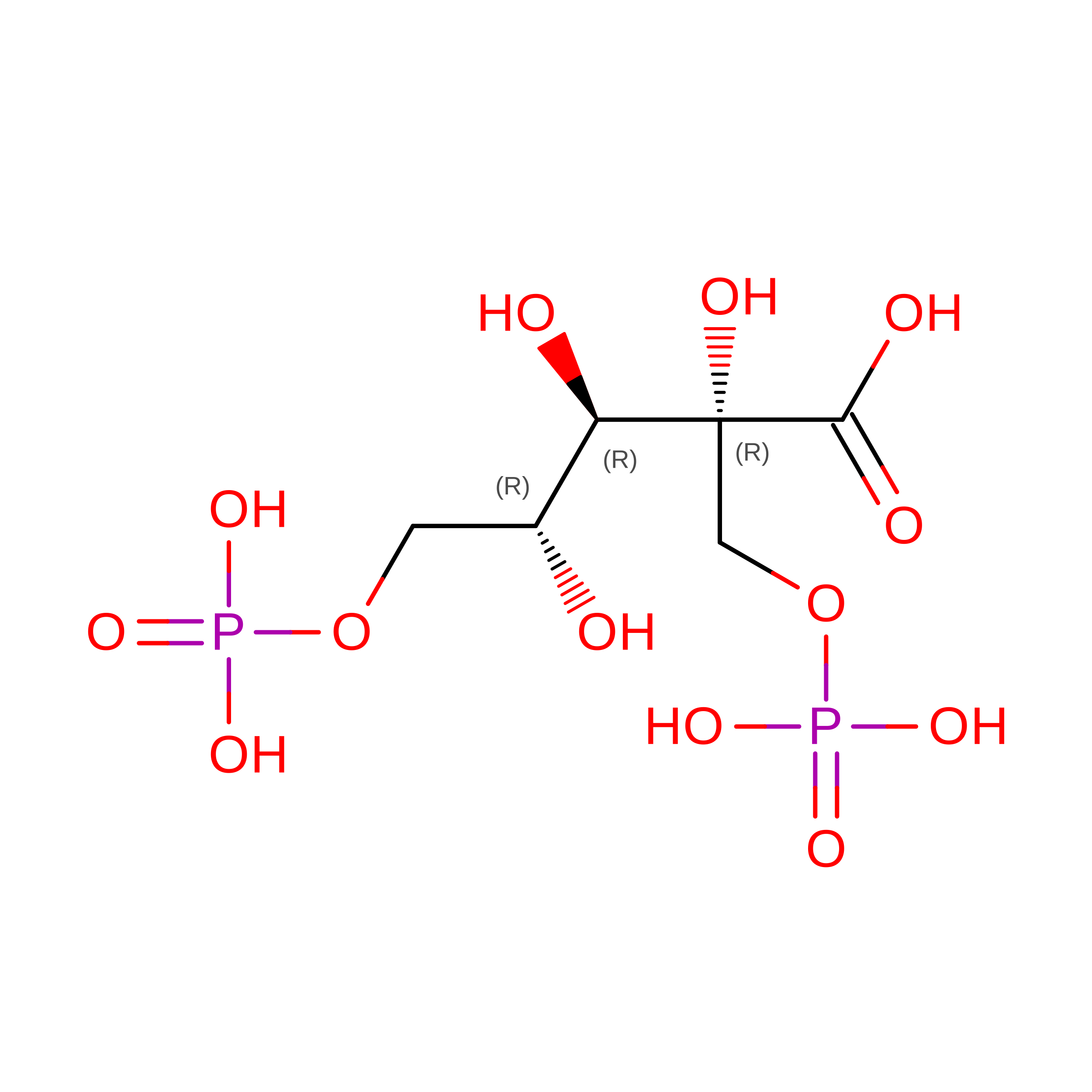
2-CARBOXYARABINITOL-1,5-DIPHOSPHATE
C6 H14 O13 P2
ITHCSGCUQDMYAI-ZMIZWQJLSA-N
MG
(Subject of Investigation/LOI)

Query on MG


Download:Ideal Coordinates CCD File
BA [auth F]
DA [auth G]
FA [auth H]
HA [auth I]
JA [auth J]
BA [auth F],
DA [auth G],
FA [auth H],
HA [auth I],
JA [auth J],
LA [auth K],
NA [auth L],
PA [auth M],
R [auth A],
RA [auth N],
T [auth B],
TA [auth O],
V [auth C],
VA [auth P],
X [auth D],
Z [auth E]
MAGNESIUM ION
Mg
JLVVSXFLKOJNIY-UHFFFAOYSA-N
Modified Residues  1 Unique
IDChains TypeFormula2D DiagramParent
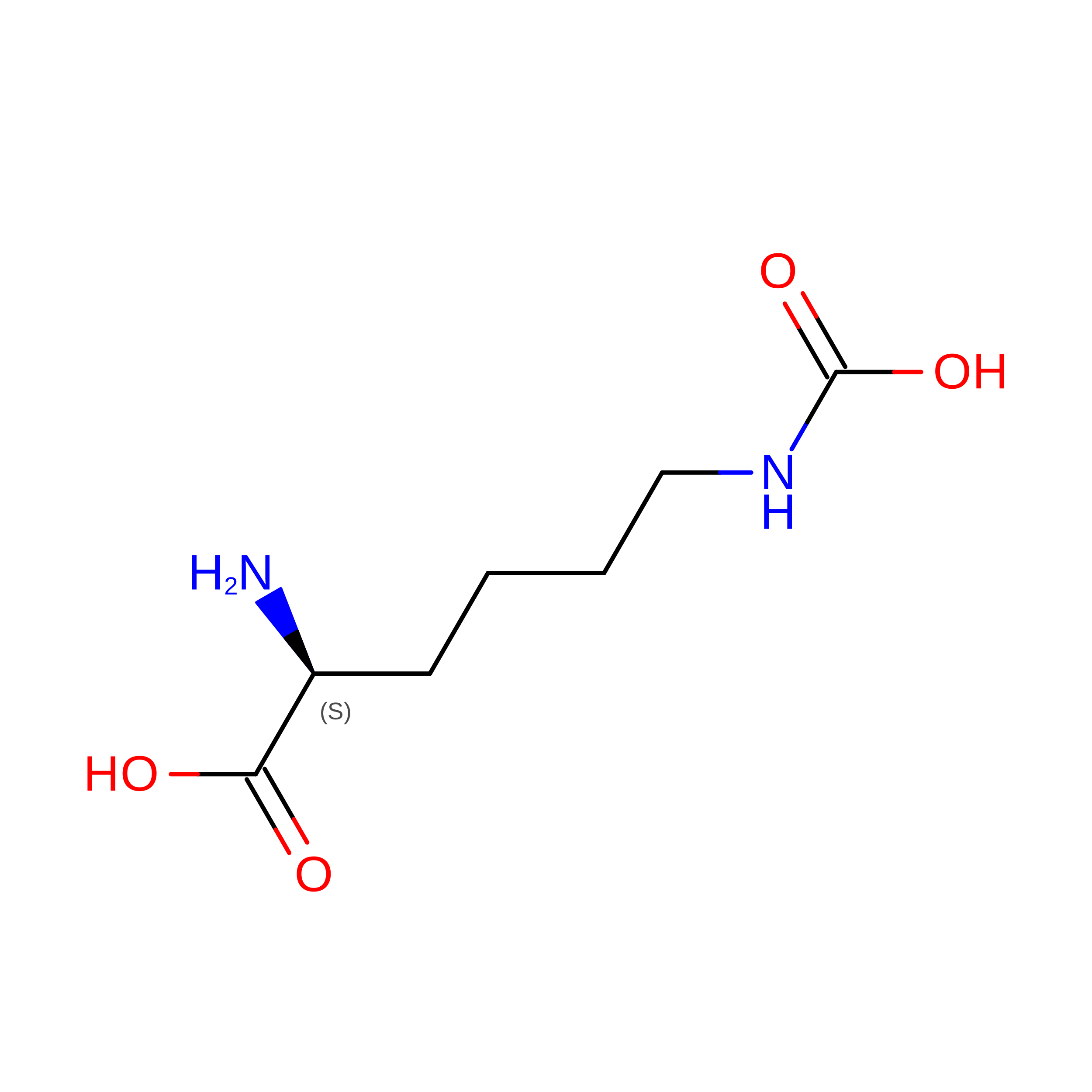
KCX
Query on KCX
A, B, C, D, E
A, B, C, D, E, F, G, H, I, J, K, L, M, N, O, P
L-PEPTIDE LINKINGC7 H14 N2 O4LYS

Experimental Data & Validation

Experimental Data

  • Method: ELECTRON MICROSCOPY
  • Resolution: 3.00 Å
  • Aggregation State: 2D ARRAY 
  • Reconstruction Method: SINGLE PARTICLE 

Structure Validation

View Full Validation Report


Entry History 

& Funding Information

Deposition Data


Funding OrganizationLocationGrant Number
Max Planck SocietyGermany--
German Research Foundation (DFG)GermanySCHU 3364/1-1

Revision History  (Full details and data files)

  • Version 1.0: 2022-10-12
    Type: Initial release
  • Version 1.1: 2022-10-26
    Changes: Database references