7NPF | pdb_00007npf

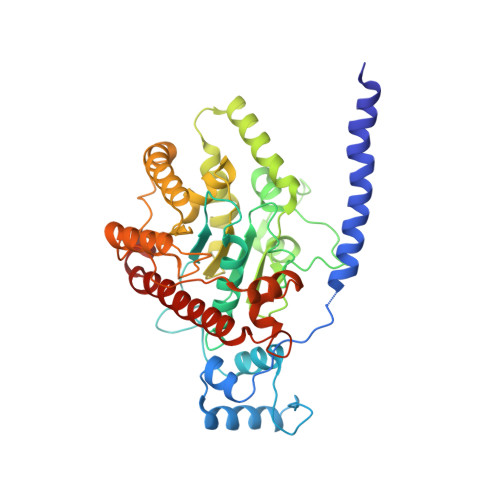
Vibrio cholerae ParA2-ATPyS-DNA filament


Experimental Data Snapshot

  • Method: ELECTRON MICROSCOPY
  • Resolution: 4.50 Å
  • Aggregation State: FILAMENT 
  • Reconstruction Method: HELICAL 

wwPDB Validation 3D Report Full Report

Validation slider image for 7NPF

This is version 2.1 of the entry. See complete history

Literature

The structure of the bacterial DNA segregation ATPase filament reveals the conformational plasticity of ParA upon DNA binding.

Parker, A.V.Mann, D.Tzokov, S.B.Hwang, L.C.Bergeron, J.R.C.

(2021) Nat Commun 12: 5166-5166

  • DOI: https://doi.org/10.1038/s41467-021-25429-2
  • Primary Citation Related Structures: 
    7NPD, 7NPF

  • PubMed Abstract: 

    The efficient segregation of replicated genetic material is an essential step for cell division. Bacterial cells use several evolutionarily-distinct genome segregation systems, the most common of which is the type I Par system. It consists of an adapter protein, ParB, that binds to the DNA cargo via interaction with the parS DNA sequence; and an ATPase, ParA, that binds nonspecific DNA and mediates cargo transport. However, the molecular details of how this system functions are not well understood. Here, we report the cryo-EM structure of the Vibrio cholerae ParA2 filament bound to DNA, as well as the crystal structures of this protein in various nucleotide states. These structures show that ParA forms a left-handed filament on DNA, stabilized by nucleotide binding, and that ParA undergoes profound structural rearrangements upon DNA binding and filament assembly. Collectively, our data suggest the structural basis for ParA's cooperative binding to DNA and the formation of high ParA density regions on the nucleoid.


  • Organizational Affiliation
    • Department of Molecular Biology and Biotechnology, the University of Sheffield, Sheffield, UK.

Macromolecule Content 

  • Total Structure Weight: 406.07 kDa 
  • Atom Count: 26,773 
  • Modeled Residue Count: 3,322 
  • Deposited Residue Count: 3,354 
  • Unique protein chains: 1
  • Unique nucleic acid chains: 2

Macromolecules


Find similar proteins by:|  3D Structure
Entity ID: 1
MoleculeChains  Sequence LengthOrganismDetailsImage
AAA family ATPase
A, B, C, D, E
A, B, C, D, E, F, G, H
407Vibrio choleraeMutation(s): 0 
Gene Names: 
UniProt
Find proteins for Q9KKJ2 (Vibrio cholerae serotype O1 (strain ATCC 39315 / El Tor Inaba N16961))
Explore Q9KKJ2 
Go to UniProtKB:  Q9KKJ2
Entity Groups
Sequence Clusters30% Identity50% Identity70% Identity90% Identity95% Identity100% Identity
UniProt GroupQ9KKJ2
Sequence Annotations
Expand
Reference Sequence
Find similar nucleic acids by:  (by identity cutoff) 
Entity ID: 2
MoleculeChains LengthOrganismImage
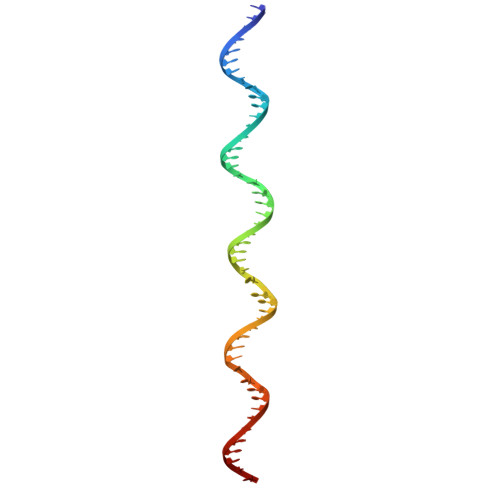
DNA (49-MER)49Bleekeriella leptaspis
Sequence Annotations
Expand
Reference Sequence
Find similar nucleic acids by:  (by identity cutoff) 
Entity ID: 3
MoleculeChains LengthOrganismImage
DNA (49-MER)49Bleekeriella leptaspis
Sequence Annotations
Expand
Reference Sequence

Small Molecules

Ligands 2 Unique
IDChains Name / Formula / InChI Key2D Diagram3D Interactions
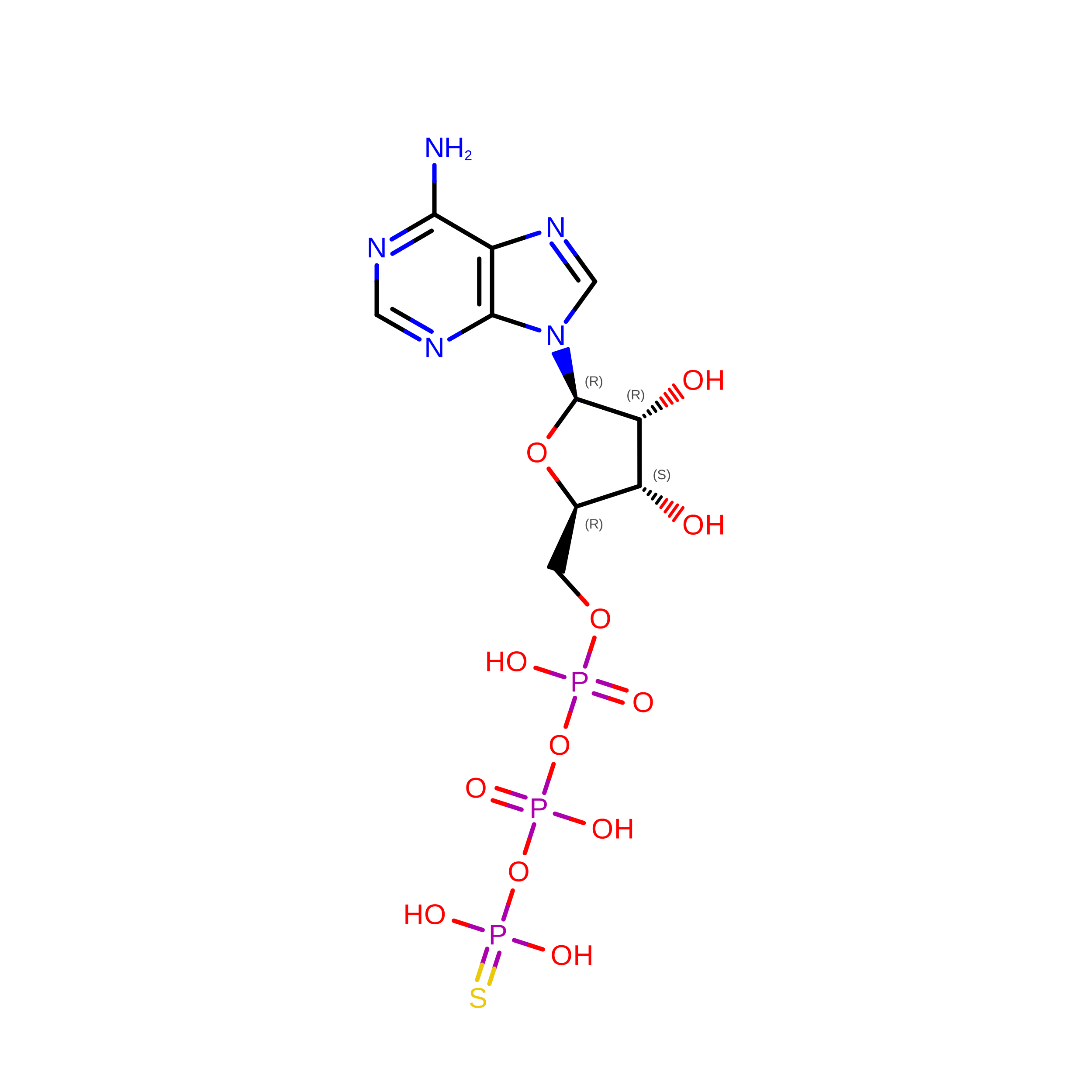
AGS
(Subject of Investigation/LOI)

Query on AGS


Download:Ideal Coordinates CCD File
L [auth A]
N [auth B]
P [auth C]
R [auth D]
T [auth E]
L [auth A],
N [auth B],
P [auth C],
R [auth D],
T [auth E],
V [auth F],
X [auth G],
Z [auth H]
PHOSPHOTHIOPHOSPHORIC ACID-ADENYLATE ESTER
C10 H16 N5 O12 P3 S
NLTUCYMLOPLUHL-KQYNXXCUSA-N
MG
(Subject of Investigation/LOI)

Query on MG


Download:Ideal Coordinates CCD File
K [auth A]
M [auth B]
O [auth C]
Q [auth D]
S [auth E]
K [auth A],
M [auth B],
O [auth C],
Q [auth D],
S [auth E],
U [auth F],
W [auth G],
Y [auth H]
MAGNESIUM ION
Mg
JLVVSXFLKOJNIY-UHFFFAOYSA-N

Experimental Data & Validation

Experimental Data

  • Method: ELECTRON MICROSCOPY
  • Resolution: 4.50 Å
  • Aggregation State: FILAMENT 
  • Reconstruction Method: HELICAL 

Structure Validation

View Full Validation Report


Entry History 

& Funding Information

Deposition Data


Funding OrganizationLocationGrant Number
Not fundedUnited Kingdom--

Revision History  (Full details and data files)

  • Version 1.0: 2021-10-06
    Type: Initial release
  • Version 2.0: 2021-10-20
    Changes: Advisory, Atomic model, Data collection, Database references, Derived calculations, Polymer sequence, Source and taxonomy, Structure summary
  • Version 2.1: 2025-10-01
    Changes: Advisory, Data collection, Derived calculations, Structure summary