Download Mendeley
Molecular characterization of cyanobacterial short-chain prenyltransferases and discovery of a novel GGPP phosphatase.
Satta, A., Esquirol, L., Ebert, B.E., Newman, J., Peat, T.S., Plan, M., Schenk, G., Vickers, C.E.(2022) FEBS J 289: 6672-6693
- PubMed: 35704353 Search on PubMedSearch on PubMed Central
- DOI: https://doi.org/10.1111/febs.16556
- Primary Citation Related Structures:
7MXZ, 7MY0, 7MY1, 7MY6, 7MY7 - PubMed Abstract:
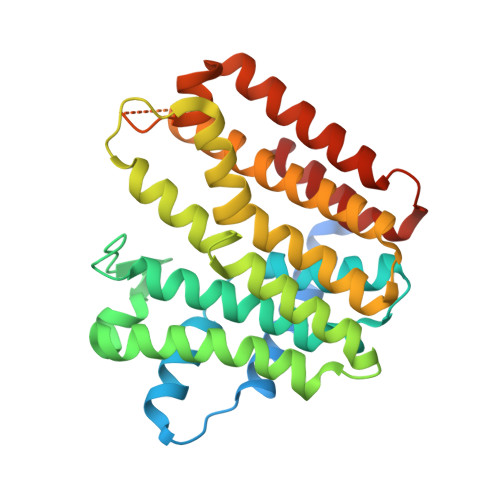
Cyanobacteria are photosynthetic prokaryotes with strong potential to be used for industrial terpenoid production. However, the key enzymes forming the principal terpenoid building blocks, called short-chain prenyltransferases (SPTs), are insufficiently characterized. Here, we examined SPTs in the model cyanobacteria Synechococcus elongatus sp. PCC 7942 and Synechocystis sp. PCC 6803. Each species has a single putative SPT (SeCrtE and SyCrtE, respectively). Sequence analysis identified these as type-II geranylgeranyl pyrophosphate synthases (GGPPSs) with high homology to GGPPSs found in the plastids of green plants and other photosynthetic organisms. In vitro analysis demonstrated that SyCrtE is multifunctional, producing geranylgeranyl pyrophosphate (GGPP; C 20 ) primarily but also significant amounts of farnesyl pyrophosphate (FPP, C 15 ) and geranyl pyrophosphate (GPP, C 10 ); whereas SeCrtE appears to produce only GGPP. The crystal structures were solved to 2.02 and 1.37 Å, respectively, and the superposition of the structures against the GGPPS of Synechococcus elongatus sp. PCC 7002 yield a root mean square deviation of 0.8 Å (SeCrtE) and 1.1 Å (SyCrtE). We also discovered that SeCrtE is co-encoded in an operon with a functional GGPP phosphatase, suggesting metabolic pairing of these two activities and a putative function in tocopherol biosynthesis. This work sheds light on the activity of SPTs and terpenoid synthesis in cyanobacteria. Understanding native prenyl phosphate metabolism is an important step in developing approaches to engineering the production of different chain-length terpenoids in cyanobacteria.
- Australian Institute for Bioengineering and Biotechnology, The University of Queensland, St. Lucia, Australia.
Organizational Affiliation: