7EVJ | pdb_00007evj

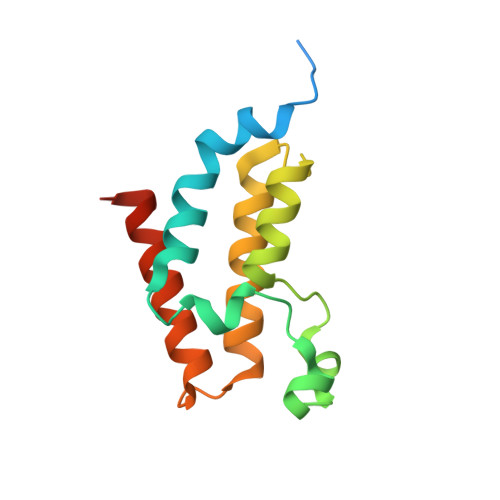
Crystal structure of CBP bromodomain liganded with 9c


Experimental Data Snapshot

  • Method: X-RAY DIFFRACTION
  • Resolution: 2.57 Å
  • R-Value Free: 
    0.209 (Depositor), 0.217 (DCC) 
  • R-Value Work: 
    0.187 (Depositor), 0.195 (DCC) 
  • R-Value Observed: 
    0.188 (Depositor) 

Starting Model: experimental
View more details

wwPDB Validation 3D Report Full Report

Validation slider image for 7EVJ

Ligand Structure Quality Assessment 


This is version 1.1 of the entry. See complete history

Literature

Design, Synthesis, and Biological Evaluation of 1-(Indolizin-3-yl)ethan-1-ones as CBP Bromodomain Inhibitors for the Treatment of Prostate Cancer.

Xiang, Q.Wang, C.Wu, T.Zhang, C.Hu, Q.Luo, G.Hu, J.Zhuang, X.Zou, L.Shen, H.Wu, X.Zhang, Y.Kong, X.Liu, J.Xu, Y.

(2022) J Med Chem 65: 785-810

  • DOI: https://doi.org/10.1021/acs.jmedchem.1c01864
  • Primary Citation Related Structures: 
    7EVJ, 7XNE

  • PubMed Abstract: 

    CREB (cyclic-AMP responsive element binding protein) binding protein (CBP) is a potential target for prostate cancer treatment. Herein, we report the structural optimization of a series of 1-(indolizin-3-yl)ethan-1-one compounds as new selective CBP bromodomain inhibitors, aiming to improve cellular potency and metabolic stability. This process led to compound 9g (Y08284), which possesses good liver microsomal stability and pharmacokinetic properties ( F = 25.9%). Furthermore, the compound is able to inhibit CBP bromodomain as well as the proliferation, colony formation, and migration of prostate cancer cells. Additionally, the new inhibitor shows promising antitumor efficacy in a 22Rv1 xenograft model (TGI = 88%). This study provides new lead compounds for further development of drugs for the treatment of prostate cancer.


  • Organizational Affiliation
    • Guangdong Provincial Key Laboratory of Biocomputing, Joint School of Life Sciences, Guangzhou Institutes of Biomedicine and Health, Guangzhou Medical University, Chinese Academy of Sciences, Guangzhou 510530, China.

Macromolecule Content 

  • Total Structure Weight: 16.6 kDa 
  • Atom Count: 1,026 
  • Modeled Residue Count: 111 
  • Deposited Residue Count: 133 
  • Unique protein chains: 1

Macromolecules

Find similar proteins by:|  3D Structure
Entity ID: 1
MoleculeChains  Sequence LengthOrganismDetailsImage
CREB-binding protein133Homo sapiensMutation(s): 0 
Gene Names: CREBBPCBP
EC: 2.3.1.48 (PDB Primary Data), 2.3.1 (UniProt)
UniProt & NIH Common Fund Data Resources
Find proteins for Q92793 (Homo sapiens)
Explore Q92793 
Go to UniProtKB:  Q92793
PHAROS:  Q92793
GTEx:  ENSG00000005339 
Entity Groups
Sequence Clusters30% Identity50% Identity70% Identity90% Identity95% Identity100% Identity
UniProt GroupQ92793
Sequence Annotations
Expand
Reference Sequence

Small Molecules

Ligands 3 Unique
IDChains Name / Formula / InChI Key2D Diagram3D Interactions
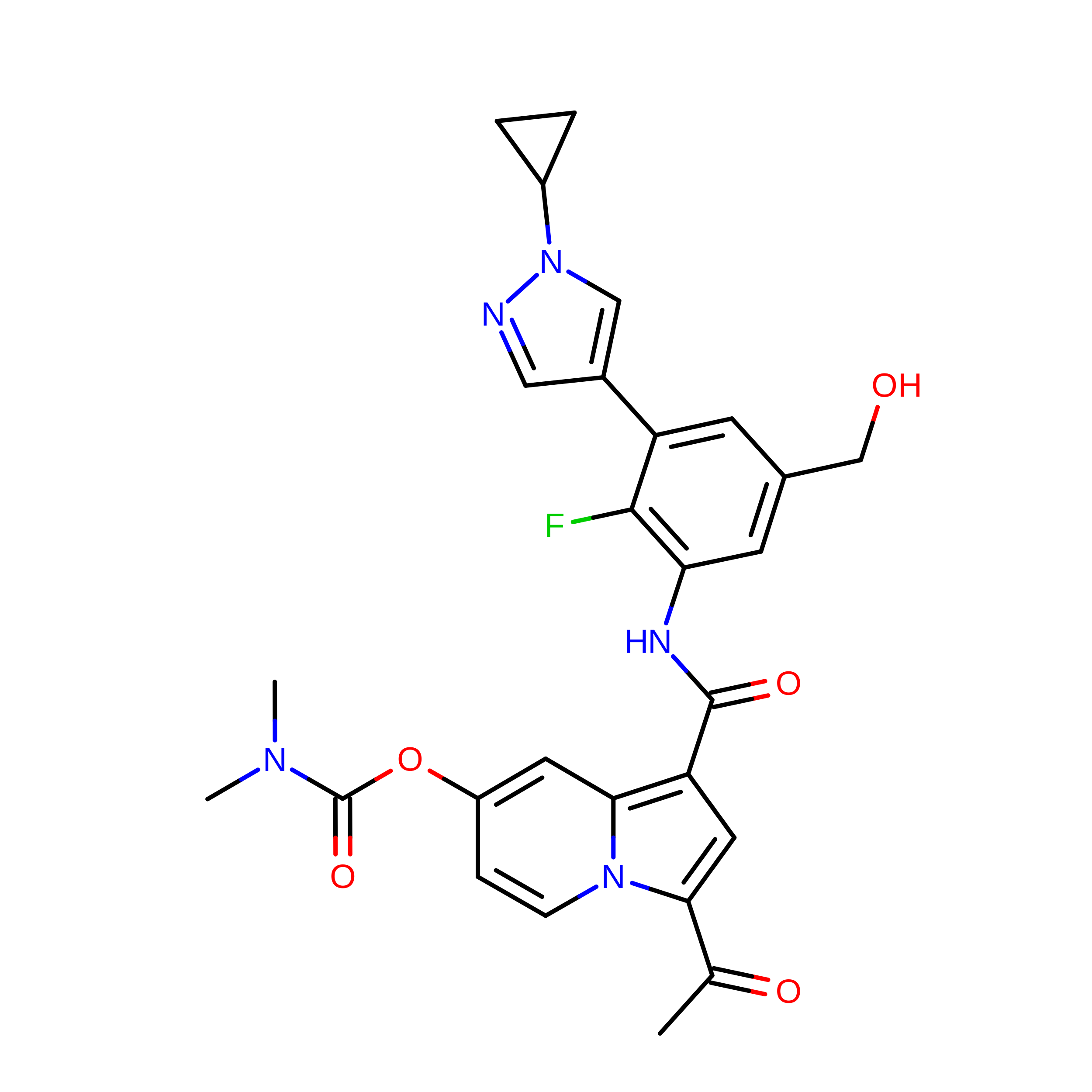
JE9
(Subject of Investigation/LOI)

Query on JE9


Download:Ideal Coordinates CCD File
B [auth A]3-acetyl-1-((3-(1-cyclopropyl-1H-pyrazol-4-yl)-2-fluoro-5-(hydroxymethyl)phenyl)carbamoyl)indolizin-7-yl dimethylcarbamate
C27 H26 F N5 O5
UMURGYUDULFAPH-UHFFFAOYSA-N
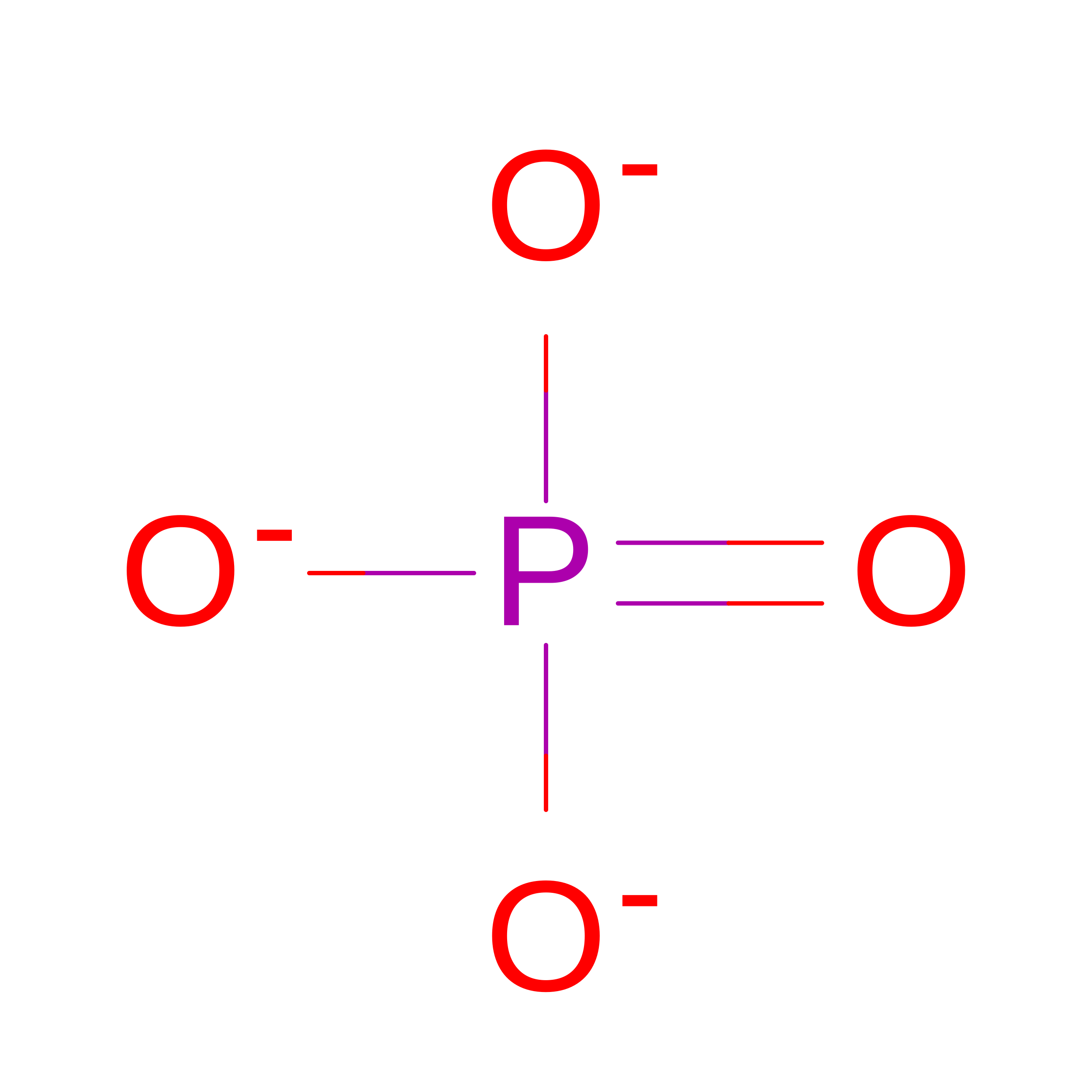
PO4

Query on PO4


Download:Ideal Coordinates CCD File
C [auth A]PHOSPHATE ION
O4 P
NBIIXXVUZAFLBC-UHFFFAOYSA-K
GOL

Query on GOL


Download:Ideal Coordinates CCD File
D [auth A]GLYCEROL
C3 H8 O3
PEDCQBHIVMGVHV-UHFFFAOYSA-N

Experimental Data & Validation

Experimental Data

  • Method: X-RAY DIFFRACTION
  • Resolution: 2.57 Å
  • R-Value Free:  0.209 (Depositor), 0.217 (DCC) 
  • R-Value Work:  0.187 (Depositor), 0.195 (DCC) 
  • R-Value Observed: 0.188 (Depositor) 
Space Group: P 4 21 2
Unit Cell:
Length ( Å )Angle ( ˚ )
a = 79.45α = 90
b = 79.45β = 90
c = 45.11γ = 90
Software Package:
Software NamePurpose
REFMACrefinement
Aimlessdata scaling
PDB_EXTRACTdata extraction
iMOSFLMdata reduction
MOLREPphasing

Structure Validation

View Full Validation Report


Ligand Structure Quality Assessment 


Entry History 

Deposition Data

Revision History  (Full details and data files)

  • Version 1.0: 2022-02-16
    Type: Initial release
  • Version 1.1: 2023-11-29
    Changes: Data collection, Refinement description