Download Mendeley
Zeta-carbonic anhydrases show CS 2 hydrolase activity: A new metabolic carbon acquisition pathway in diatoms?
Alterio, V., Langella, E., Buonanno, M., Esposito, D., Nocentini, A., Berrino, E., Bua, S., Polentarutti, M., Supuran, C.T., Monti, S.M., De Simone, G.(2021) Comput Struct Biotechnol J 19: 3427-3436
- PubMed: 34194668 Search on PubMedSearch on PubMed Central
- DOI: https://doi.org/10.1016/j.csbj.2021.05.057
- Primary Citation Related Structures:
7BEZ, 7BF0 - PubMed Abstract:
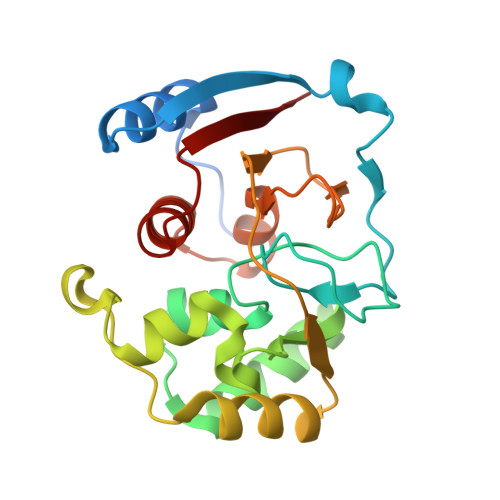
CDCA1 is a very peculiar member of the Carbonic Anhydrase (CA) family. It has been the first enzyme to show an efficient utilization of Cd(II) ions in Nature and a unique adaptation capability to live on the surface ocean. Indeed, in this environment, which is extremely depleted in essential metal ions, CDCA1 can utilize Zn(II) or Cd(II) as catalytic metal to support the metabolic needs of fast growing diatoms. In this paper we demonstrate a further catalytic versatility of this enzyme by using a combination of X-ray crystallography, molecular dynamics simulations and enzymatic experiments. First we identified the CO 2 binding site and the way in which this substrate travels from the environment to the enzyme active site. Then, starting from the observation of a structural similarity with the substrate entry route of CS 2 hydrolase from Acidanius A1-3 , we hypothesized and demonstrated that also CS 2 is a substrate for CDCA1. This finding is new and unexpected since until now only few CS 2 hydrolases have been characterized, and none of them is reported to have any CO 2 hydratase action. The physiological implications of this supplementary catalytic activity still remain to be unveiled. We suggest here that it could represent another ability of diatoms expressing CDCA1 to adapt to the external environment. Indeed, the ability of this enzyme to convert CS 2 could represent an alternative source of carbon acquisition for diatoms, in addition to CO 2 .
- Istituto di Biostrutture e Bioimmagini-CNR, via Mezzocannone 16, 80134 Napoli, Italy.
Organizational Affiliation: