7B4Q | pdb_00007b4q

Structure of a cold active HSL family esterase reveals mechanisms of low temperature adaptation and substrate specificity


Experimental Data Snapshot

  • Method: X-RAY DIFFRACTION
  • Resolution: 1.61 Å
  • R-Value Free: 
    0.193 (Depositor), 0.204 (DCC) 
  • R-Value Work: 
    0.167 (Depositor), 0.180 (DCC) 
  • R-Value Observed: 
    0.168 (Depositor) 

Starting Model: experimental
View more details

wwPDB Validation 3D Report Full Report

Validation slider image for 7B4Q

This is version 1.1 of the entry. See complete history

Literature

Structure and in silico simulations of a cold-active esterase reveals its prime cold-adaptation mechanism.

Noby, N.Auhim, H.S.Winter, S.Worthy, H.L.Embaby, A.M.Saeed, H.Hussein, A.Pudney, C.R.Rizkallah, P.J.Wells, S.A.Jones, D.D.

(2021) Open Biol 11: 210182-210182

  • DOI: https://doi.org/10.1098/rsob.210182
  • Primary Citation Related Structures: 
    7B4Q

  • PubMed Abstract: 

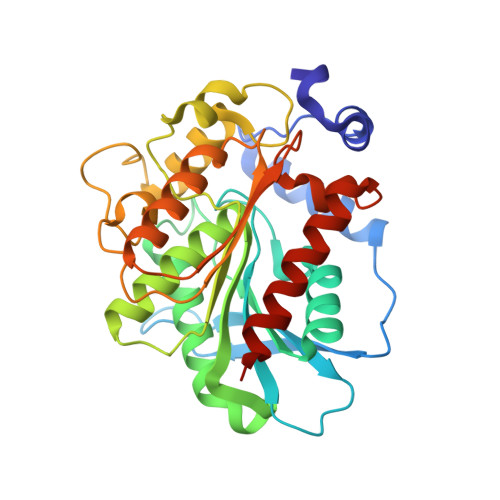
    Here we determined the structure of a cold active family IV esterase (EstN7) cloned from Bacillus cohnii strain N1. EstN7 is a dimer with a classical α/β hydrolase fold. It has an acidic surface that is thought to play a role in cold-adaption by retaining solvation under changed water solvent entropy at lower temperatures. The conformation of the functionally important cap region is significantly different to EstN7's closest relatives, forming a bridge-like structure with reduced helical content providing greater access to the active site through more than one substrate access tunnel. However, dynamics do not appear to play a major role in cold adaption. Molecular dynamics at different temperatures, rigidity analysis, normal mode analysis and geometric simulations of motion confirm the flexibility of the cap region but suggest that the rest of the protein is largely rigid. Rigidity analysis indicates the distribution of hydrophobic tethers is appropriate to colder conditions, where the hydrophobic effect is weaker than in mesophilic conditions due to reduced water entropy. Thus, it is likely that increased substrate accessibility and tolerance to changes in water entropy are important for of EstN7's cold adaptation rather than changes in dynamics.


  • Organizational Affiliation
    • Department of Biotechnology, Institute of Graduate Studies and Research, Alexandria University, Alexandria, Egypt.

Macromolecule Content 

  • Total Structure Weight: 71.54 kDa 
  • Atom Count: 5,604 
  • Modeled Residue Count: 628 
  • Deposited Residue Count: 640 
  • Unique protein chains: 1

Macromolecules

Find similar proteins by:|  3D Structure
Entity ID: 1
MoleculeChains  Sequence LengthOrganismDetailsImage
Lipase
A, B
320Sutcliffiella cohnii NBRC 15565Mutation(s): 0 
EC: 3.1.1.3
UniProt
Find proteins for A0A2K9UV39 (Sutcliffiella cohnii)
Explore A0A2K9UV39 
Go to UniProtKB:  A0A2K9UV39
Entity Groups
Sequence Clusters30% Identity50% Identity70% Identity90% Identity95% Identity100% Identity
UniProt GroupA0A2K9UV39
Sequence Annotations
Expand
Reference Sequence

Small Molecules

Ligands 4 Unique
IDChains Name / Formula / InChI Key2D Diagram3D Interactions
PEG

Query on PEG


Download:Ideal Coordinates CCD File
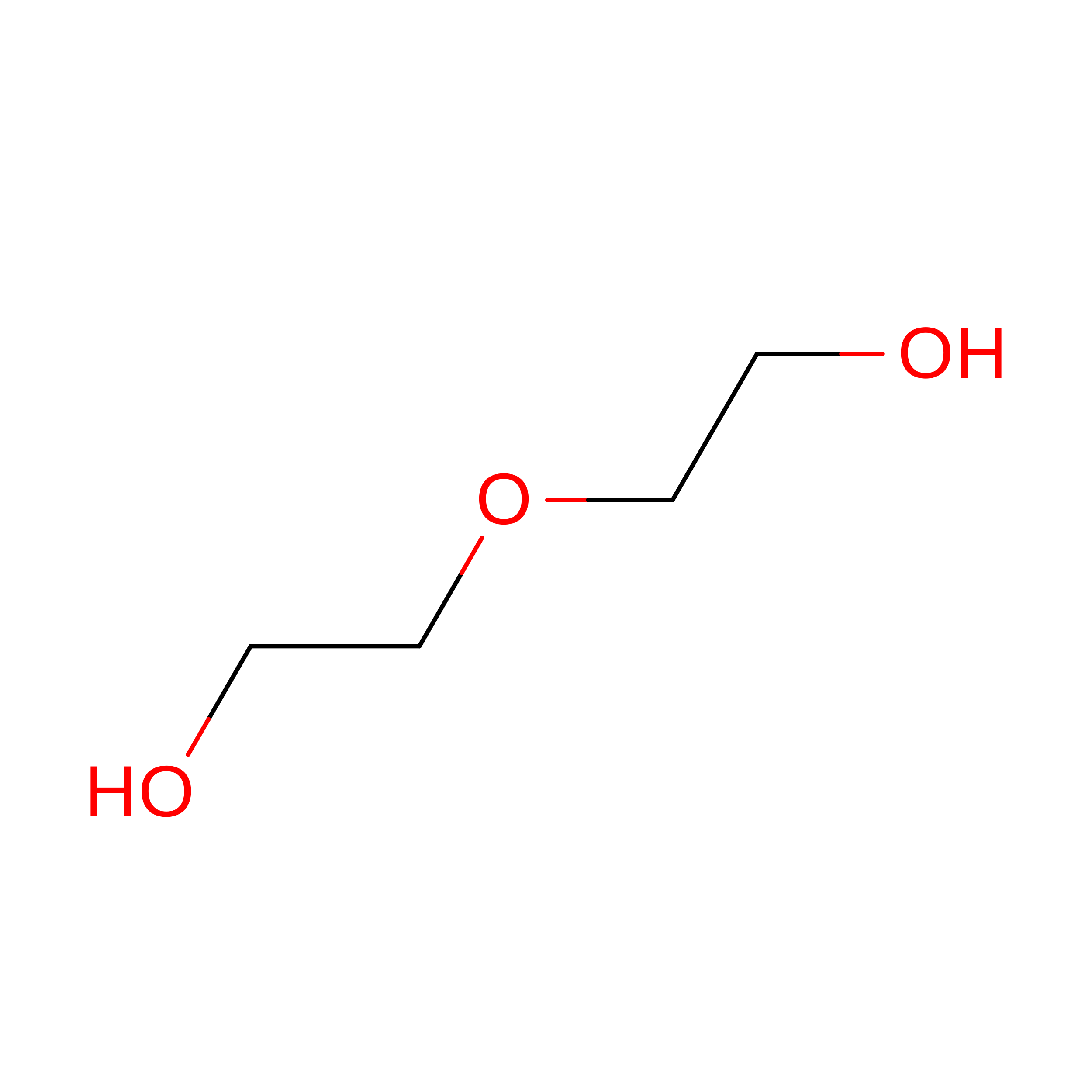
E [auth A]DI(HYDROXYETHYL)ETHER
C4 H10 O3
MTHSVFCYNBDYFN-UHFFFAOYSA-N
GOL

Query on GOL


Download:Ideal Coordinates CCD File
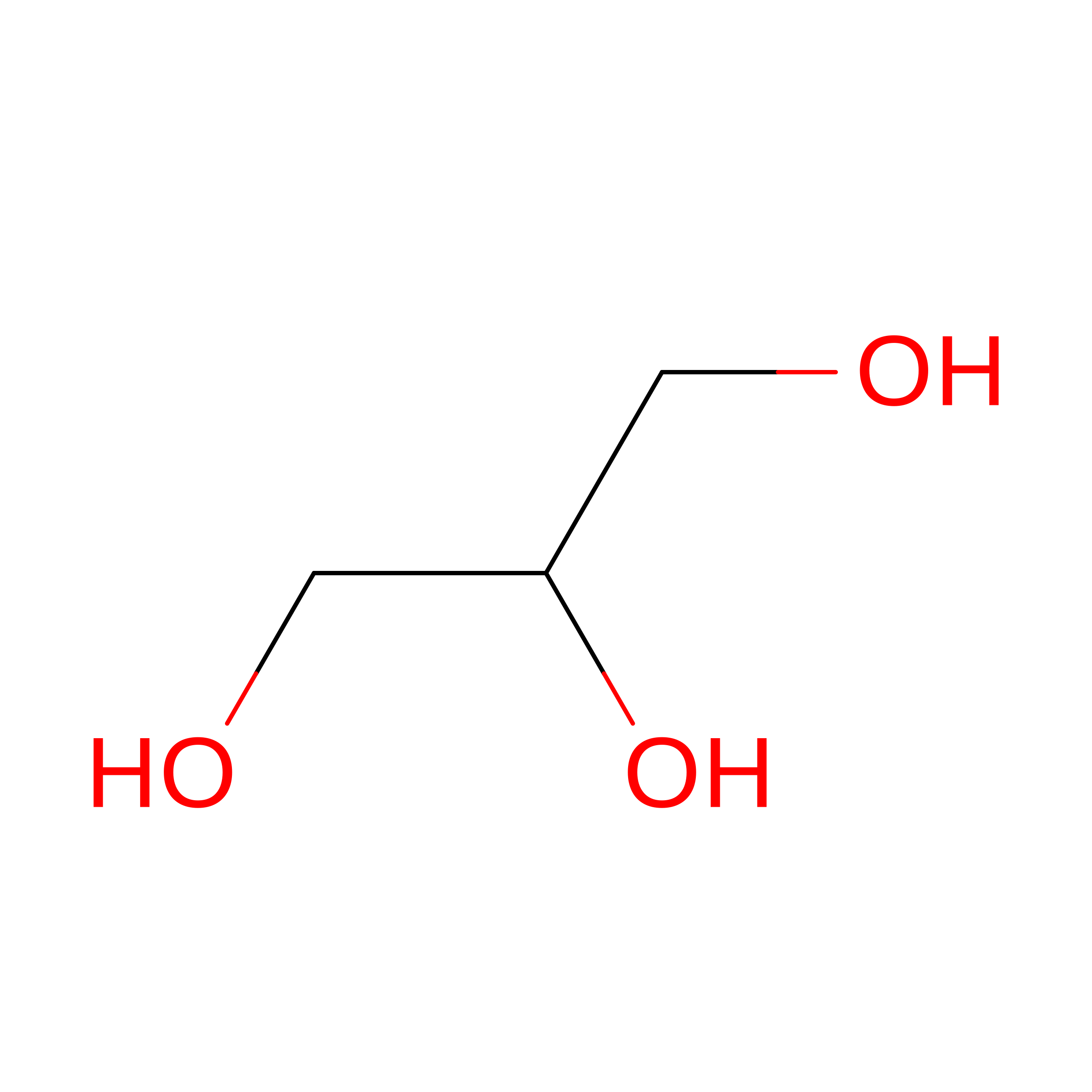
D [auth A]GLYCEROL
C3 H8 O3
PEDCQBHIVMGVHV-UHFFFAOYSA-N
EDO

Query on EDO


Download:Ideal Coordinates CCD File
C [auth A],
G [auth B],
H [auth B],
I [auth B]
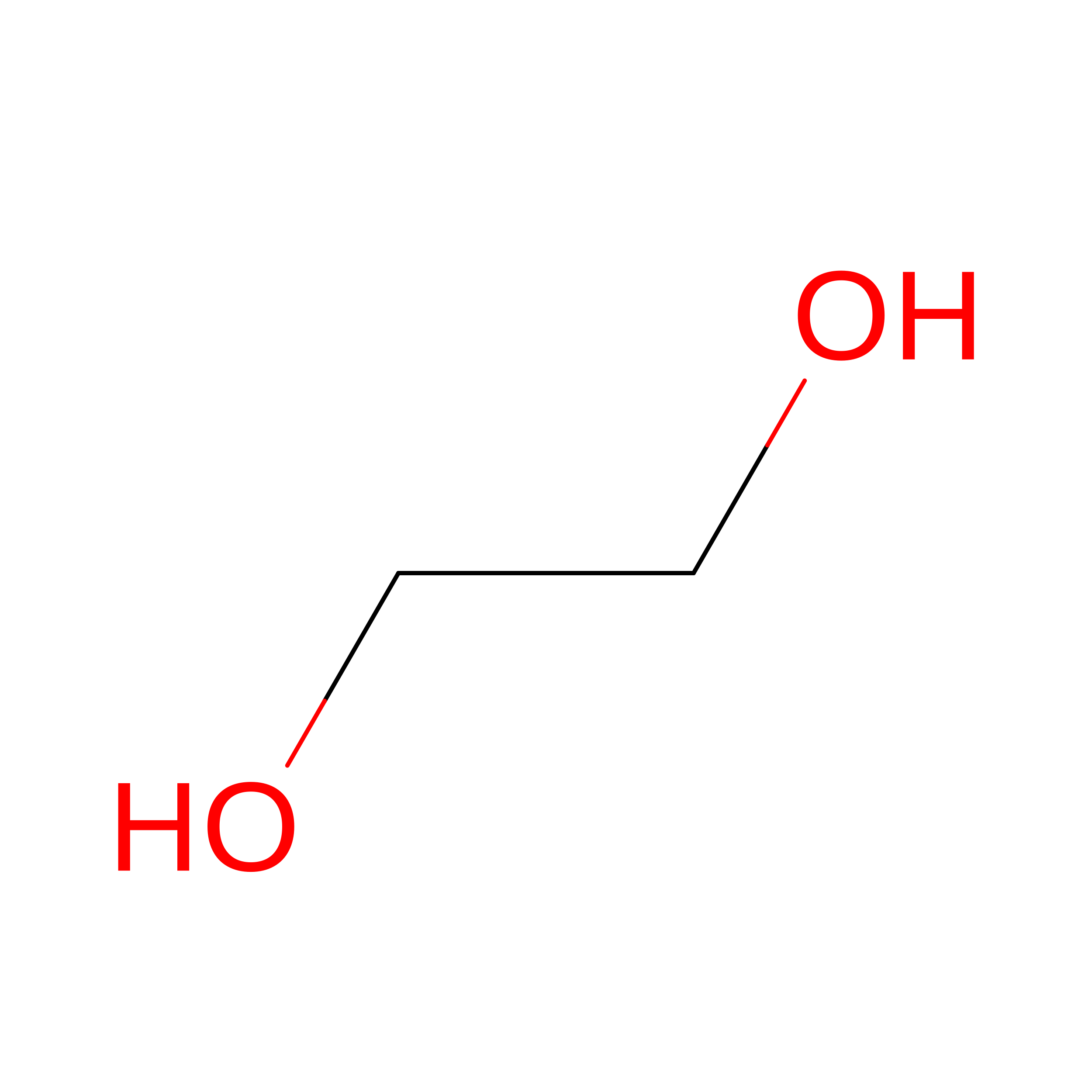
1,2-ETHANEDIOL
C2 H6 O2
LYCAIKOWRPUZTN-UHFFFAOYSA-N
MG

Query on MG


Download:Ideal Coordinates CCD File
F [auth A]MAGNESIUM ION
Mg
JLVVSXFLKOJNIY-UHFFFAOYSA-N

Experimental Data & Validation

Experimental Data

  • Method: X-RAY DIFFRACTION
  • Resolution: 1.61 Å
  • R-Value Free:  0.193 (Depositor), 0.204 (DCC) 
  • R-Value Work:  0.167 (Depositor), 0.180 (DCC) 
  • R-Value Observed: 0.168 (Depositor) 
Space Group: P 43 21 2
Unit Cell:
Length ( Å )Angle ( ˚ )
a = 109.883α = 90
b = 109.883β = 90
c = 126.772γ = 90
Software Package:
Software NamePurpose
REFMACrefinement
Aimlessdata scaling
PDB_EXTRACTdata extraction
XDSdata reduction
PHASERphasing
xia2data reduction

Structure Validation

View Full Validation Report


Entry History 

Deposition Data

Revision History  (Full details and data files)

  • Version 1.0: 2021-12-15
    Type: Initial release
  • Version 1.1: 2024-01-31
    Changes: Data collection, Refinement description