6XTZ | pdb_00006xtz

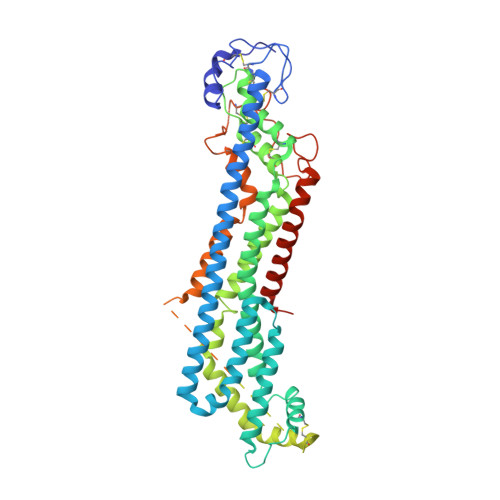
Structure of Dally-like protein in complex with O-palmitoleoyl serine


Experimental Data Snapshot

  • Method: X-RAY DIFFRACTION
  • Resolution: 2.21 Å
  • R-Value Free: 
    0.255 (Depositor), 0.258 (DCC) 
  • R-Value Work: 
    0.227 (Depositor), 0.230 (DCC) 
  • R-Value Observed: 
    0.228 (Depositor) 

Starting Model: experimental
View more details

wwPDB Validation 3D Report Full Report

Validation slider image for 6XTZ

Ligand Structure Quality Assessment 


This is version 3.2 of the entry. See complete history

Literature

Glypicans shield the Wnt lipid moiety to enable signalling at a distance.

McGough, I.J.Vecchia, L.Bishop, B.Malinauskas, T.Beckett, K.Joshi, D.O'Reilly, N.Siebold, C.Jones, E.Y.Vincent, J.P.

(2020) Nature 585: 85-90

  • DOI: https://doi.org/10.1038/s41586-020-2498-z
  • Primary Citation Related Structures: 
    6XTZ

  • PubMed Abstract: 

    A relatively small number of proteins have been suggested to act as morphogens-signalling molecules that spread within tissues to organize tissue repair and the specification of cell fate during development. Among them are Wnt proteins, which carry a palmitoleate moiety that is essential for signalling activity 1-3 . How a hydrophobic lipoprotein can spread in the aqueous extracellular space is unknown. Several mechanisms, such as those involving lipoprotein particles, exosomes or a specific chaperone, have been proposed to overcome this so-called Wnt solubility problem 4-6 . Here we provide evidence against these models and show that the Wnt lipid is shielded by the core domain of a subclass of glypicans defined by the Dally-like protein (Dlp). Structural analysis shows that, in the presence of palmitoleoylated peptides, these glypicans change conformation to create a hydrophobic space. Thus, glypicans of the Dlp family protect the lipid of Wnt proteins from the aqueous environment and serve as a reservoir from which Wnt proteins can be handed over to signalling receptors.


  • Organizational Affiliation
    • The Francis Crick Institute, London, UK.

Macromolecule Content 

  • Total Structure Weight: 63.8 kDa 
  • Atom Count: 3,546 
  • Modeled Residue Count: 421 
  • Deposited Residue Count: 555 
  • Unique protein chains: 1

Macromolecules

Find similar proteins by:|  3D Structure
Entity ID: 1
MoleculeChains  Sequence LengthOrganismDetailsImage
Dally-like, isoform A555Drosophila melanogasterMutation(s): 5 
Gene Names: 
UniProt
Find proteins for Q9VUG1 (Drosophila melanogaster)
Explore Q9VUG1 
Go to UniProtKB:  Q9VUG1
Entity Groups
Sequence Clusters30% Identity50% Identity70% Identity90% Identity95% Identity100% Identity
UniProt GroupQ9VUG1
Glycosylation
Glycosylation Sites: 1Go to GlyGen: Q9VUG1-1
Sequence Annotations
Expand
Reference Sequence

Small Molecules

Ligands 4 Unique
IDChains Name / Formula / InChI Key2D Diagram3D Interactions
O18
(Subject of Investigation/LOI)

Query on O18


Download:Ideal Coordinates CCD File
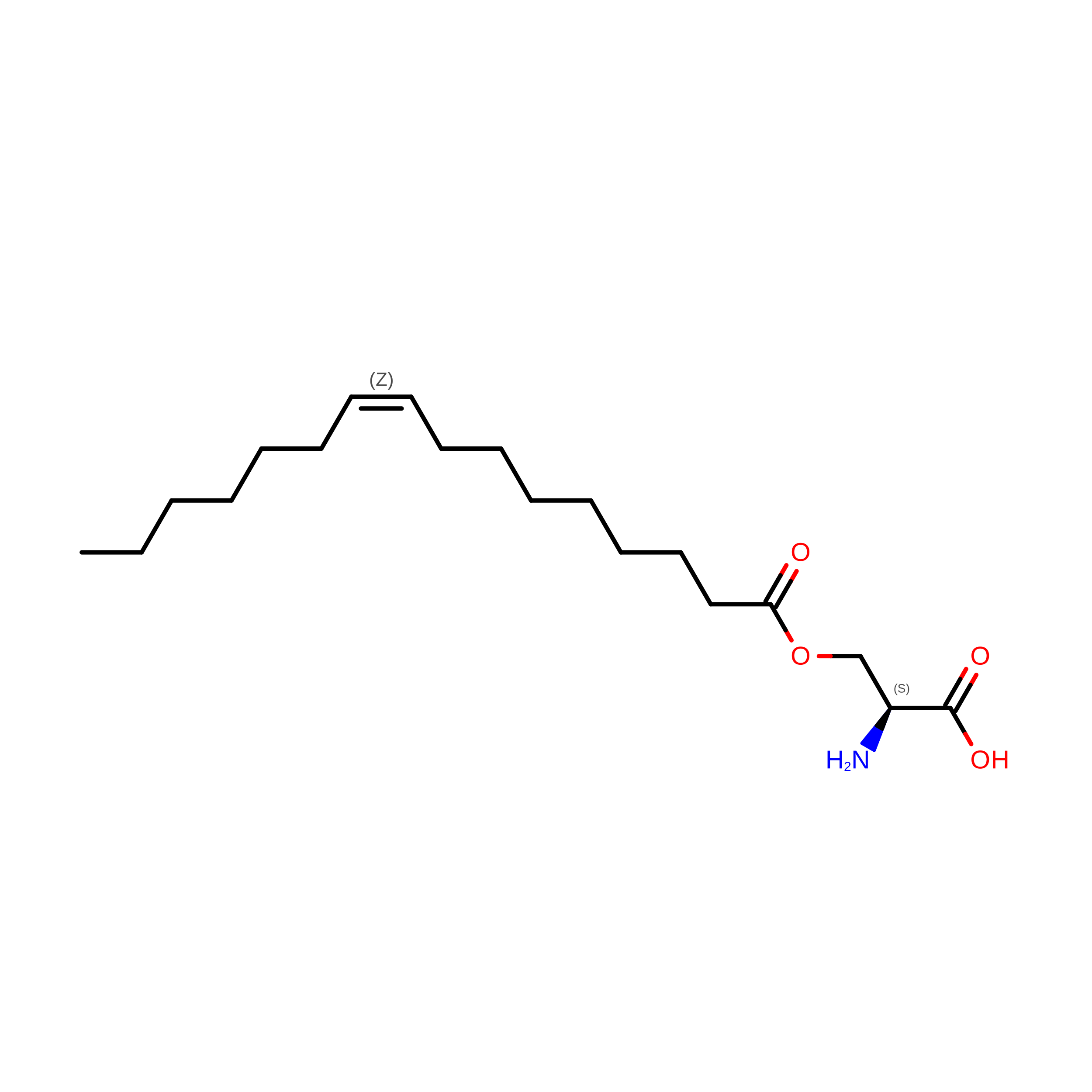
H [auth A]O-palmitoleoyl serine
C19 H35 N O4
BEQLUQLZPXGDLC-QWPQOLDESA-N
NAG

Query on NAG


Download:Ideal Coordinates CCD File
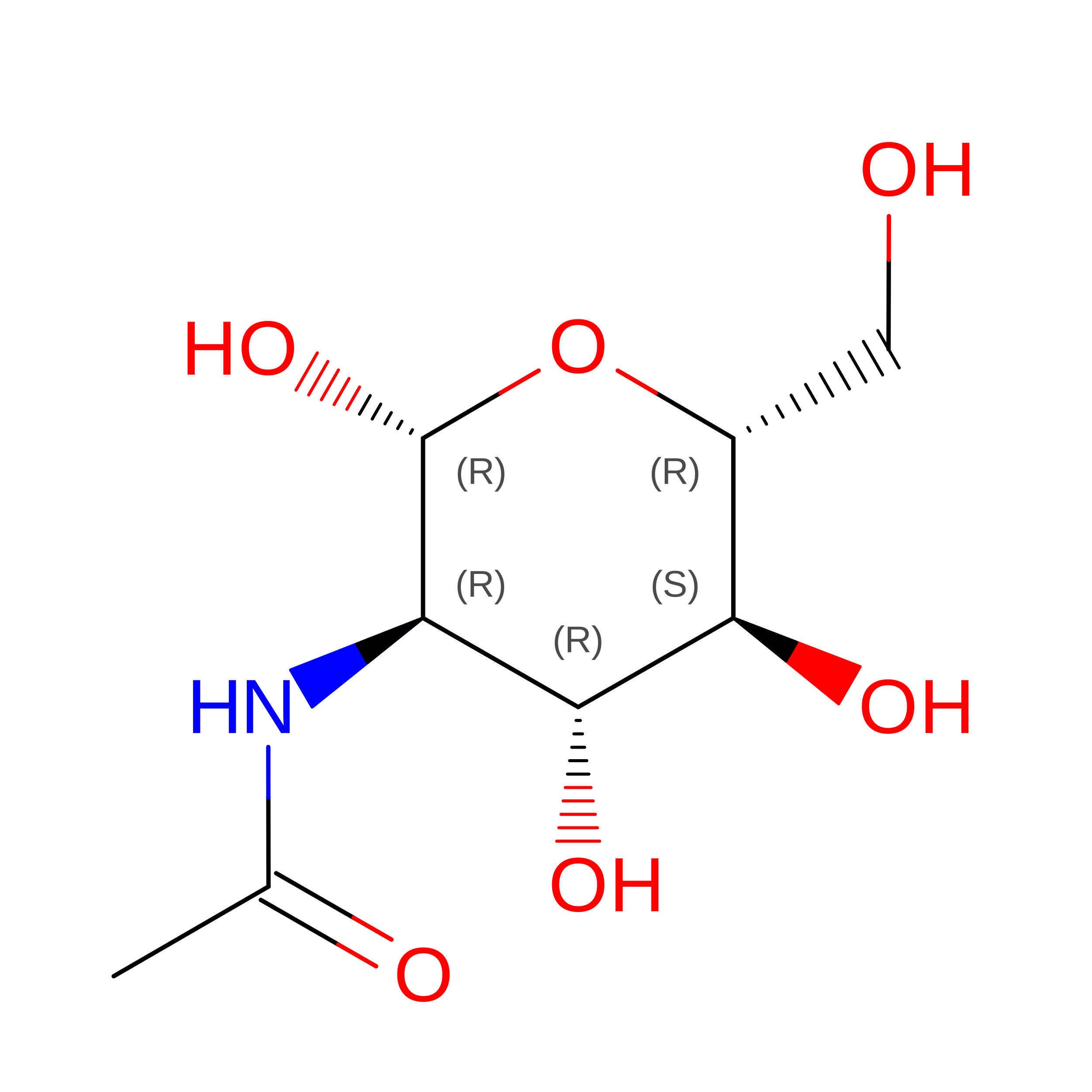
B [auth A]2-acetamido-2-deoxy-beta-D-glucopyranose
C8 H15 N O6
OVRNDRQMDRJTHS-FMDGEEDCSA-N
TRS

Query on TRS


Download:Ideal Coordinates CCD File
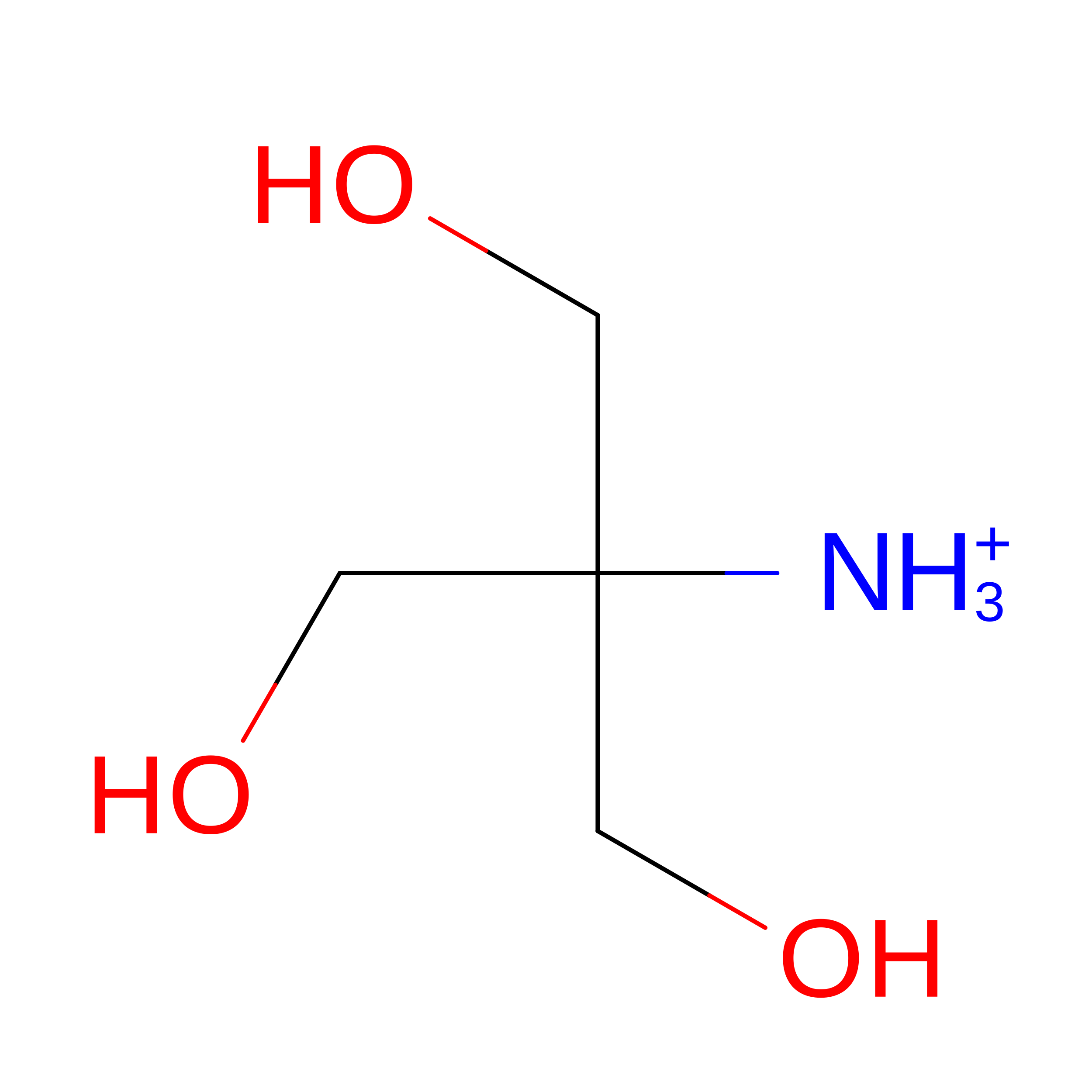
C [auth A]2-AMINO-2-HYDROXYMETHYL-PROPANE-1,3-DIOL
C4 H12 N O3
LENZDBCJOHFCAS-UHFFFAOYSA-O
GOL

Query on GOL


Download:Ideal Coordinates CCD File
D [auth A],
E [auth A],
F [auth A],
G [auth A]
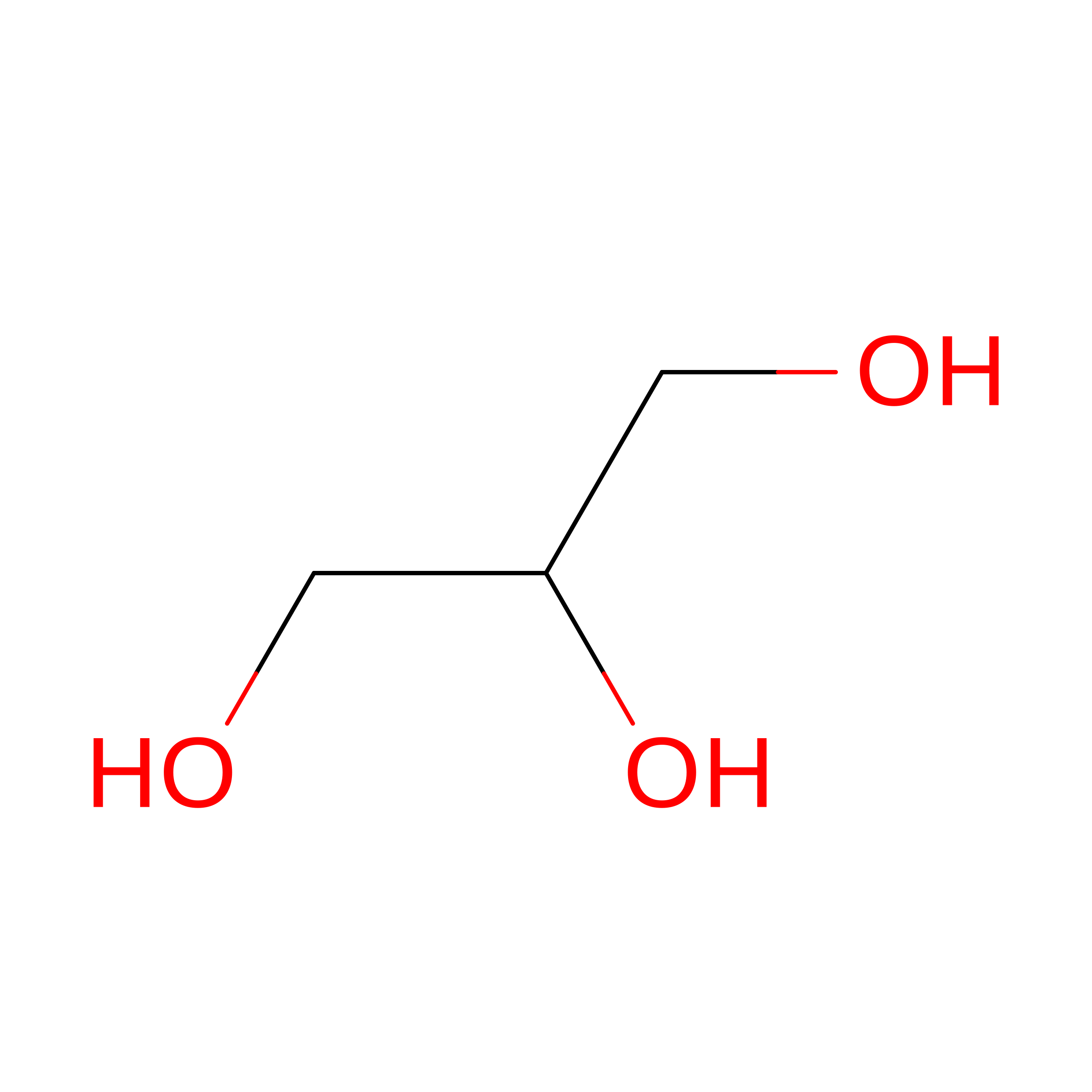
GLYCEROL
C3 H8 O3
PEDCQBHIVMGVHV-UHFFFAOYSA-N

Experimental Data & Validation

Experimental Data

  • Method: X-RAY DIFFRACTION
  • Resolution: 2.21 Å
  • R-Value Free:  0.255 (Depositor), 0.258 (DCC) 
  • R-Value Work:  0.227 (Depositor), 0.230 (DCC) 
  • R-Value Observed: 0.228 (Depositor) 
Space Group: P 21 21 21
Unit Cell:
Length ( Å )Angle ( ˚ )
a = 63.691α = 90
b = 77.38β = 90
c = 118.82γ = 90
Software Package:
Software NamePurpose
PHENIXrefinement
PHENIXrefinement
xia2data reduction
DIALSdata scaling
PHASERphasing

Structure Validation

View Full Validation Report


Ligand Structure Quality Assessment 


Entry History 

& Funding Information

Deposition Data


Funding OrganizationLocationGrant Number
The Francis Crick InstituteUnited KingdomFC001204
European Union (EU)European Union294523
European Union (EU)European Union647278
Cancer Research UKUnited KingdomC375/A17721
Cancer Research UKUnited KingdomC20724/A26752
Wellcome TrustUnited Kingdom102164/B/13/Z
Wellcome TrustUnited Kingdom203141/Z/16/Z

Revision History  (Full details and data files)

  • Version 1.0: 2020-07-29
    Type: Initial release
  • Version 1.1: 2020-08-05
    Changes: Database references
  • Version 2.0: 2020-08-26
    Changes: Advisory, Database references, Polymer sequence, Source and taxonomy, Structure summary
  • Version 2.1: 2020-09-16
    Changes: Database references
  • Version 3.0: 2023-09-27
    Changes: Advisory, Atomic model, Data collection, Database references, Derived calculations, Non-polymer description, Source and taxonomy, Structure summary
  • Version 3.1: 2024-01-24
    Changes: Refinement description
  • Version 3.2: 2024-10-16
    Changes: Structure summary