6SU8 | pdb_00006su8

Highly thermostable endoglucanase Cel7B


Experimental Data Snapshot

  • Method: X-RAY DIFFRACTION
  • Resolution: 2.48 Å
  • R-Value Free: 
    0.190 (Depositor), 0.202 (DCC) 
  • R-Value Work: 
    0.170 (Depositor), 0.179 (DCC) 

Starting Model: experimental
View more details

wwPDB Validation 3D Report Full Report

Validation slider image for 6SU8

Ligand Structure Quality Assessment 


This is version 3.2 of the entry. See complete history

Literature

Structural and biochemical characterization of a family 7 highly thermostable endoglucanase from the fungus Rasamsonia emersonii.

Schiano-di-Cola, C.Kolaczkowski, B.Sorensen, T.H.Christensen, S.J.Cavaleiro, A.M.Windahl, M.S.Borch, K.Morth, J.P.Westh, P.

(2020) FEBS J 287: 2577-2596

  • DOI: https://doi.org/10.1111/febs.15151
  • Primary Citation Related Structures: 
    6SU8

  • PubMed Abstract: 

    Thermostable cellulases from glycoside hydrolase family 7 (GH7) are the main components of enzymatic mixtures for industrial saccharification of lignocellulose. Activity improvement of these enzymes via rational design is a promising strategy to alleviate the industrial costs, but it requires detailed structural knowledge. While substantial biochemical and structural data are available for GH7 cellobiohydrolases, endoglucanases are more elusive and only few structures have been solved so far. Here, we report a new crystal structure and biochemical characterization of a thermostable endoglucanase from the thermophilic ascomycete Rasamsonia emersonii, ReCel7B. The enzyme was compared with the homologous endoglucanase from the mesophilic model ascomycete Trichoderma reesei (TrCel7B), which unlike ReCel7B possesses an additional carbohydrate-binding module (CBM). With a temperature optimum of 80 °C, ReCel7B displayed a number of differences in activity and ability to synergize with cellobiohydrolases compared to TrCel7B. We improved both binding and kinetics in a chimeric variant of ReCel7B and a CBM, while we observe the opposite effect when the CBM was removed in TrCel7B. The crystal structure of ReCel7B was determined at 2.48 Å resolution, with R work and R free factors of 0.182 and 0.206, respectively. Structural analyses revealed that ReCel7B has increased rigidity in a number of peripheral loops compared to TrCel7B and fewer aromatics in the substrate-binding cleft. An increased number of glycosylations were identified in ReCel7B, and we propose a stabilizing mechanism for one of the glycans. Global structure-function interpretations of ReCel7B highlight the differences in temperature stability, turnover, binding, and cellulose accessibility in GH7 endoglucanases. DATABASE: Structural data are available in RCSB Protein Data Bank database under the accession number 6SU8. ENZYMES: ReCel7B, endoglucanase (EC3.2.1.4) from Rasamsonia emersonii; ReCel7A, cellobiohydrolase (EC3.2.1.176) from Rasamsonia emersonii; TrCel7B, endoglucanase (EC3.2.1.4) from Trichoderma reesei; TrCel7A, cellobiohydrolase (EC3.2.1.176) from Trichoderma reesei.


  • Organizational Affiliation
    • Department of Science and Environment, Roskilde University, Denmark.

Macromolecule Content 

  • Total Structure Weight: 130.49 kDa 
  • Atom Count: 9,354 
  • Modeled Residue Count: 1,188 
  • Deposited Residue Count: 1,191 
  • Unique protein chains: 1

Macromolecules

Find similar proteins by:|  3D Structure
Entity ID: 1
MoleculeChains  Sequence LengthOrganismDetailsImage
Glucanase
A, B, C
397Rasamsonia emersoniiMutation(s): 1 
EC: 3.2.1
UniProt
Find proteins for W8P1L2 (Rasamsonia emersonii)
Explore W8P1L2 
Go to UniProtKB:  W8P1L2
Entity Groups
Sequence Clusters30% Identity50% Identity70% Identity90% Identity95% Identity100% Identity
UniProt GroupW8P1L2
Glycosylation
Glycosylation Sites: 5
Sequence Annotations
Expand
Reference Sequence

Oligosaccharides

Help  
Entity ID: 2
MoleculeChains Length2D Diagram GlycosylationD Interactions
beta-D-mannopyranose-(1-4)-2-acetamido-2-deoxy-beta-D-glucopyranose-(1-4)-2-acetamido-2-deoxy-beta-D-glucopyranose
D
3N-Glycosylation
Glycosylation Resources
GlyTouCan: G15407YE
GlyCosmos: G15407YE
GlyGen: G15407YE
Entity ID: 3
MoleculeChains Length2D Diagram GlycosylationD Interactions
2-acetamido-2-deoxy-beta-D-glucopyranose-(1-4)-2-acetamido-2-deoxy-beta-D-glucopyranose
E, F, G, H
2N-Glycosylation
Glycosylation Resources
GlyTouCan: G42666HT
GlyCosmos: G42666HT
GlyGen: G42666HT

Small Molecules

Ligands 3 Unique
IDChains Name / Formula / InChI Key2D Diagram3D Interactions
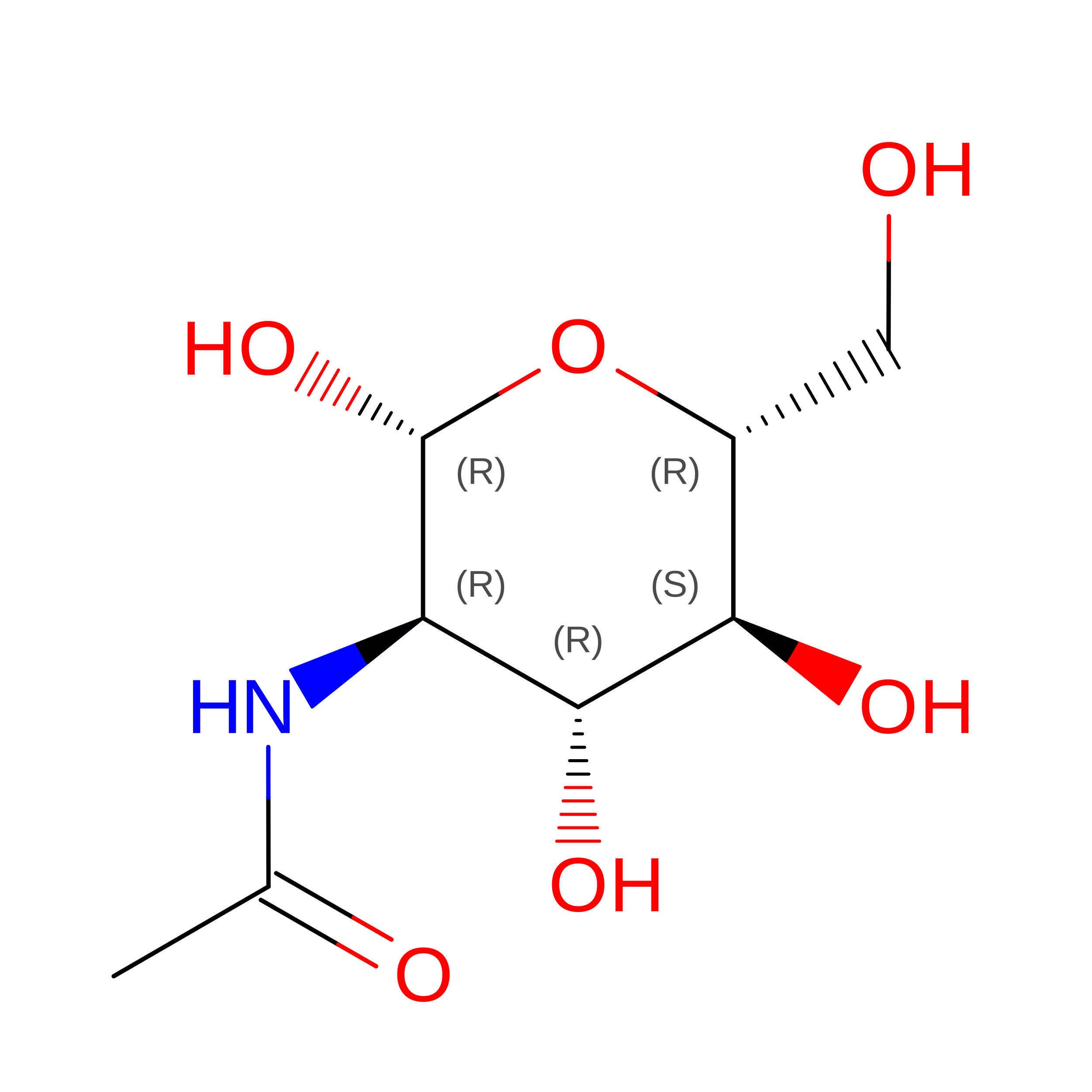
NAG
(Subject of Investigation/LOI)

Query on NAG


Download:Ideal Coordinates CCD File
I [auth A]
J [auth A]
K [auth A]
L [auth A]
N [auth B]
I [auth A],
J [auth A],
K [auth A],
L [auth A],
N [auth B],
O [auth B],
P [auth B],
Q [auth C],
R [auth C],
S [auth C]
2-acetamido-2-deoxy-beta-D-glucopyranose
C8 H15 N O6
OVRNDRQMDRJTHS-FMDGEEDCSA-N
MLI

Query on MLI


Download:Ideal Coordinates CCD File
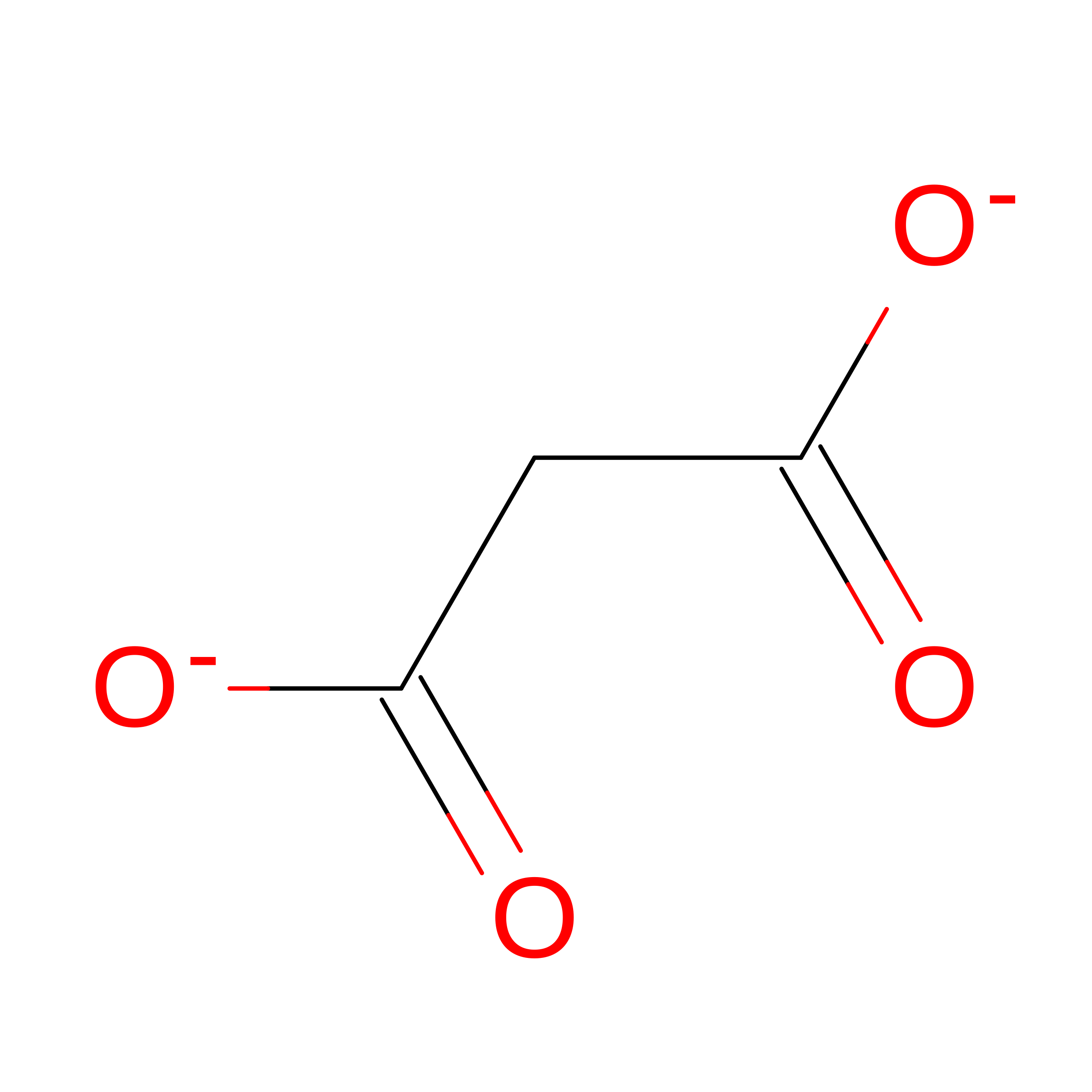
M [auth A]MALONATE ION
C3 H2 O4
OFOBLEOULBTSOW-UHFFFAOYSA-L
NA

Query on NA


Download:Ideal Coordinates CCD File
T [auth C]SODIUM ION
Na
FKNQFGJONOIPTF-UHFFFAOYSA-N
Modified Residues  1 Unique
IDChains TypeFormula2D DiagramParent
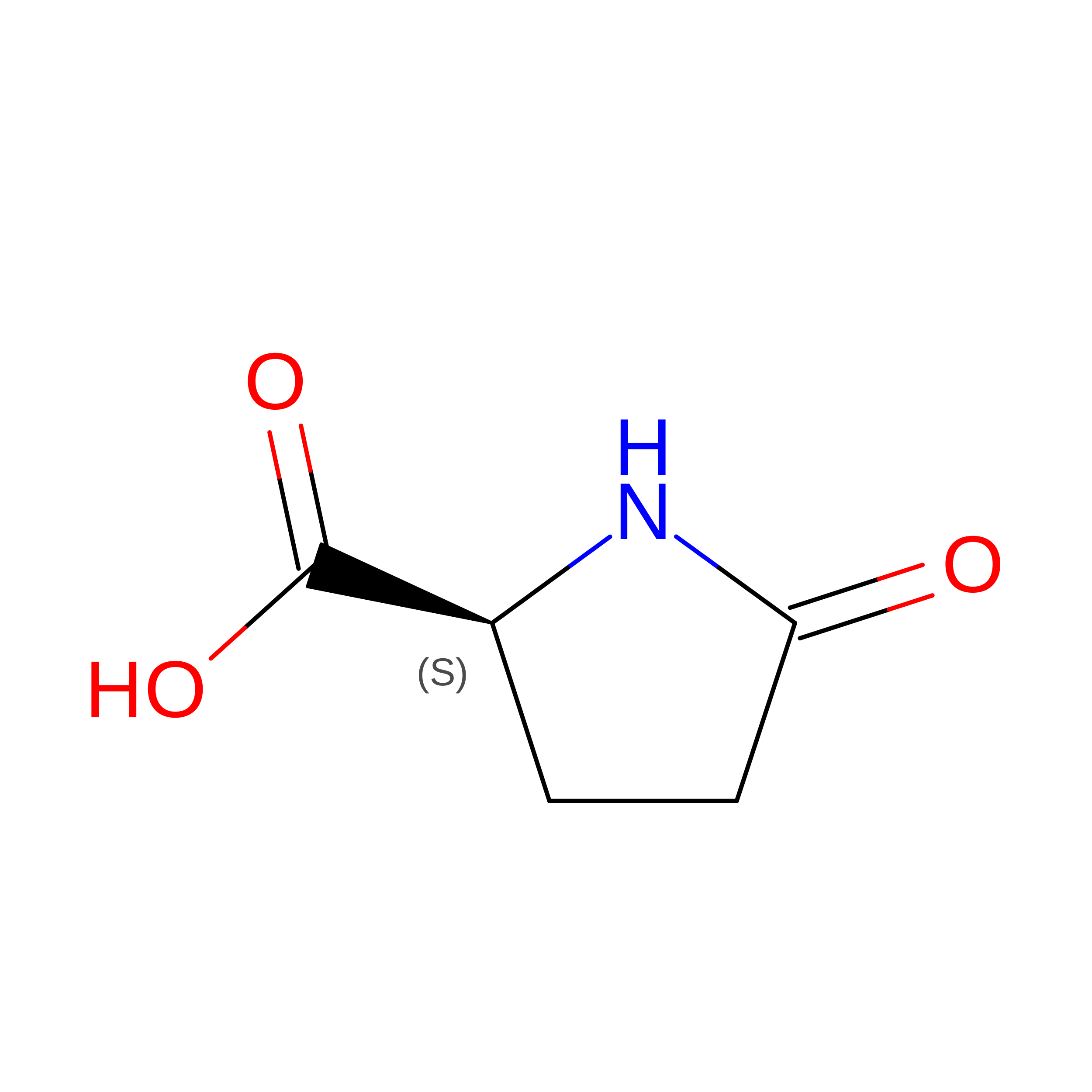
PCA
Query on PCA
A, B, C
L-PEPTIDE LINKINGC5 H7 N O3GLN

Experimental Data & Validation

Experimental Data

  • Method: X-RAY DIFFRACTION
  • Resolution: 2.48 Å
  • R-Value Free:  0.190 (Depositor), 0.202 (DCC) 
  • R-Value Work:  0.170 (Depositor), 0.179 (DCC) 
Space Group: C 2 2 21
Unit Cell:
Length ( Å )Angle ( ˚ )
a = 113.367α = 90
b = 263.212β = 90
c = 197.824γ = 90
Software Package:
Software NamePurpose
PHENIXrefinement
PHENIXrefinement
xia2data reduction
xia2data scaling
PHASERphasing

Structure Validation

View Full Validation Report


Ligand Structure Quality Assessment 


Entry History 

& Funding Information

Deposition Data


Funding OrganizationLocationGrant Number
Danish Agency for Science Technology and InnovationDenmark5150-00020B

Revision History  (Full details and data files)

  • Version 1.0: 2019-11-06
    Type: Initial release
  • Version 2.0: 2019-12-04
    Changes: Database references, Polymer sequence
  • Version 2.1: 2020-03-11
    Changes: Data collection
  • Version 2.2: 2020-07-01
    Changes: Database references
  • Version 3.0: 2020-07-29
    Type: Remediation
    Reason: Carbohydrate remediation
    Changes: Advisory, Atomic model, Data collection, Derived calculations, Structure summary
  • Version 3.1: 2024-01-24
    Changes: Data collection, Database references, Refinement description, Structure summary
  • Version 3.2: 2024-10-23
    Changes: Structure summary