Download Mendeley
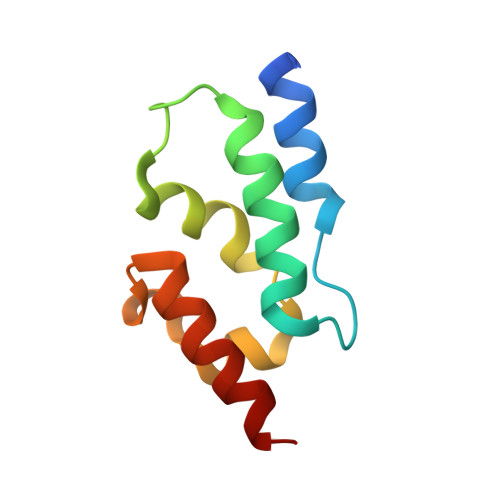
Crystal and solution structures reveal oligomerization of individual capsid homology domains of Drosophila Arc.
Hallin, E.I., Markusson, S., Bottger, L., Torda, A.E., Bramham, C.R., Kursula, P.(2021) PLoS One 16: e0251459-e0251459
- PubMed: 33989344 Search on PubMedSearch on PubMed Central
- DOI: https://doi.org/10.1371/journal.pone.0251459
- Primary Citation Related Structures:
6SIB, 6SID, 6SIE - PubMed Abstract:
Synaptic plasticity is vital for brain function and memory formation. One of the key proteins in long-term synaptic plasticity and memory is the activity-regulated cytoskeleton-associated protein (Arc). Mammalian Arc forms virus-like capsid structures in a process requiring the N-terminal domain and contains two C-terminal lobes that are structural homologues to retroviral capsids. Drosophila has two isoforms of Arc, dArc1 and dArc2, with low sequence similarity to mammalian Arc, but lacking a large N-terminal domain. Both dArc isoforms are related to the Ty3/gypsy retrotransposon capsid, consisting of N- and C-terminal lobes. Structures of dArc1, as well as capsids formed by both dArc isoforms, have been recently determined. We carried out structural characterization of the four individual dArc lobe domains. As opposed to the corresponding mammalian Arc lobe domains, which are monomeric, the dArc lobes were all oligomeric in solution, indicating a strong propensity for homophilic interactions. A truncated N-lobe from dArc2 formed a domain-swapped dimer in the crystal structure, resulting in a novel dimer interaction that could be relevant for capsid assembly or other dArc functions. This domain-swapped structure resembles the dimeric protein C of flavivirus capsids, as well as the structure of histones dimers, domain-swapped transcription factors, and membrane-interacting BAK domains. The strong oligomerization properties of the isolated dArc lobe domains explain the ability of dArc to form capsids in the absence of any large N-terminal domain, in contrast to the mammalian protein.
- Department of Biomedicine, University of Bergen, Bergen, Norway.
Organizational Affiliation: