6Q6C | pdb_00006q6c

Pore-modulating toxins exploit inherent slow inactivation to block K+ channels


Experimental Data Snapshot

  • Method: X-RAY DIFFRACTION
  • Resolution: 1.30 Å
  • R-Value Free: 
    0.202 (Depositor), 0.204 (DCC) 
  • R-Value Work: 
    0.162 (Depositor), 0.163 (DCC) 
  • R-Value Observed: 
    0.164 (Depositor) 

Starting Model: experimental
View more details

wwPDB Validation 3D Report Full Report

Validation slider image for 6Q6C

This is version 1.4 of the entry. See complete history

Literature

Pore-modulating toxins exploit inherent slow inactivation to block K+channels.

Karbat, I.Altman-Gueta, H.Fine, S.Szanto, T.Hamer-Rogotner, S.Dym, O.Frolow, F.Gordon, D.Panyi, G.Gurevitz, M.Reuveny, E.

(2019) Proc Natl Acad Sci U S A 116: 18700-18709

  • DOI: https://doi.org/10.1073/pnas.1908903116
  • Primary Citation Related Structures: 
    6Q61, 6Q6C

  • PubMed Abstract: 

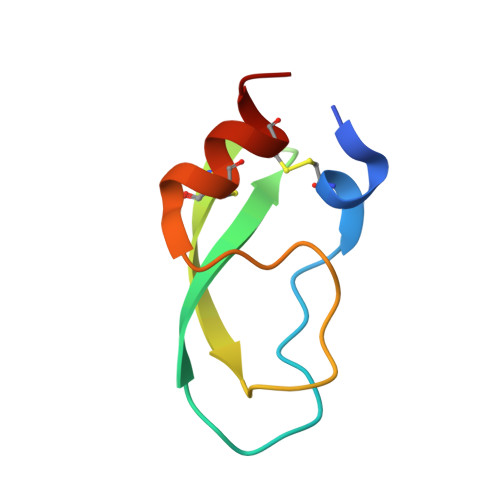
    Voltage-dependent potassium channels (K v s) gate in response to changes in electrical membrane potential by coupling a voltage-sensing module with a K + -selective pore. Animal toxins targeting K v s are classified as pore blockers, which physically plug the ion conduction pathway, or as gating modifiers, which disrupt voltage sensor movements. A third group of toxins blocks K + conduction by an unknown mechanism via binding to the channel turrets. Here, we show that Conkunitzin-S1 (Cs1), a peptide toxin isolated from cone snail venom, binds at the turrets of K v 1.2 and targets a network of hydrogen bonds that govern water access to the peripheral cavities that surround the central pore. The resulting ectopic water flow triggers an asymmetric collapse of the pore by a process resembling that of inherent slow inactivation. Pore modulation by animal toxins exposes the peripheral cavity of K + channels as a novel pharmacological target and provides a rational framework for drug design.


  • Organizational Affiliation
    • Department of Biomolecular Sciences, Weizmann Institute of Science, 76100 Rehovot, Israel.

Macromolecule Content 

  • Total Structure Weight: 14.57 kDa 
  • Atom Count: 1,156 
  • Modeled Residue Count: 117 
  • Deposited Residue Count: 122 
  • Unique protein chains: 1

Macromolecules

Find similar proteins by:|  3D Structure
Entity ID: 1
MoleculeChains  Sequence LengthOrganismDetailsImage
Kunitz-type conkunitzin-S1
A, B
61Conus striatusMutation(s): 1 
UniProt
Find proteins for P0C1X2 (Conus striatus)
Explore P0C1X2 
Go to UniProtKB:  P0C1X2
Entity Groups
Sequence Clusters30% Identity50% Identity70% Identity90% Identity95% Identity100% Identity
UniProt GroupP0C1X2
Sequence Annotations
Expand
Reference Sequence

Small Molecules

Ligands 3 Unique
IDChains Name / Formula / InChI Key2D Diagram3D Interactions
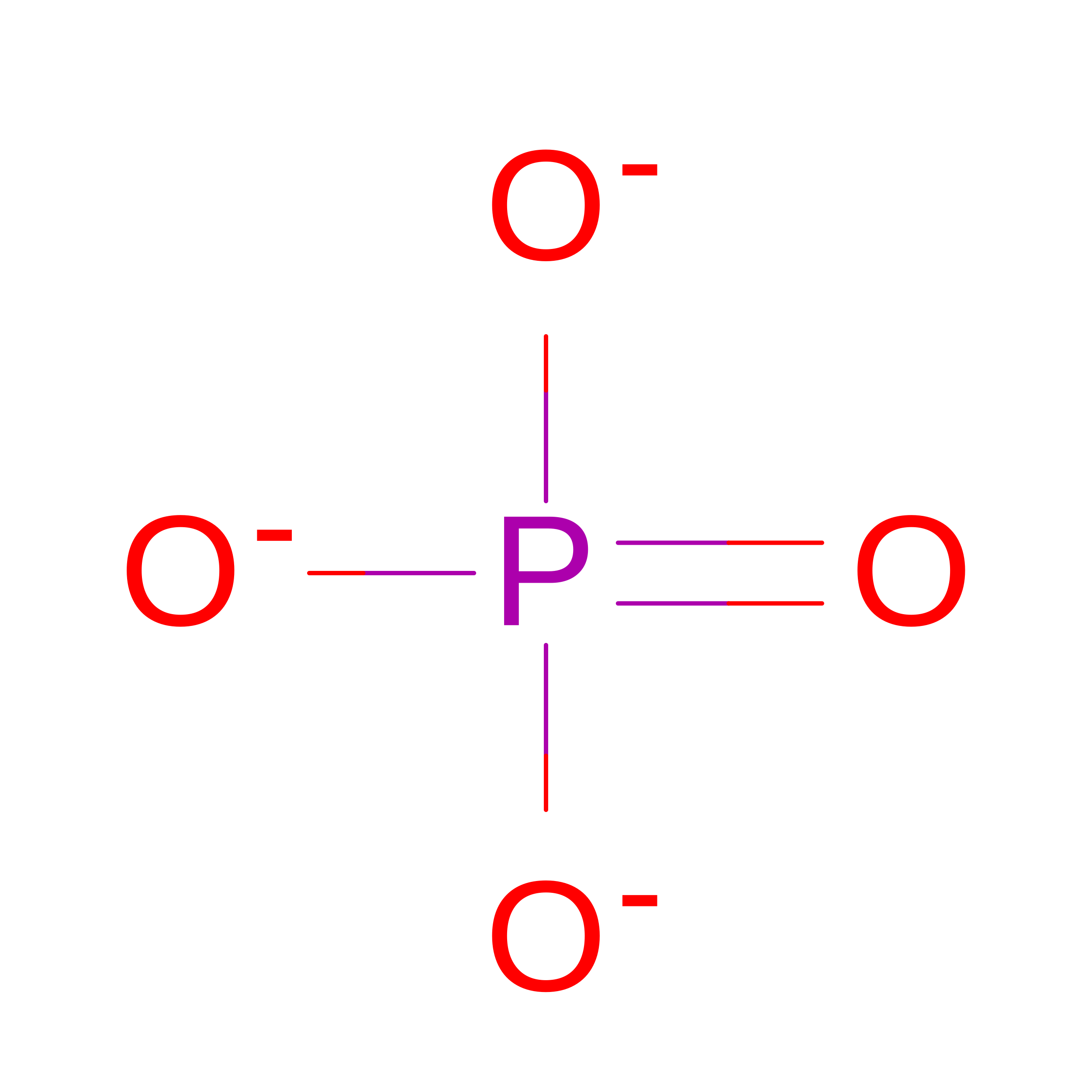
PO4

Query on PO4


Download:Ideal Coordinates CCD File
C [auth A],
J [auth B]
PHOSPHATE ION
O4 P
NBIIXXVUZAFLBC-UHFFFAOYSA-K
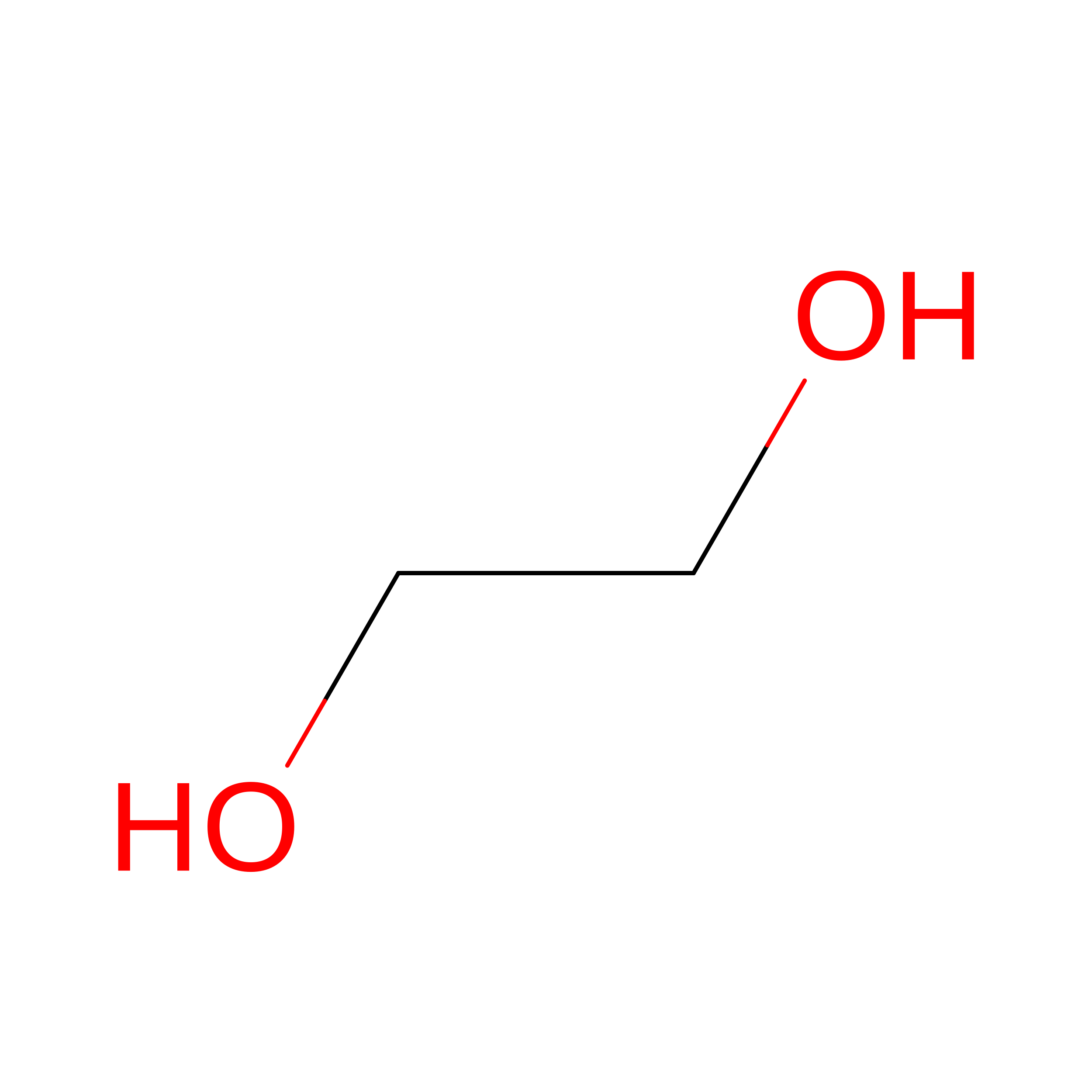
EDO

Query on EDO


Download:Ideal Coordinates CCD File
I [auth B]1,2-ETHANEDIOL
C2 H6 O2
LYCAIKOWRPUZTN-UHFFFAOYSA-N
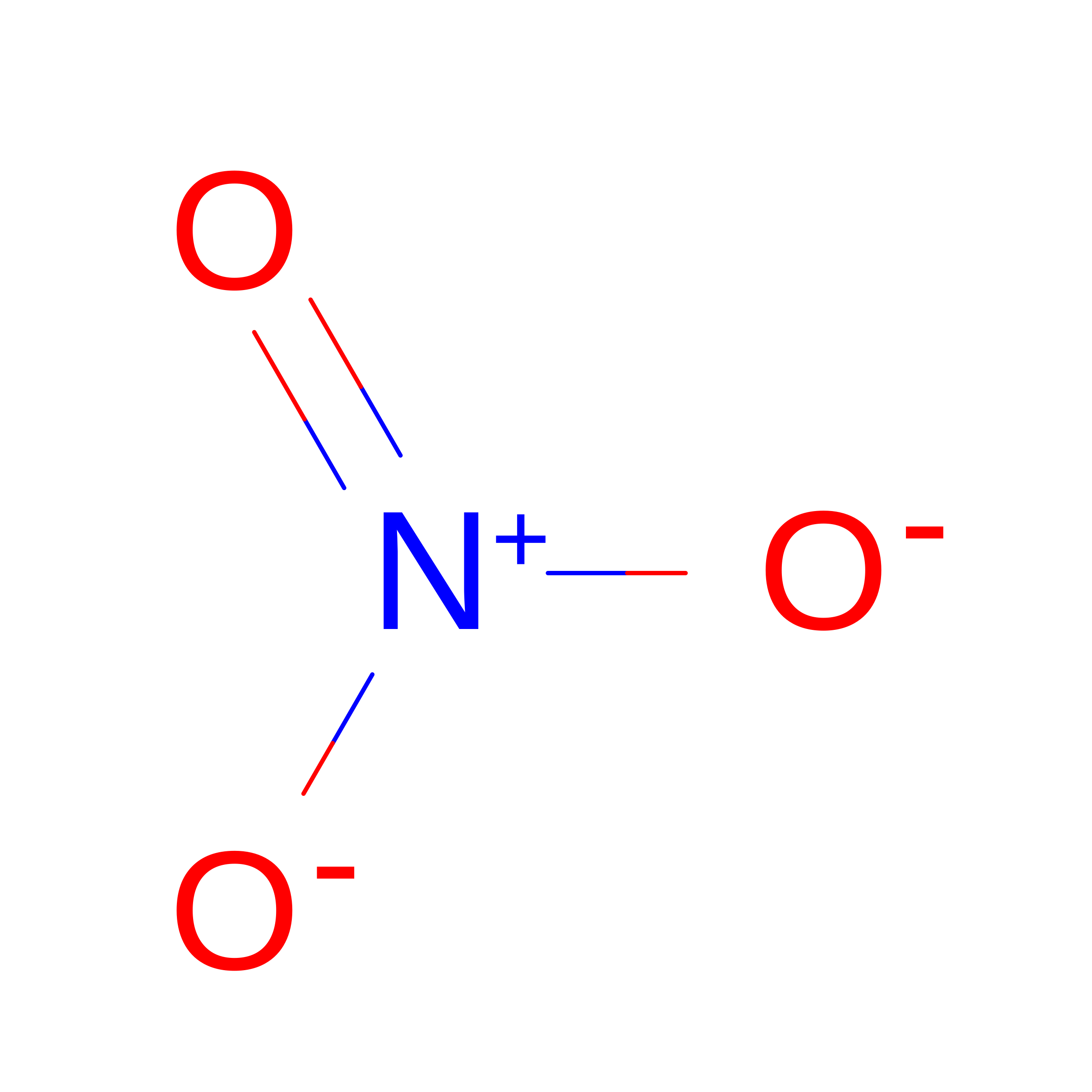
NO3

Query on NO3


Download:Ideal Coordinates CCD File
D [auth A]
E [auth A]
F [auth A]
G [auth A]
H [auth A]
D [auth A],
E [auth A],
F [auth A],
G [auth A],
H [auth A],
K [auth B]
NITRATE ION
N O3
NHNBFGGVMKEFGY-UHFFFAOYSA-N

Experimental Data & Validation

Experimental Data

  • Method: X-RAY DIFFRACTION
  • Resolution: 1.30 Å
  • R-Value Free:  0.202 (Depositor), 0.204 (DCC) 
  • R-Value Work:  0.162 (Depositor), 0.163 (DCC) 
  • R-Value Observed: 0.164 (Depositor) 
Space Group: P 32 2 1
Unit Cell:
Length ( Å )Angle ( ˚ )
a = 64.835α = 90
b = 64.835β = 90
c = 66.825γ = 120
Software Package:
Software NamePurpose
REFMACrefinement
Epinormdata reduction
HKL-2000data scaling
MOLREPphasing

Structure Validation

View Full Validation Report


Entry History 

& Funding Information

Deposition Data


Funding OrganizationLocationGrant Number
Israel Science FoundationIsrael1248/2015

Revision History  (Full details and data files)

  • Version 1.0: 2019-08-21
    Type: Initial release
  • Version 1.1: 2019-09-04
    Changes: Data collection, Database references
  • Version 1.2: 2019-09-18
    Changes: Data collection, Database references
  • Version 1.3: 2024-01-24
    Changes: Data collection, Database references, Refinement description
  • Version 1.4: 2024-11-13
    Changes: Structure summary