Download Mendeley
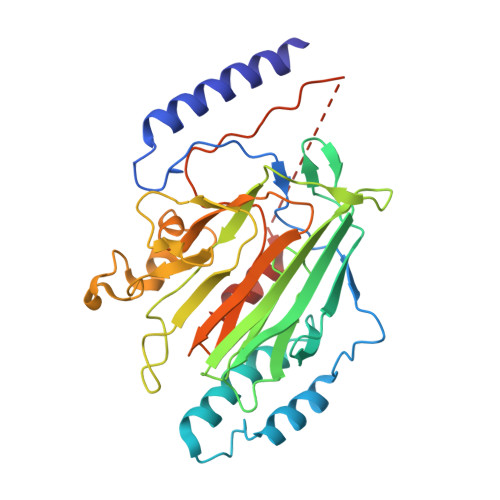
The structure of Streptococcus gordonii surface protein SspB in complex with TEV peptide provides clues to oral streptococcal adherence to salivary agglutinin.
Mieher, J.L., Schormann, N., Purushotham, S., Krishnan, V.B., Wu, R., Patel, M., Wu, H., Deivanayagam, C.(2026) Infect Immun : e0046725-e0046725
- PubMed: 41636513 Search on PubMedSearch on PubMed Central
- DOI: https://doi.org/10.1128/iai.00467-25
- Primary Citation Related Structures:
6Q2K, 6Q2L - PubMed Abstract:
Streptococcus gordonii is a commensal bacterium in the oral cavity and has many surface adhesins that have been well characterized. SspA/B belongs to the Antigen I/II-like family of proteins, which are well known for their multifunctional adherence capabilities. Most AgI/II-like proteins adhere to salivary agglutinin (also known as glycoprotein 340, Gp340). In an effort to identify the putative binding site on the AgI/II-like family of proteins, we conducted structural studies to determine the V-domain of SspB. In this paper, we report the structure of SspB's V-domain in complex with a TEV-peptide that was inserted to cleave the histidine tag at the C-terminus after purification. This peptide shared sequence and structural homology with a helical region on the scavenger receptor cysteine-rich (SRCR) domain of Gp340. Our studies with the synthetic peptide PepCD1 SRCR show that it inhibits the Streptococcus mutans biofilm formation in a dose-dependent manner. A comprehensive comparative analysis of this site with the corresponding sites in the homologous V-domains of S. mutans AgI/II and GbpC established that most of these interface residues were conserved. Based on the structural data, mutational analysis was initiated to study the effect of binding-interface residues on the ability of each of these V-domains from S. mutans and S. gordonii to adhere to salivary agglutinin. Here, we report for the first time the binding site for the V-regions that are distinct among oral streptococci, which provides potential opportunities for therapeutic intervention of pathogenic species.
- Department of Biochemistry and Molecular Genetics, The University of Alabama at Birmingham, Birmingham, Alabama, USA.
Organizational Affiliation: