6OQ7 | pdb_00006oq7

Structure of the GTD domain of Clostridium difficile toxin B in complex with VHH E3


Experimental Data Snapshot

  • Method: X-RAY DIFFRACTION
  • Resolution: 2.39 Å
  • R-Value Free: 
    0.236 (Depositor), 0.236 (DCC) 
  • R-Value Work: 
    0.197 (Depositor), 0.197 (DCC) 
  • R-Value Observed: 
    0.199 (Depositor) 

Starting Model: experimental
View more details

wwPDB Validation 3D Report Full Report

Validation slider image for 6OQ7

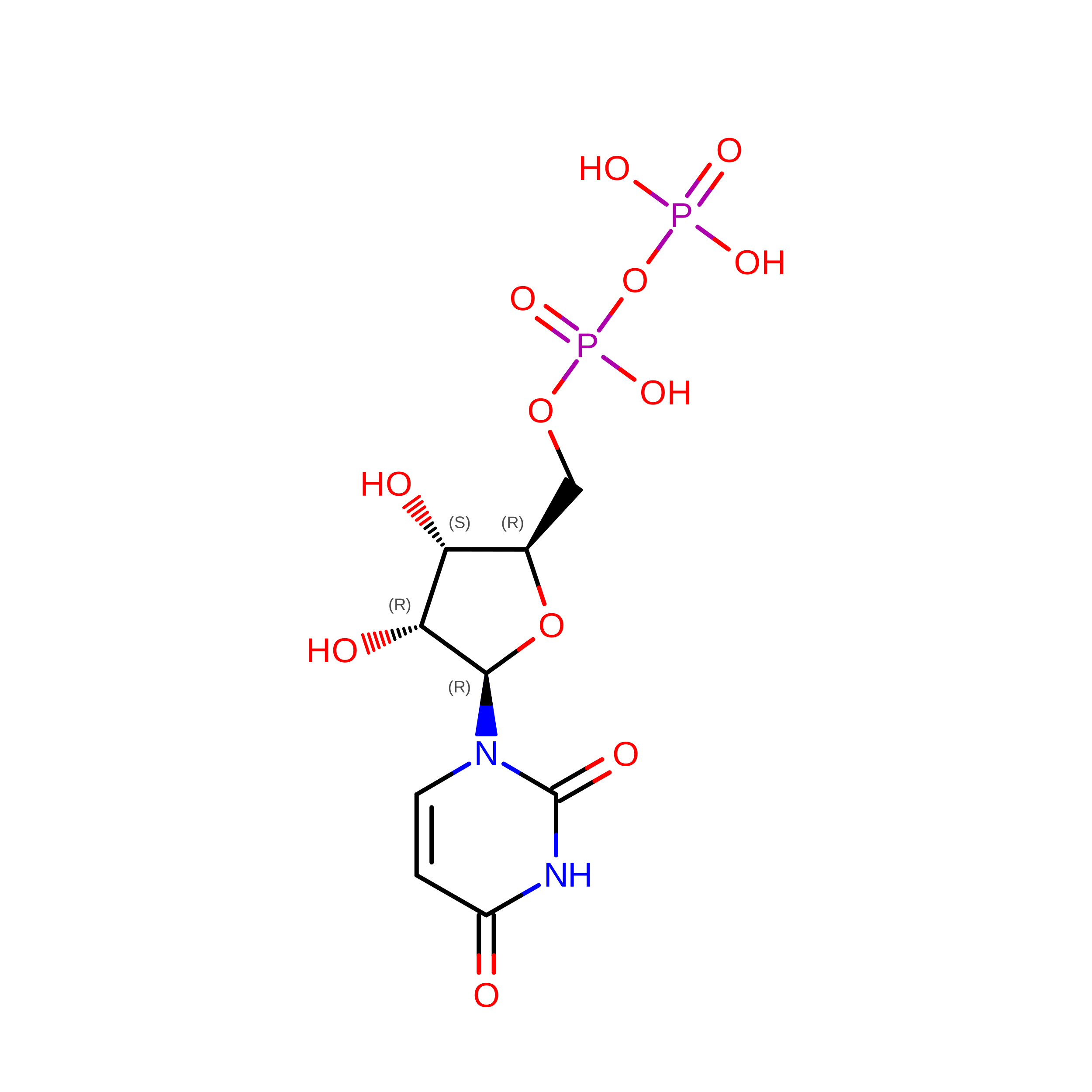
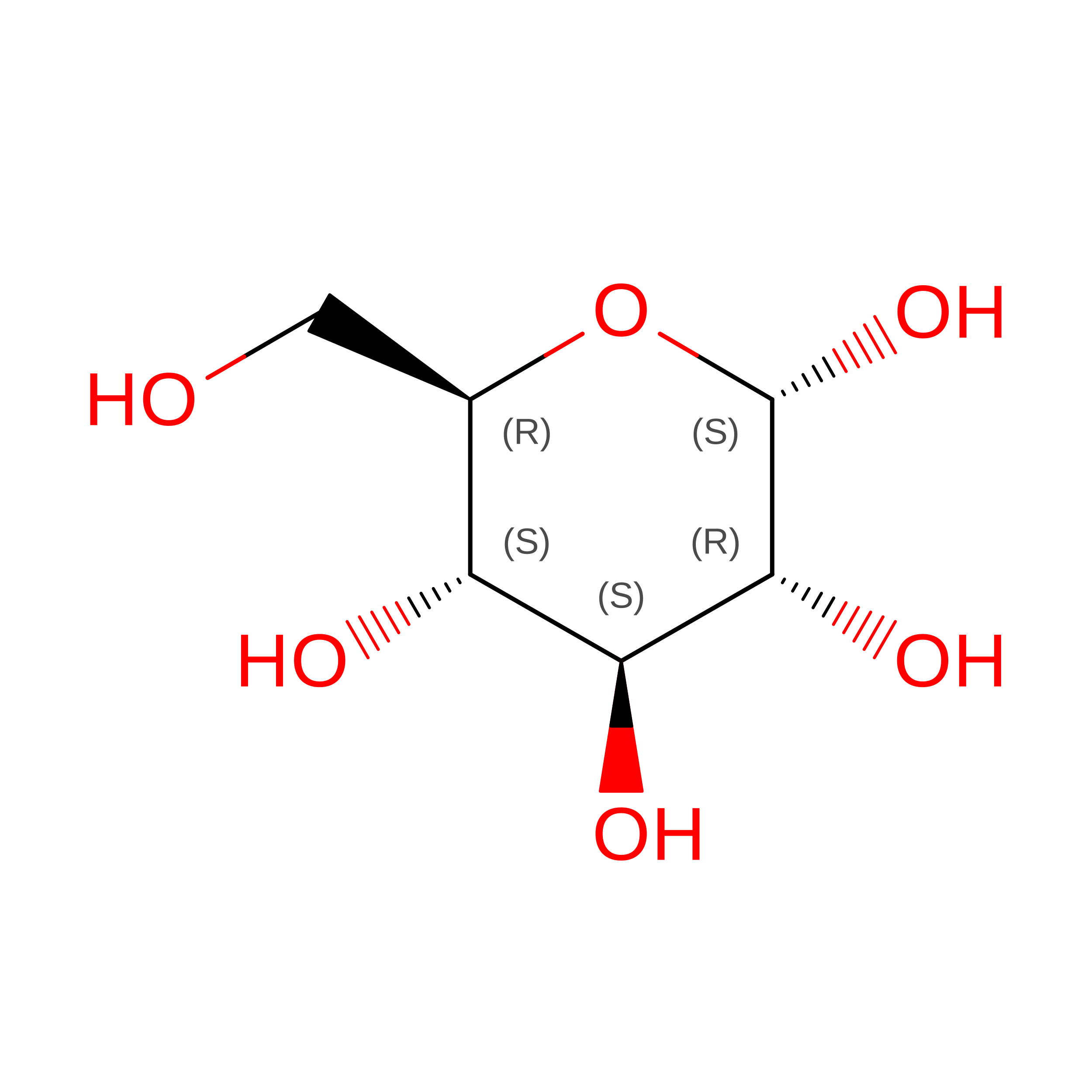
Ligand Structure Quality Assessment 


This is version 1.6 of the entry. See complete history

Literature

Structure of the full-length Clostridium difficile toxin B.

Chen, P.Lam, K.H.Liu, Z.Mindlin, F.A.Chen, B.Gutierrez, C.B.Huang, L.Zhang, Y.Hamza, T.Feng, H.Matsui, T.Bowen, M.E.Perry, K.Jin, R.

(2019) Nat Struct Mol Biol 26: 712-719

  • DOI: https://doi.org/10.1038/s41594-019-0268-0
  • Primary Citation Related Structures: 
    6OQ5, 6OQ6, 6OQ7, 6OQ8

  • PubMed Abstract: 

    Clostridium difficile is an opportunistic pathogen that establishes in the colon when the gut microbiota are disrupted by antibiotics or disease. C. difficile infection (CDI) is largely caused by two virulence factors, TcdA and TcdB. Here, we report a 3.87-Å-resolution crystal structure of TcdB holotoxin that captures a unique conformation of TcdB at endosomal pH. Complementary biophysical studies suggest that the C-terminal combined repetitive oligopeptides (CROPs) domain of TcdB is dynamic and can sample open and closed conformations that may facilitate modulation of TcdB activity in response to environmental and cellular cues during intoxication. Furthermore, we report three crystal structures of TcdB-antibody complexes that reveal how antibodies could specifically inhibit the activities of individual TcdB domains. Our studies provide novel insight into the structure and function of TcdB holotoxin and identify intrinsic vulnerabilities that could be exploited to develop new therapeutics and vaccines for the treatment of CDI.


  • Organizational Affiliation
    • Department of Physiology and Biophysics, University of California, Irvine, Irvine, CA, USA.

Macromolecule Content 

  • Total Structure Weight: 78.94 kDa 
  • Atom Count: 5,368 
  • Modeled Residue Count: 650 
  • Deposited Residue Count: 686 
  • Unique protein chains: 2

Macromolecules

Find similar proteins by:|  3D Structure
Entity ID: 1
MoleculeChains  Sequence LengthOrganismDetailsImage
Toxin B549Clostridioides difficileMutation(s): 0 
Gene Names: tcdB
EC: 3.4.22
UniProt
Find proteins for Q9EXR0 (Clostridioides difficile)
Explore Q9EXR0 
Go to UniProtKB:  Q9EXR0
Entity Groups
Sequence Clusters30% Identity50% Identity70% Identity90% Identity95% Identity100% Identity
UniProt GroupQ9EXR0
Sequence Annotations
Expand
Reference Sequence
Find similar proteins by:|  3D Structure
Entity ID: 2
MoleculeChains  Sequence LengthOrganismDetailsImage
E3B [auth C]137CamelidaeMutation(s): 0 

Experimental Data & Validation

Experimental Data

  • Method: X-RAY DIFFRACTION
  • Resolution: 2.39 Å
  • R-Value Free:  0.236 (Depositor), 0.236 (DCC) 
  • R-Value Work:  0.197 (Depositor), 0.197 (DCC) 
  • R-Value Observed: 0.199 (Depositor) 
Space Group: P 21 21 21
Unit Cell:
Length ( Å )Angle ( ˚ )
a = 66.018α = 90
b = 104.096β = 90
c = 113.825γ = 90
Software Package:
Software NamePurpose
REFMACrefinement
HKL-2000data reduction
HKL-2000data scaling
PHASERphasing

Structure Validation

View Full Validation Report


Ligand Structure Quality Assessment 


Entry History 

& Funding Information

Deposition Data


Funding OrganizationLocationGrant Number
National Institutes of Health/National Center for Research Resources (NIH/NCRR)United States--

Revision History  (Full details and data files)

  • Version 1.0: 2019-07-10
    Type: Initial release
  • Version 1.1: 2019-07-31
    Changes: Data collection, Database references
  • Version 1.2: 2019-08-21
    Changes: Data collection, Database references
  • Version 1.3: 2019-12-04
    Changes: Author supporting evidence, Data collection
  • Version 1.4: 2020-07-29
    Type: Remediation
    Reason: Carbohydrate remediation
    Changes: Data collection, Derived calculations, Structure summary
  • Version 1.5: 2023-10-11
    Changes: Data collection, Database references, Refinement description, Structure summary
  • Version 1.6: 2024-10-23
    Changes: Structure summary