6N9T | pdb_00006n9t

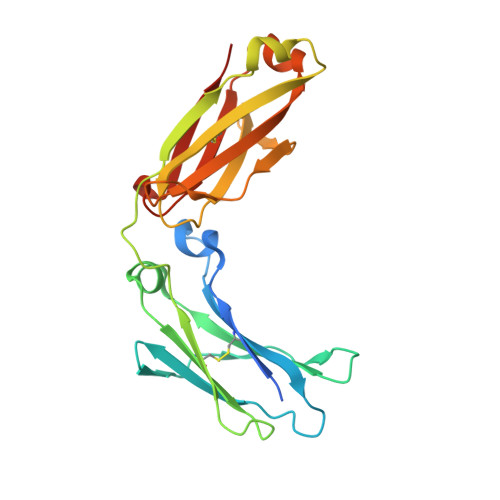
Structure of a peptide-based photo-affinity cross-linker with Herceptin Fc


Experimental Data Snapshot

  • Method: X-RAY DIFFRACTION
  • Resolution: 2.58 Å
  • R-Value Free: 
    0.265 (Depositor), 0.265 (DCC) 
  • R-Value Work: 
    0.229 (Depositor), 0.230 (DCC) 
  • R-Value Observed: 
    0.231 (Depositor) 

wwPDB Validation 3D Report Full Report

Validation slider image for 6N9T

This is version 2.1 of the entry. See complete history

Literature

Development, Optimization, and Structural Characterization of an Efficient Peptide-Based Photoaffinity Cross-Linking Reaction for Generation of Homogeneous Conjugates from Wild-Type Antibodies.

Vance, N.Zacharias, N.Ultsch, M.Li, G.Fourie, A.Liu, P.LaFrance-Vanasse, J.Ernst, J.A.Sandoval, W.Kozak, K.R.Phillips, G.Wang, W.Sadowsky, J.

(2019) Bioconjug Chem 30: 148-160

  • DOI: https://doi.org/10.1021/acs.bioconjchem.8b00809
  • Primary Citation Related Structures: 
    6N9T

  • PubMed Abstract: 

    Site-specific conjugation of small molecules to antibodies represents an attractive goal for the development of more homogeneous targeted therapies and diagnostics. Most site-specific conjugation strategies require modification or removal of antibody glycans or interchain disulfide bonds or engineering of an antibody mutant that bears a reactive handle. While such methods are effective, they complicate the process of preparing antibody conjugates and can negatively impact biological activity. Herein we report the development and detailed characterization of a robust photoaffinity cross-linking method for site-specific conjugation to fully glycosylated wild-type antibodies. The method employs a benzoylphenylalanine (Bpa) mutant of a previously described 13-residue peptide derived from phage display to bind tightly to the Fc domain; upon UV irradiation, the Bpa residue forms a diradical that reacts with the bound antibody. After the initial discovery of an effective Bpa mutant peptide and optimization of the reaction conditions to enable efficient conjugation without concomitant UV-induced photodamage of the antibody, we assessed the scope of the photoconjugation reaction across different human and nonhuman antibodies and antibody mutants. Next, the specific site of conjugation on a human antibody was characterized in detail by mass spectrometry experiments and at atomic resolution by X-ray crystallography. Finally, we adapted the photoconjugation method to attach a cytotoxic payload site-specifically to a wild-type antibody and showed that the resulting conjugate is both stable in plasma and as potent as a conventional antibody-drug conjugate in cells, portending well for future biological applications.


  • Organizational Affiliation
    • Research & Early Development , Genentech, Inc. , 1 DNA Way , South San Francisco , California 94080 , United States.

Macromolecule Content 

  • Total Structure Weight: 56.37 kDa 
  • Atom Count: 3,894 
  • Modeled Residue Count: 440 
  • Deposited Residue Count: 474 
  • Unique protein chains: 2

Macromolecules

Find similar proteins by:|  3D Structure
Entity ID: 1
MoleculeChains  Sequence LengthOrganismDetailsImage
Immunoglobulin G1 FCA,
C [auth B]
224Homo sapiensMutation(s): 0 
UniProt
Find proteins for Q6MZV7 (Homo sapiens)
Explore Q6MZV7 
Go to UniProtKB:  Q6MZV7
Entity Groups
Sequence Clusters30% Identity50% Identity70% Identity90% Identity95% Identity100% Identity
UniProt GroupQ6MZV7
Glycosylation
Glycosylation Sites: 1
Sequence Annotations
Expand
Reference Sequence
Find similar proteins by:  Sequence   |   3D Structure  
Entity ID: 2
MoleculeChains  Sequence LengthOrganismDetailsImage
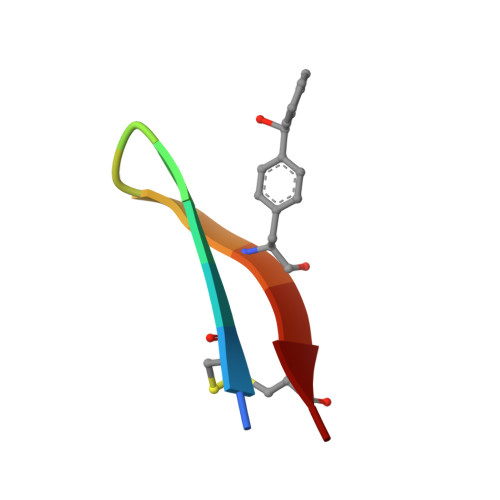
Photo-affinity peptideB [auth E],
D [auth F]
13synthetic constructMutation(s): 0 

Oligosaccharides

Help  
Entity ID: 3
MoleculeChains Length2D Diagram GlycosylationD Interactions
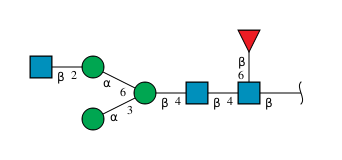
2-acetamido-2-deoxy-beta-D-glucopyranose-(1-2)-alpha-D-mannopyranose-(1-6)-[alpha-D-mannopyranose-(1-3)]beta-D-mannopyranose-(1-4)-2-acetamido-2-deoxy-beta-D-glucopyranose-(1-4)-[beta-L-fucopyranose-(1-6)]2-acetamido-2-deoxy-beta-D-glucopyranoseE [auth C]7N-Glycosylation
Glycosylation Resources
GlyTouCan: G20449BJ
GlyCosmos: G20449BJ
GlyGen: G20449BJ
Entity ID: 4
MoleculeChains Length2D Diagram GlycosylationD Interactions
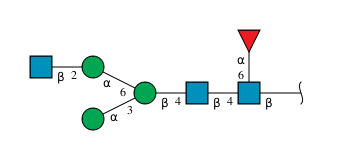
2-acetamido-2-deoxy-beta-D-glucopyranose-(1-2)-alpha-D-mannopyranose-(1-6)-[alpha-D-mannopyranose-(1-3)]beta-D-mannopyranose-(1-4)-2-acetamido-2-deoxy-beta-D-glucopyranose-(1-4)-[alpha-L-fucopyranose-(1-6)]2-acetamido-2-deoxy-beta-D-glucopyranoseF [auth D]7N-Glycosylation
Glycosylation Resources
GlyTouCan: G45889JQ
GlyCosmos: G45889JQ
GlyGen: G45889JQ

Small Molecules

Modified Residues  1 Unique
IDChains TypeFormula2D DiagramParent
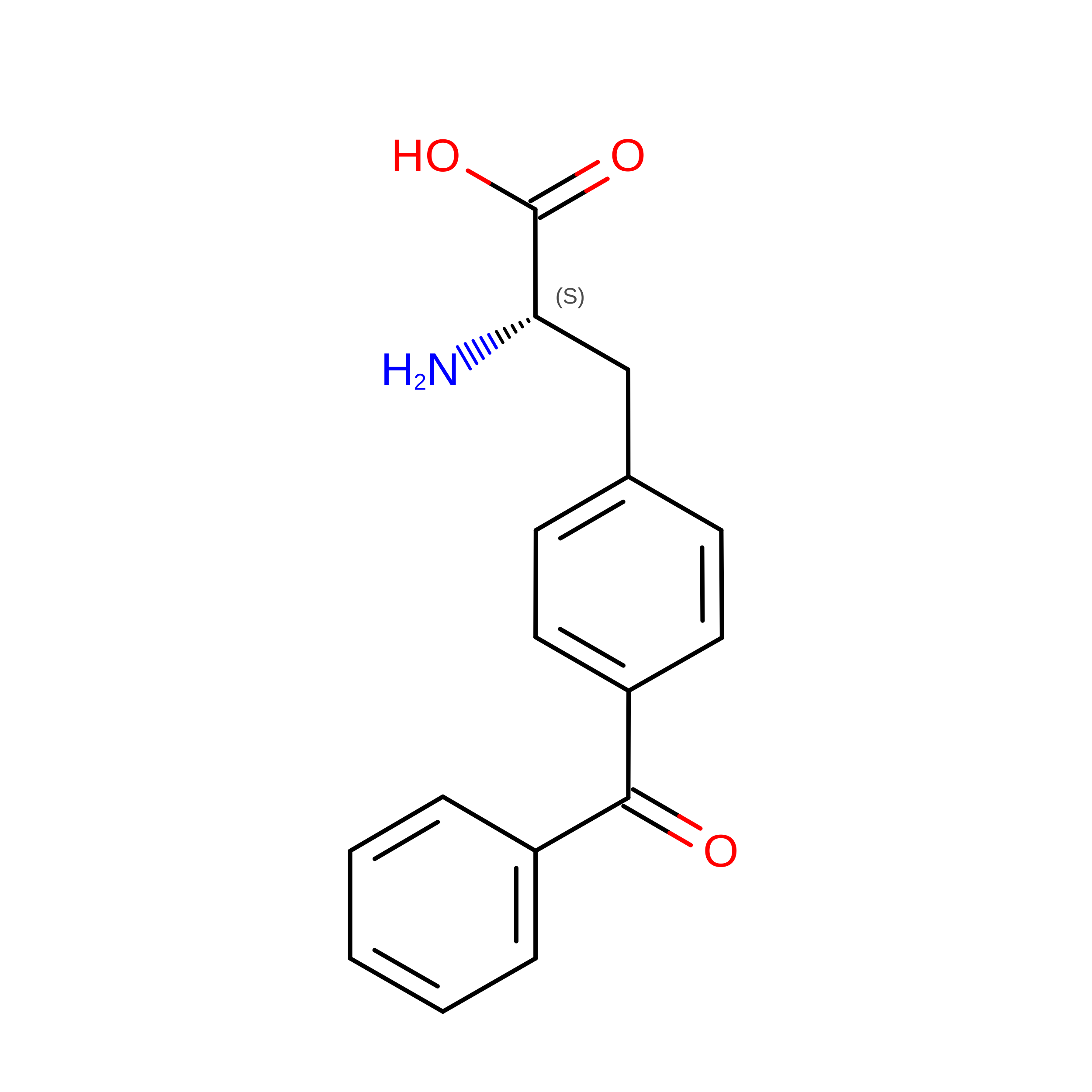
PBF
Query on PBF
B [auth E],
D [auth F]
L-PEPTIDE LINKINGC16 H15 N O3PHE

Experimental Data & Validation

Experimental Data

  • Method: X-RAY DIFFRACTION
  • Resolution: 2.58 Å
  • R-Value Free:  0.265 (Depositor), 0.265 (DCC) 
  • R-Value Work:  0.229 (Depositor), 0.230 (DCC) 
  • R-Value Observed: 0.231 (Depositor) 
Space Group: P 1 21 1
Unit Cell:
Length ( Å )Angle ( ˚ )
a = 66.112α = 90
b = 60.85β = 103.13
c = 68.167γ = 90
Software Package:
Software NamePurpose
PHENIXrefinement
XDSdata reduction
Aimlessdata scaling
PHASERphasing

Structure Validation

View Full Validation Report


Entry History 

Deposition Data

Revision History  (Full details and data files)

  • Version 1.0: 2019-01-16
    Type: Initial release
  • Version 1.1: 2019-05-01
    Changes: Data collection, Database references
  • Version 2.0: 2020-07-29
    Type: Remediation
    Reason: Carbohydrate remediation
    Changes: Advisory, Atomic model, Data collection, Derived calculations, Structure summary
  • Version 2.1: 2025-04-02
    Changes: Data collection, Database references, Derived calculations, Structure summary