6MP4 | pdb_00006mp4

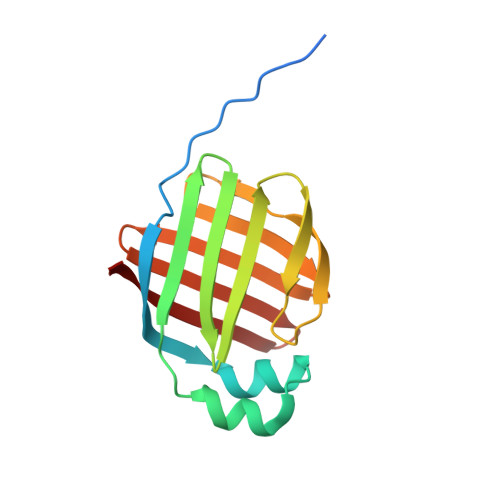
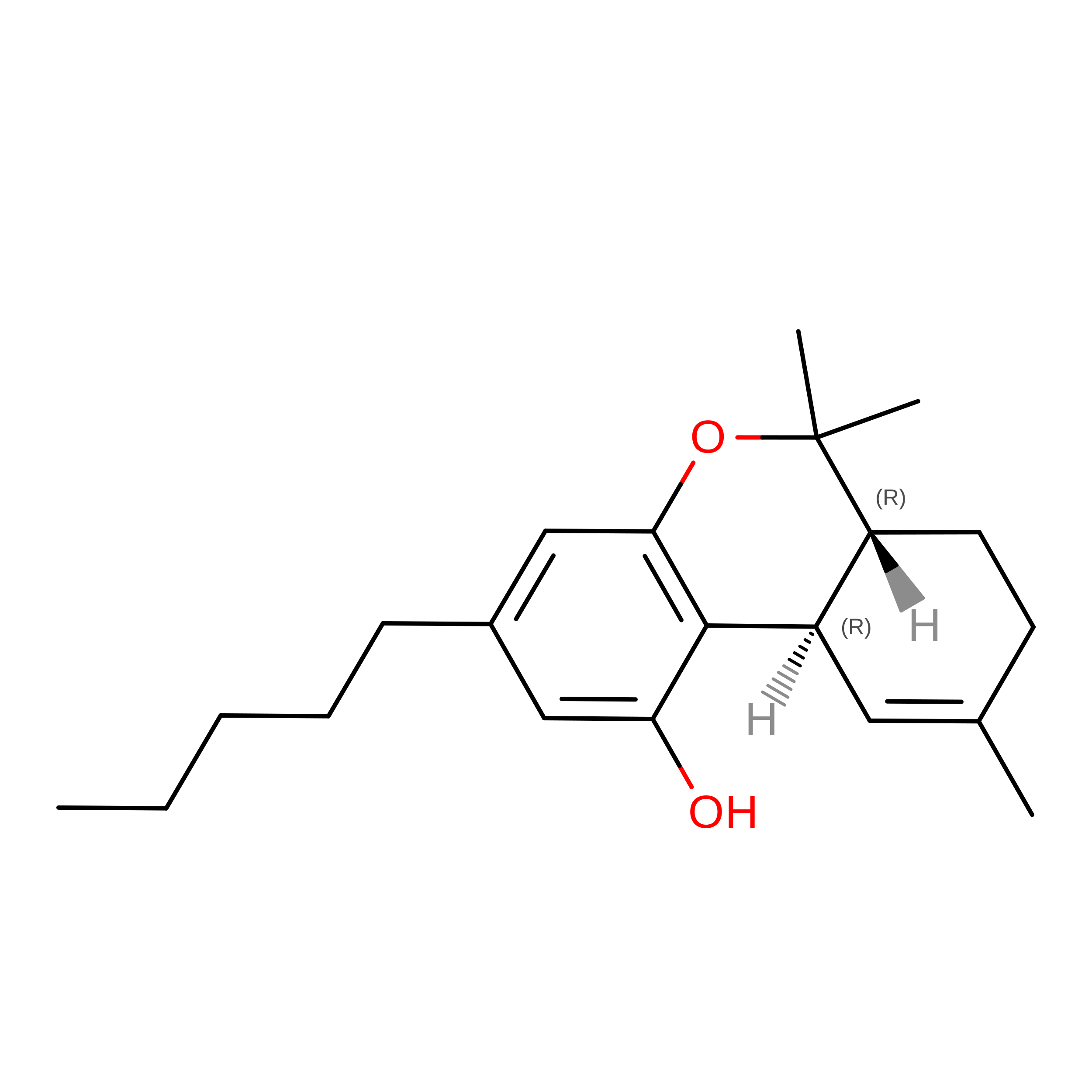
Human liver FABP1 bound to tetrahydrocannabinol


Experimental Data Snapshot

  • Method: X-RAY DIFFRACTION
  • Resolution: 2.50 Å
  • R-Value Free: 
    0.225 (Depositor), 0.225 (DCC) 
  • R-Value Work: 
    0.206 (Depositor), 0.206 (DCC) 
  • R-Value Observed: 
    0.209 (Depositor) 

Starting Model: experimental
View more details

wwPDB Validation 3D Report Full Report

Validation slider image for 6MP4

Ligand Structure Quality Assessment 


This is version 1.3 of the entry. See complete history

Literature

FABP1 controls hepatic transport and biotransformation of Delta 9 -THC.

Elmes, M.W.Prentis, L.E.McGoldrick, L.L.Giuliano, C.J.Sweeney, J.M.Joseph, O.M.Che, J.Carbonetti, G.S.Studholme, K.Deutsch, D.G.Rizzo, R.C.Glynn, S.E.Kaczocha, M.

(2019) Sci Rep 9: 7588-7588

  • DOI: https://doi.org/10.1038/s41598-019-44108-3
  • Primary Citation Related Structures: 
    6MP4

  • PubMed Abstract: 

    The increasing use of medical marijuana highlights the importance of developing a better understanding of cannabinoid metabolism. Phytocannabinoids, including ∆ 9 -tetrahydrocannabinol (THC), are metabolized and inactivated by cytochrome P450 enzymes primarily within the liver. The lipophilic nature of cannabinoids necessitates mechanism(s) to facilitate their intracellular transport to metabolic enzymes. Here, we test the central hypothesis that liver-type fatty acid binding protein (FABP1) mediates phytocannabinoid transport and subsequent inactivation. Using X-ray crystallography, molecular modeling, and in vitro binding approaches we demonstrate that FABP1 accommodates one molecule of THC within its ligand binding pocket. Consistent with its role as a THC carrier, biotransformation of THC was reduced in primary hepatocytes obtained from FABP1-knockout (FABP1-KO) mice. Compared to their wild-type littermates, administration of THC to male and female FABP1-KO mice potentiated the physiological and behavioral effects of THC. The stark pharmacodynamic differences were confirmed upon pharmacokinetic analyses which revealed that FABP1-KO mice exhibit reduced rates of THC biotransformation. Collectively, these data position FABP1 as a hepatic THC transport protein and a critical mediator of cannabinoid inactivation. Since commonly used medications bind to FABP1 with comparable affinities to THC, our results further suggest that FABP1 could serve a previously unrecognized site of drug-drug interactions.


  • Organizational Affiliation
    • Department of Biochemistry and Cell Biology, Stony Brook University, Stony Brook, New York, 11794, USA. matthew.elmes@stonybrook.edu.

Macromolecule Content 

  • Total Structure Weight: 135.53 kDa 
  • Atom Count: 9,028 
  • Modeled Residue Count: 1,089 
  • Deposited Residue Count: 1,192 
  • Unique protein chains: 1

Macromolecules

Find similar proteins by:|  3D Structure
Entity ID: 1
MoleculeChains  Sequence LengthOrganismDetailsImage
Fatty acid-binding protein, liver
A, B, C, D, E
A, B, C, D, E, F, G, H
149Homo sapiensMutation(s): 0 
Gene Names: FABP1FABPL
UniProt & NIH Common Fund Data Resources
Find proteins for P07148 (Homo sapiens)
Explore P07148 
Go to UniProtKB:  P07148
PHAROS:  P07148
GTEx:  ENSG00000163586 
Entity Groups
Sequence Clusters30% Identity50% Identity70% Identity90% Identity95% Identity100% Identity
UniProt GroupP07148
Sequence Annotations
Expand
Reference Sequence

Experimental Data & Validation

Experimental Data

  • Method: X-RAY DIFFRACTION
  • Resolution: 2.50 Å
  • R-Value Free:  0.225 (Depositor), 0.225 (DCC) 
  • R-Value Work:  0.206 (Depositor), 0.206 (DCC) 
  • R-Value Observed: 0.209 (Depositor) 
Space Group: P 21 21 21
Unit Cell:
Length ( Å )Angle ( ˚ )
a = 79.185α = 90
b = 79.291β = 90
c = 234.621γ = 90
Software Package:
Software NamePurpose
SCALEPACKdata scaling
PHENIXrefinement
PDB_EXTRACTdata extraction
HKL-2000data reduction
PHASERphasing

Structure Validation

View Full Validation Report


Ligand Structure Quality Assessment 


Entry History 

& Funding Information

Deposition Data


Funding OrganizationLocationGrant Number
National Institutes of Health/National Institute on Drug Abuse (NIH/NIDA)United StatesF31DA042545
National Institutes of Health/National Institute on Drug Abuse (NIH/NIDA)United StatesR01DA035949
National Institutes of Health/National Institute on Drug Abuse (NIH/NIDA)United StatesR01DA035923

Revision History  (Full details and data files)

  • Version 1.0: 2019-11-13
    Type: Initial release
  • Version 1.1: 2019-12-11
    Changes: Author supporting evidence
  • Version 1.2: 2024-01-31
    Changes: Advisory, Data collection, Database references, Refinement description
  • Version 1.3: 2024-04-03
    Changes: Refinement description