6MN4 | pdb_00006mn4

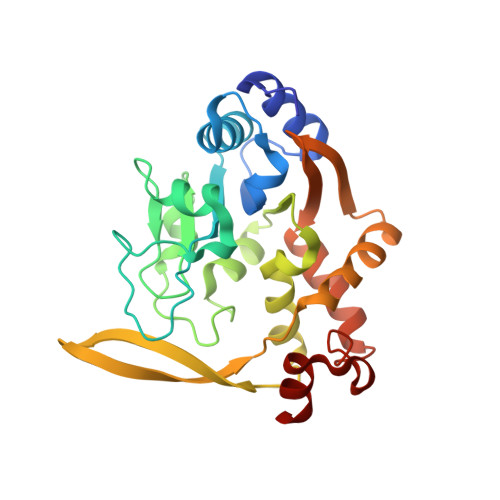
Crystal structure of aminoglycoside acetyltransferase AAC(3)-IVa, H154A mutant, in complex with apramycin


Experimental Data Snapshot

  • Method: X-RAY DIFFRACTION
  • Resolution: 2.80 Å
  • R-Value Free: 
    0.304 (Depositor), 0.305 (DCC) 
  • R-Value Work: 
    0.247 (Depositor), 0.248 (DCC) 
  • R-Value Observed: 
    0.249 (Depositor) 

Starting Model: experimental
View more details

wwPDB Validation 3D Report Full Report

Validation slider image for 6MN4

Ligand Structure Quality Assessment 


This is version 1.3 of the entry. See complete history

Literature

Structural and molecular rationale for the diversification of resistance mediated by the Antibiotic_NAT family.

Stogios, P.J.Bordeleau, E.Xu, Z.Skarina, T.Evdokimova, E.Chou, S.Diorio-Toth, L.D'Souza, A.W.Patel, S.Dantas, G.Wright, G.D.Savchenko, A.

(2022) Commun Biol 5: 263-263

  • DOI: https://doi.org/10.1038/s42003-022-03219-w
  • Primary Citation Related Structures: 
    5HT0, 6MMZ, 6MN0, 6MN3, 6MN4, 6MN5, 7KES, 7LAO, 7LAP

  • PubMed Abstract: 

    The environmental microbiome harbors a vast repertoire of antibiotic resistance genes (ARGs) which can serve as evolutionary predecessors for ARGs found in pathogenic bacteria, or can be directly mobilized to pathogens in the presence of selection pressures. Thus, ARGs from benign environmental bacteria are an important resource for understanding clinically relevant resistance. Here, we conduct a comprehensive functional analysis of the Antibiotic_NAT family of aminoglycoside acetyltransferases. We determined a pan-family antibiogram of 21 Antibiotic_NAT enzymes, including 8 derived from clinical isolates and 13 from environmental metagenomic samples. We find that environment-derived representatives confer high-level, broad-spectrum resistance, including against the atypical aminoglycoside apramycin, and that a metagenome-derived gene likely is ancestral to an aac(3) gene found in clinical isolates. Through crystallographic analysis, we rationalize the molecular basis for diversification of substrate specificity across the family. This work provides critical data on the molecular mechanism underpinning resistance to established and emergent aminoglycoside antibiotics and broadens our understanding of ARGs in the environment.


  • Organizational Affiliation
    • Department of Chemical Engineering and Applied Chemistry, University of Toronto, Toronto, M5S 3E5, Canada.

Macromolecule Content 

  • Total Structure Weight: 174.4 kDa 
  • Atom Count: 12,349 
  • Modeled Residue Count: 1,532 
  • Deposited Residue Count: 1,560 
  • Unique protein chains: 1

Macromolecules

Find similar proteins by:|  3D Structure
Entity ID: 1
MoleculeChains  Sequence LengthOrganismDetailsImage
Aminoglycoside N(3)-acetyltransferase, AAC(3)-IVa
A, B, C, D, E
A, B, C, D, E, F
260Escherichia coliMutation(s): 1 
Gene Names: 
EC: 2.3.1.81 (PDB Primary Data), 2.3.1 (UniProt)
UniProt
Find proteins for Q306W4 (Escherichia coli)
Explore Q306W4 
Go to UniProtKB:  Q306W4
Entity Groups
Sequence Clusters30% Identity50% Identity70% Identity90% Identity95% Identity100% Identity
UniProt GroupQ306W4
Sequence Annotations
Expand
Reference Sequence

Small Molecules

Ligands 6 Unique
IDChains Name / Formula / InChI Key2D Diagram3D Interactions
AM2

Query on AM2


Download:Ideal Coordinates CCD File
CA [auth E]
G [auth A]
HA [auth F]
O [auth B]
T [auth C]
CA [auth E],
G [auth A],
HA [auth F],
O [auth B],
T [auth C],
X [auth D]
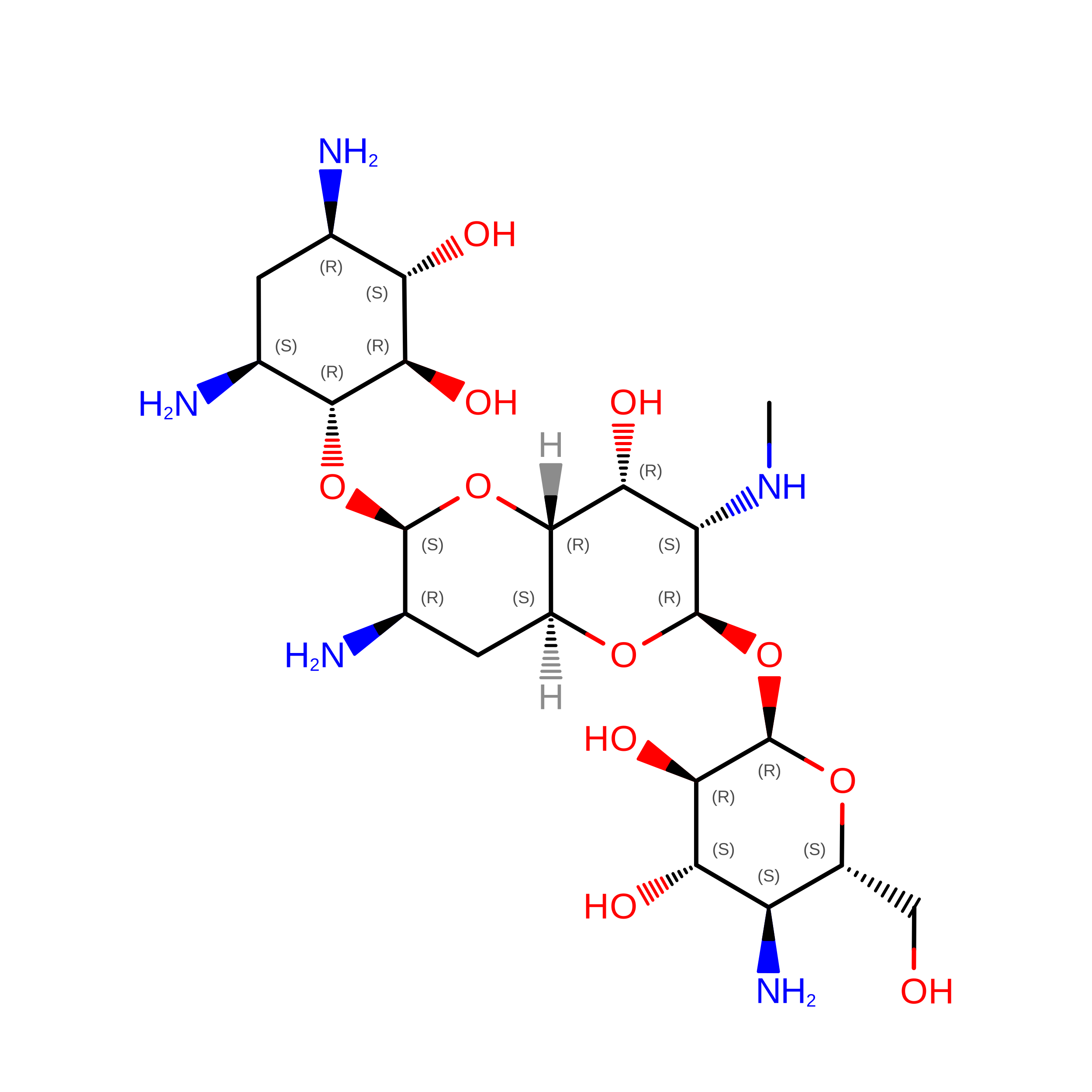
APRAMYCIN
C21 H41 N5 O11
XZNUGFQTQHRASN-XQENGBIVSA-N
EPE

Query on EPE


Download:Ideal Coordinates CCD File
BA [auth D]
GA [auth E]
JA [auth F]
N [auth A]
S [auth B]
BA [auth D],
GA [auth E],
JA [auth F],
N [auth A],
S [auth B],
W [auth C]
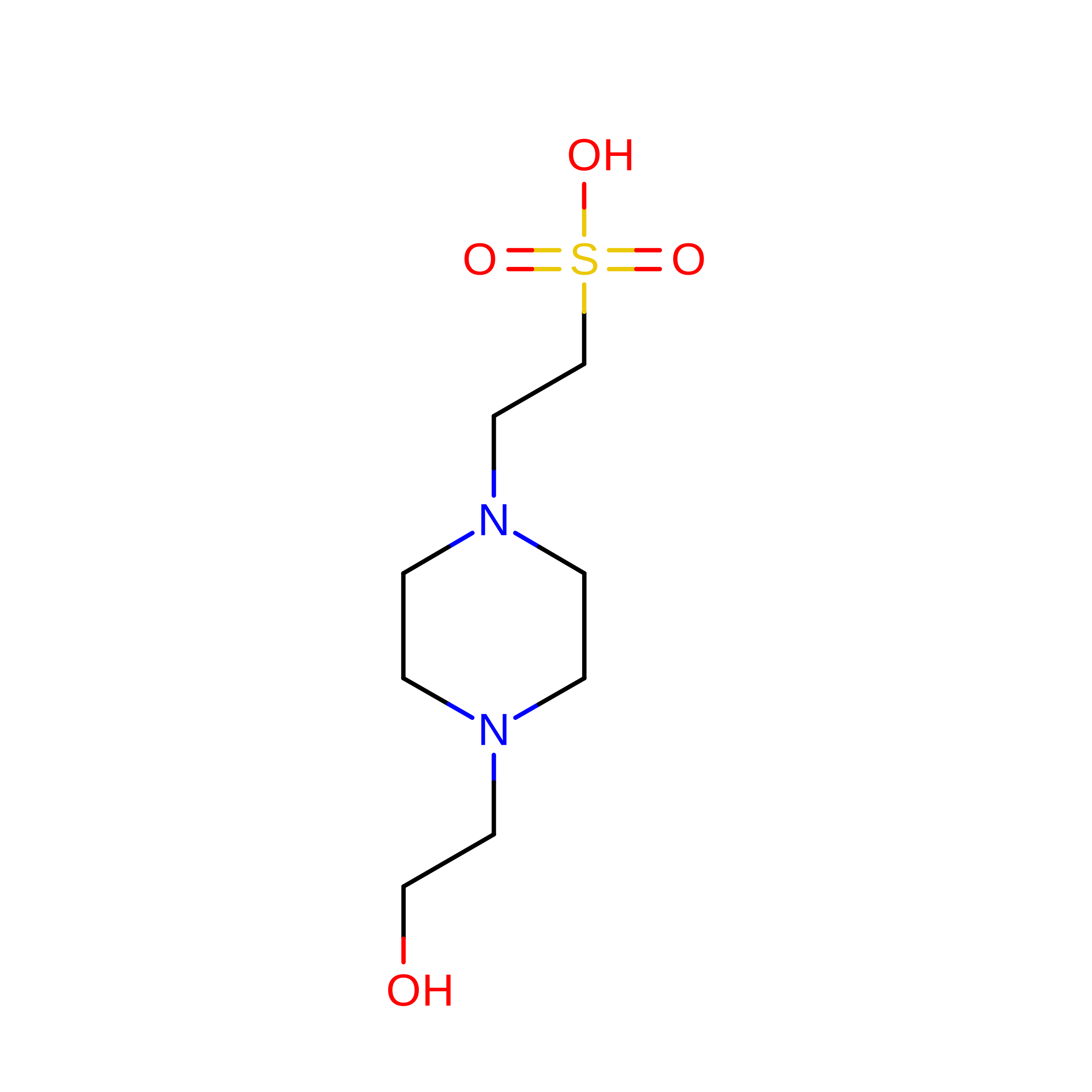
4-(2-HYDROXYETHYL)-1-PIPERAZINE ETHANESULFONIC ACID
C8 H18 N2 O4 S
JKMHFZQWWAIEOD-UHFFFAOYSA-N
PO4

Query on PO4


Download:Ideal Coordinates CCD File
EA [auth E]
IA [auth F]
M [auth A]
R [auth B]
V [auth C]
EA [auth E],
IA [auth F],
M [auth A],
R [auth B],
V [auth C],
Z [auth D]
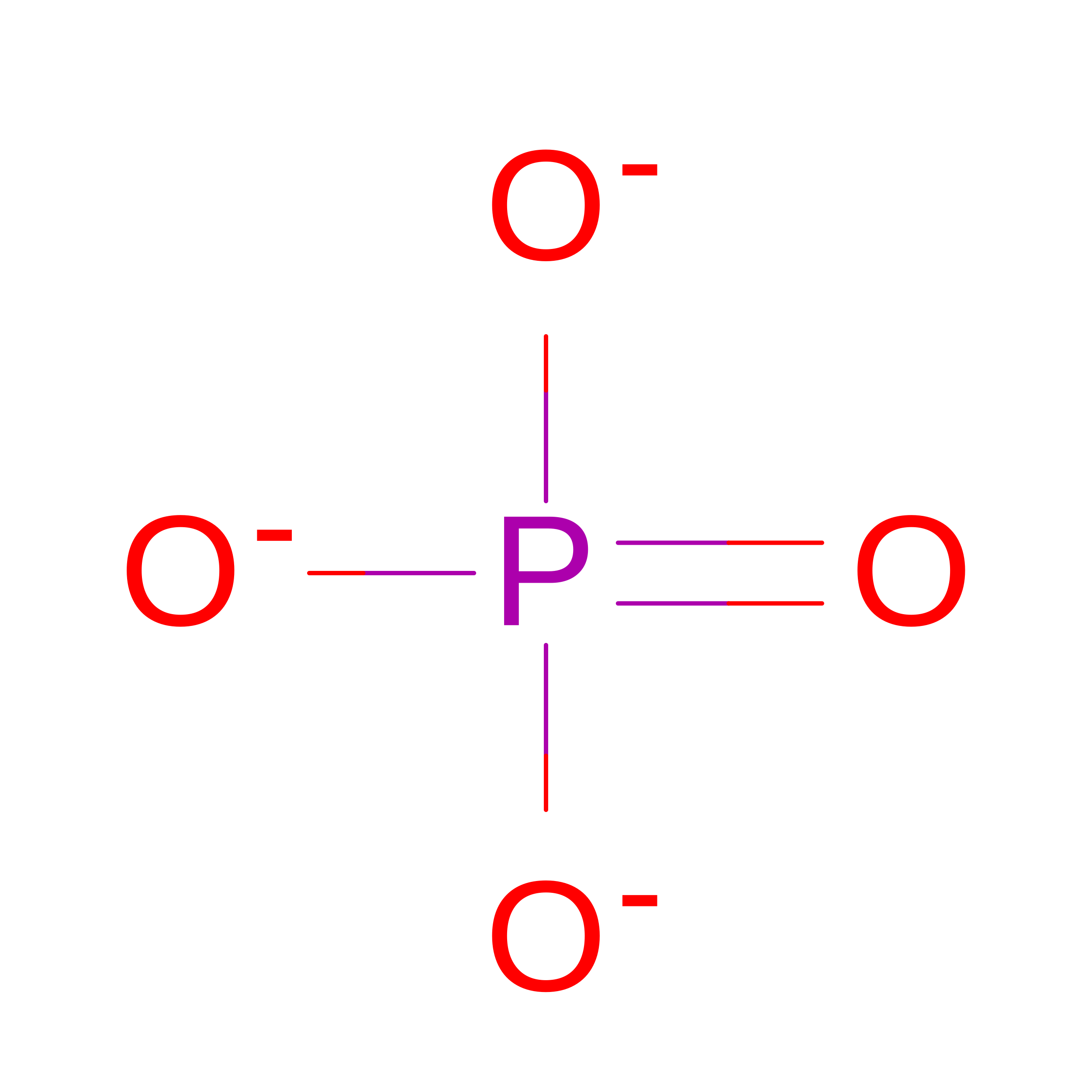
PHOSPHATE ION
O4 P
NBIIXXVUZAFLBC-UHFFFAOYSA-K
GOL

Query on GOL


Download:Ideal Coordinates CCD File
AA [auth D],
FA [auth E]
GLYCEROL
C3 H8 O3
PEDCQBHIVMGVHV-UHFFFAOYSA-N
ZN

Query on ZN


Download:Ideal Coordinates CCD File
H [auth A],
P [auth B],
U [auth C],
Y [auth D]
ZINC ION
Zn
PTFCDOFLOPIGGS-UHFFFAOYSA-N
EDO

Query on EDO


Download:Ideal Coordinates CCD File
DA [auth E]
I [auth A]
J [auth A]
K [auth A]
L [auth A]
DA [auth E],
I [auth A],
J [auth A],
K [auth A],
L [auth A],
Q [auth B]
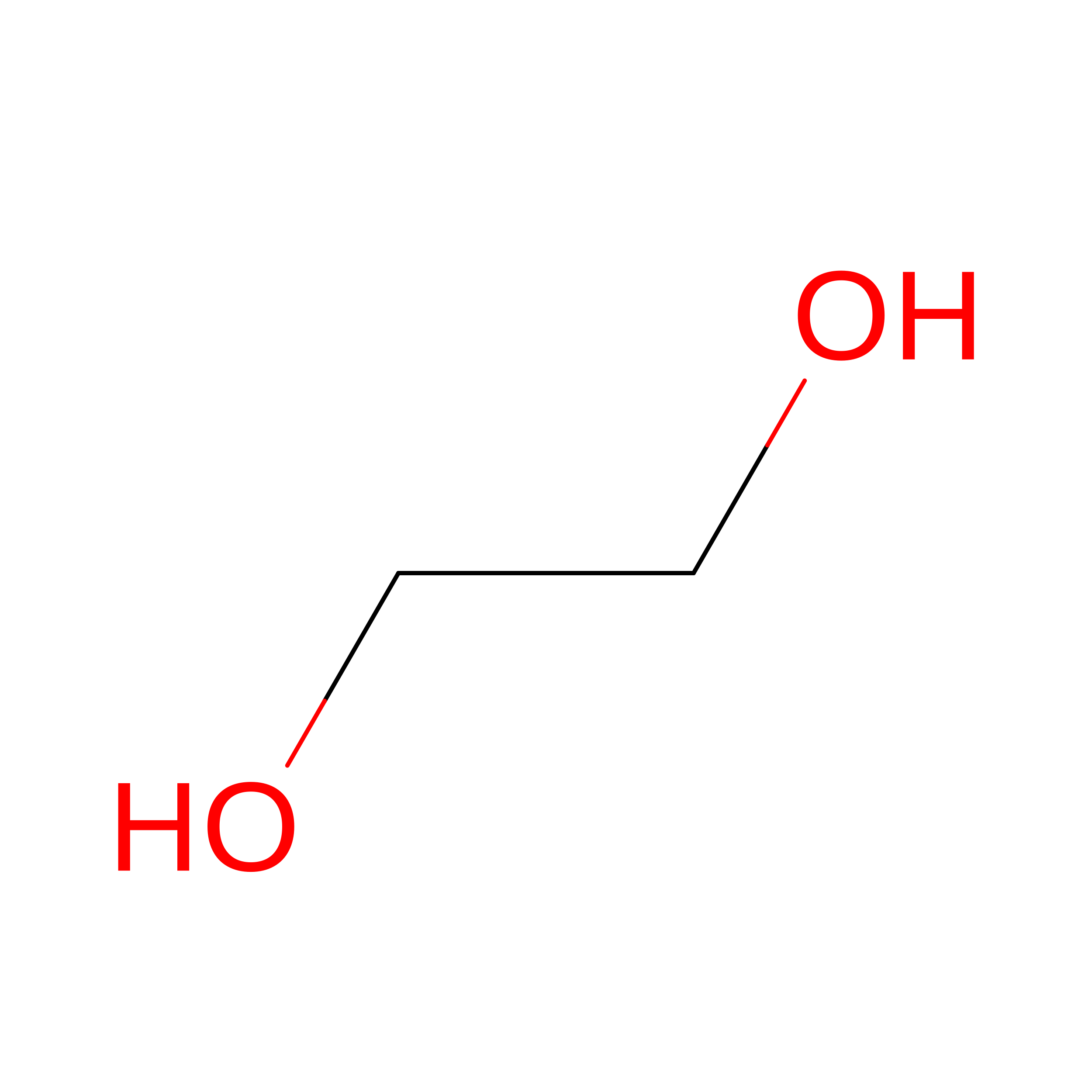
1,2-ETHANEDIOL
C2 H6 O2
LYCAIKOWRPUZTN-UHFFFAOYSA-N

Experimental Data & Validation

Experimental Data

  • Method: X-RAY DIFFRACTION
  • Resolution: 2.80 Å
  • R-Value Free:  0.304 (Depositor), 0.305 (DCC) 
  • R-Value Work:  0.247 (Depositor), 0.248 (DCC) 
  • R-Value Observed: 0.249 (Depositor) 
Space Group: P 21 21 21
Unit Cell:
Length ( Å )Angle ( ˚ )
a = 77.55α = 90
b = 130.507β = 90
c = 264.919γ = 90
Software Package:
Software NamePurpose
PHENIXrefinement
HKL-3000data reduction
HKL-3000data scaling
PHENIXphasing
PHENIXmodel building

Structure Validation

View Full Validation Report


Ligand Structure Quality Assessment 


Entry History 

& Funding Information

Deposition Data


Funding OrganizationLocationGrant Number
National Institutes of Health/National Institute Of Allergy and Infectious Diseases (NIH/NIAID)United StatesHHSN272201700060C
National Institutes of Health/National Institute Of Allergy and Infectious Diseases (NIH/NIAID)United StatesHHSN272201200026C

Revision History  (Full details and data files)

  • Version 1.0: 2018-10-24
    Type: Initial release
  • Version 1.1: 2019-12-18
    Changes: Author supporting evidence
  • Version 1.2: 2022-04-06
    Changes: Database references, Structure summary
  • Version 1.3: 2023-10-11
    Changes: Data collection, Refinement description