6G1T | pdb_00006g1t

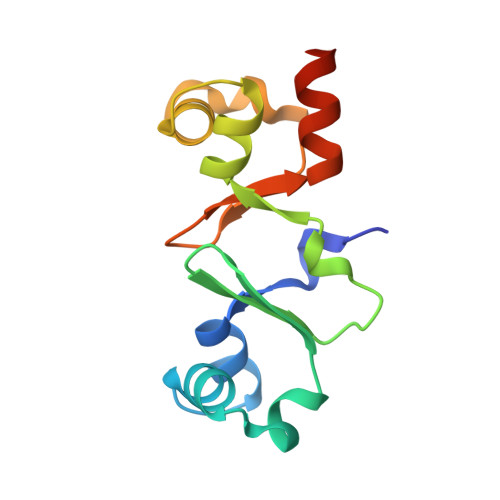
TraN, a repressor of an Enterococcus conjugative type IV secretion system


Experimental Data Snapshot

  • Method: X-RAY DIFFRACTION
  • Resolution: 1.93 Å
  • R-Value Free: 
    0.212 (Depositor), 0.211 (DCC) 
  • R-Value Work: 
    0.181 (Depositor), 0.181 (DCC) 

Starting Model: experimental
View more details

wwPDB Validation 3D Report Full Report

Validation slider image for 6G1T

This is version 1.3 of the entry. See complete history

Literature

TraN: A novel repressor of an Enterococcus conjugative type IV secretion system.

Kohler, V.Goessweiner-Mohr, N.Aufschnaiter, A.Fercher, C.Probst, I.Pavkov-Keller, T.Hunger, K.Wolinski, H.Buttner, S.Grohmann, E.Keller, W.

(2018) Nucleic Acids Res 46: 9201-9219

  • DOI: https://doi.org/10.1093/nar/gky671
  • Primary Citation Related Structures: 
    6G1T

  • PubMed Abstract: 

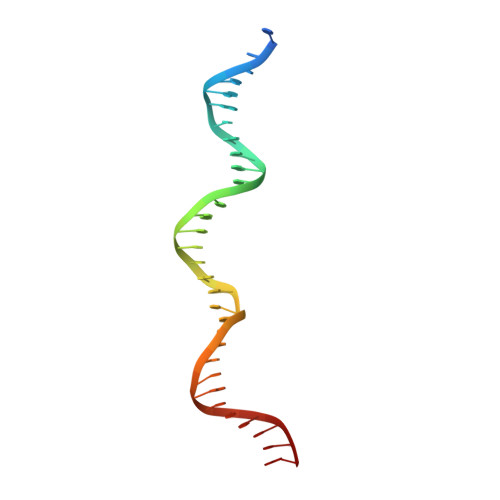
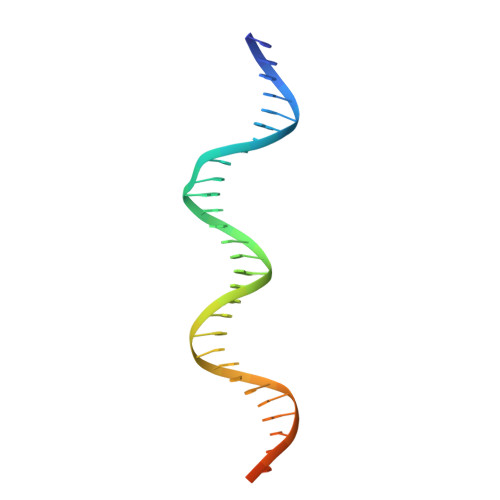
    The dissemination of multi-resistant bacteria represents an enormous burden on modern healthcare. Plasmid-borne conjugative transfer is the most prevalent mechanism, requiring a type IV secretion system that enables bacteria to spread beneficial traits, such as resistance to last-line antibiotics, among different genera. Inc18 plasmids, like the Gram-positive broad host-range plasmid pIP501, are substantially involved in propagation of vancomycin resistance from Enterococci to methicillin-resistant strains of Staphylococcus aureus. Here, we identified the small cytosolic protein TraN as a repressor of the pIP501-encoded conjugative transfer system, since deletion of traN resulted in upregulation of transfer factors, leading to highly enhanced conjugative transfer. Furthermore, we report the complex structure of TraN with DNA and define the exact sequence of its binding motif. Targeting this protein-DNA interaction might represent a novel therapeutic approach against the spreading of antibiotic resistances.


  • Organizational Affiliation
    • Institute of Molecular Biosciences, University of Graz, Graz 8010, Austria.

Macromolecule Content 

  • Total Structure Weight: 35.55 kDa 
  • Atom Count: 2,363 
  • Modeled Residue Count: 176 
  • Deposited Residue Count: 190 
  • Unique protein chains: 1
  • Unique nucleic acid chains: 2

Macromolecules


Find similar proteins by:|  3D Structure
Entity ID: 1
MoleculeChains  Sequence LengthOrganismDetailsImage
AM32122Enterococcus faecalisMutation(s): 0 
UniProt
Find proteins for Q7BVV5 (Enterococcus faecalis)
Explore Q7BVV5 
Go to UniProtKB:  Q7BVV5
Entity Groups
Sequence Clusters30% Identity50% Identity70% Identity90% Identity95% Identity100% Identity
UniProt GroupQ7BVV5
Sequence Annotations
Expand
Reference Sequence
Find similar nucleic acids by:  (by identity cutoff) 
Entity ID: 2
MoleculeChains LengthOrganismImage
DNA (34-MER)B [auth E]34Plasmid pIP501
Sequence Annotations
Expand
Reference Sequence
Find similar nucleic acids by:  (by identity cutoff) 
Entity ID: 3
MoleculeChains LengthOrganismImage
DNA (34-MER)C [auth D]34Plasmid pIP501
Sequence Annotations
Expand
Reference Sequence

Small Molecules

Ligands 1 Unique
IDChains Name / Formula / InChI Key2D Diagram3D Interactions
EPE

Query on EPE


Download:Ideal Coordinates CCD File
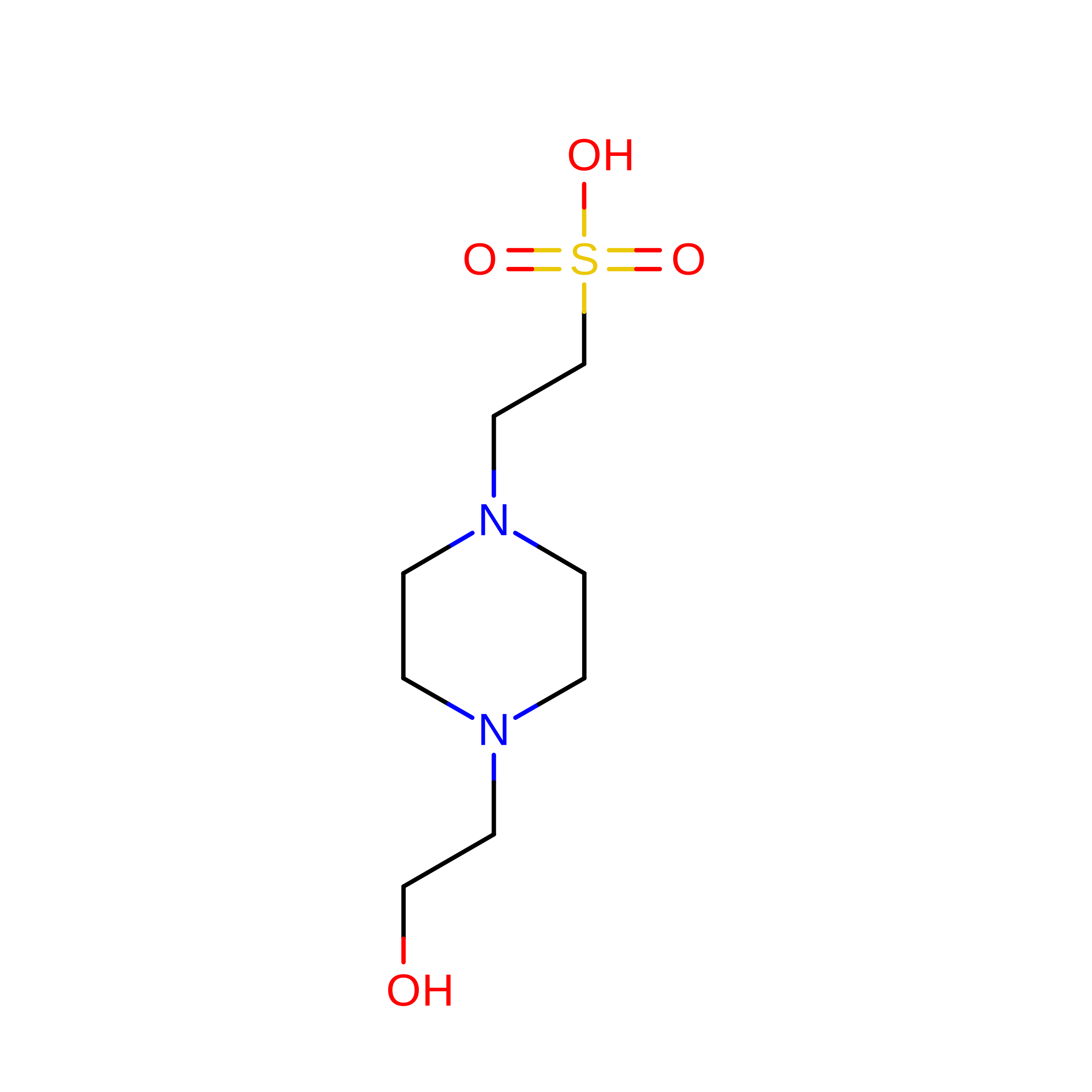
D [auth A]4-(2-HYDROXYETHYL)-1-PIPERAZINE ETHANESULFONIC ACID
C8 H18 N2 O4 S
JKMHFZQWWAIEOD-UHFFFAOYSA-N

Experimental Data & Validation

Experimental Data

  • Method: X-RAY DIFFRACTION
  • Resolution: 1.93 Å
  • R-Value Free:  0.212 (Depositor), 0.211 (DCC) 
  • R-Value Work:  0.181 (Depositor), 0.181 (DCC) 
Space Group: C 1 2 1
Unit Cell:
Length ( Å )Angle ( ˚ )
a = 122.77α = 90
b = 44.17β = 90.86
c = 56.46γ = 90
Software Package:
Software NamePurpose
PHENIXrefinement
XDSdata reduction
Aimlessdata scaling
PHASERphasing

Structure Validation

View Full Validation Report


Entry History 

& Funding Information

Deposition Data


Funding OrganizationLocationGrant Number
Austrian Science FundAustriaP27383

Revision History  (Full details and data files)

  • Version 1.0: 2018-07-25
    Type: Initial release
  • Version 1.1: 2018-08-15
    Changes: Data collection, Database references
  • Version 1.2: 2018-10-10
    Changes: Data collection, Database references
  • Version 1.3: 2024-01-17
    Changes: Data collection, Database references, Refinement description