Download Mendeley
De Novo Design of Selective Quadruplex-Duplex Junction Ligands and Structural Characterisation of Their Binding Mode: Targeting the G4 Hot-Spot.
Diaz-Casado, L., Serrano-Chacon, I., Montalvillo-Jimenez, L., Corzana, F., Bastida, A., Santana, A.G., Gonzalez, C., Asensio, J.L.(2020) Chemistry
- PubMed: 33368678 Search on PubMed
- DOI: https://doi.org/10.1002/chem.202005026
- Primary Citation Related Structures:
6FC9 - PubMed Abstract:
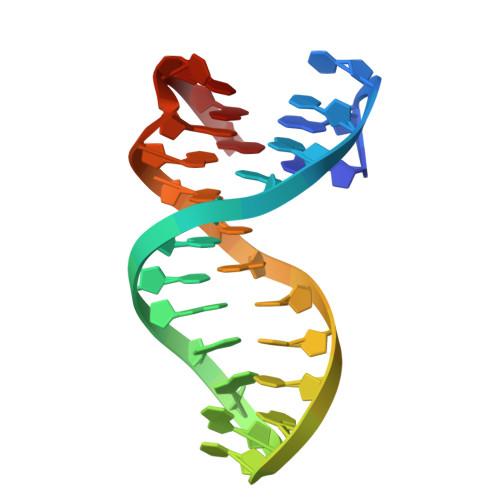
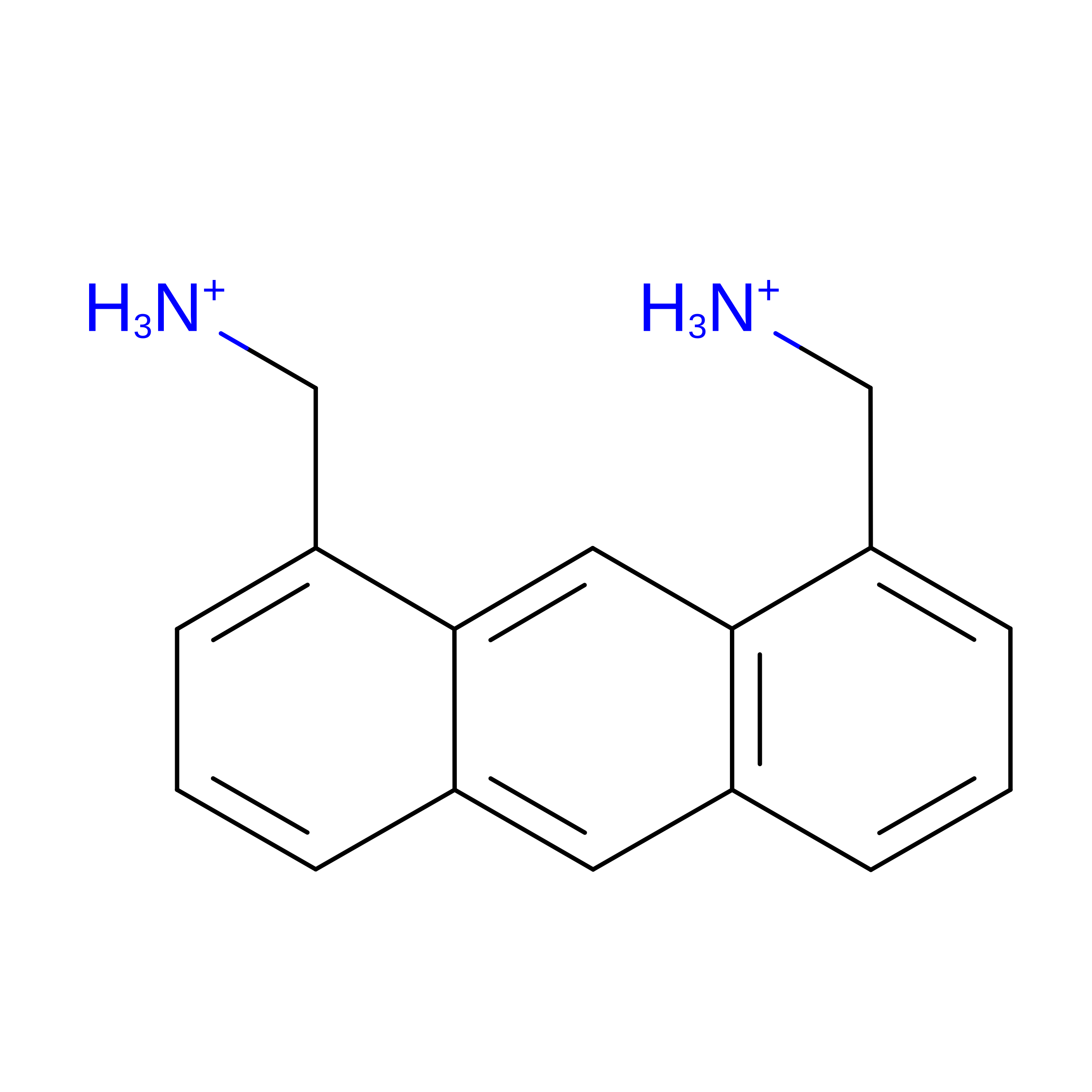
Targeting the interface between DNA quadruplex and duplex regions by small molecules holds significant promise in both therapeutics and nanotechnology. Herein, a new pharmacophore is reported, which selectively binds with high affinity to quadruplex-duplex junctions, while presenting a poorer affinity for G-quadruplex or duplex DNA alone. Ligands complying with the reported pharmacophore exhibit a significant affinity and selectivity for quadruplex-duplex junctions, including the one observed in the HIV-1 LTR-III sequence. The structure of the complex between a quadruplex-duplex junction with a ligand of this family has been determined by NMR methods. According to these data, the remarkable selectivity of this structural motif for quadruplex-duplex junctions is achieved through an unprecedented interaction mode so far unexploited in medicinal and biological chemistry: the insertion of a benzylic ammonium moiety into the centre of the partially exposed G-tetrad at the interface with the duplex. Further decoration of the described scaffolds with additional fragments opens up the road to the development of selective ligands for G-quadruplex-forming regions of the genome.
- Glycochemistry and Molecular Recognition group-Dpt. Bio-Organic Chemistry, Instituto de Química Orgánica General (IQOG-CSIC), Juan de la Cierva 3., 28006, Madrid, Spain.
Organizational Affiliation: