6B4R | pdb_00006b4r

The crystal structure of the aldehyde dehydrogenase KauB from Pseudomonas aeruginosa


Experimental Data Snapshot

  • Method: X-RAY DIFFRACTION
  • Resolution: 2.55 Å
  • R-Value Free: 
    0.234 (Depositor), 0.227 (DCC) 
  • R-Value Work: 
    0.178 (Depositor) 
  • R-Value Observed: 
    0.181 (Depositor) 

Starting Model: experimental
View more details

wwPDB Validation 3D Report Full Report

Validation slider image for 6B4R

Ligand Structure Quality Assessment 


This is version 1.3 of the entry. See complete history

Literature

The structural basis for the broad aldehyde specificity of the aminoaldehyde dehydrogenase PauC from the human pathogen Pseudomonas aeruginosa.

Cardona-Cardona, Y.V.Gonzalez-Segura, L.Rodriguez-Sotres, R.Juarez-Diaz, J.A.Mujica-Jimenez, C.Regla, I.Lopez-Ortiz, M.Munoz-Clares, R.A.

(2025) Protein Sci 34: e70124-e70124

  • DOI: https://doi.org/10.1002/pro.70124
  • Primary Citation Related Structures: 
    6B4R

  • PubMed Abstract: 

    Despite significant differences in size and formal charge, the aldehyde dehydrogenase PaPauC (PA5312) from Pseudomonas aeruginosa PAO1 efficiently catalyzes the NAD + -dependent oxidation of the aminoaldehydes formed in polyamines degradation. We report here that PaPauC also oxidizes 4-guanidinebutyraldehyde, formed in one arginine degradation pathway, trimethylaminobutyraldehyde, of unknown metabolic origin, and indole-3-acetaldehyde, a precursor of the plant growth-promoting hormone indoleacetic acid. PaPauC has been proposed as a potential target for combating P. aeruginosa. However, understanding its structure-function relationships, crucial for developing specific inhibitors, is lacking. Using X-ray crystallography, we identified the structural characteristics that determine PaPauC broad aldehyde specificity: a spacious aldehyde-entrance tunnel and six active-site residues. Docking simulations, site-directed mutagenesis, and kinetic analyses support the interactions of Lys479 with glutamylated aminoaldehydes; Phe169, Trp176, and Phe467 with amino and guanidinium groups through cation-π interactions and with the indole group via NH-π and CH-π interactions; Asp459 with amino and indole groups; and Thr303 with amide and guanidinium groups. Exploiting the distinctive structural features of the PaPauC active site could aid in developing specific inhibitors to combat P. aeruginosa infections in humans and animals, as well as in preventing its colonization of plants, which are abundant P. aeruginosa reservoirs and, therefore, a significant source of human infections.


  • Organizational Affiliation
    • Departamento de Bioquímica, Facultad de Química, Universidad Nacional Autónoma de México, Ciudad de México, Mexico.

Macromolecule Content 

  • Total Structure Weight: 213.86 kDa 
  • Atom Count: 15,533 
  • Modeled Residue Count: 1,982 
  • Deposited Residue Count: 1,988 
  • Unique protein chains: 2

Macromolecules

Find similar proteins by:|  3D Structure
Entity ID: 1
MoleculeChains  Sequence LengthOrganismDetailsImage
KauB
A, C
497Pseudomonas aeruginosa PAO1Mutation(s): 0 
Gene Names: PA5312
EC: 1.2.1.54
UniProt
Find proteins for Q9HTP2 (Pseudomonas aeruginosa (strain ATCC 15692 / DSM 22644 / CIP 104116 / JCM 14847 / LMG 12228 / 1C / PRS 101 / PAO1))
Explore Q9HTP2 
Go to UniProtKB:  Q9HTP2
Entity Groups
Sequence Clusters30% Identity50% Identity70% Identity90% Identity95% Identity100% Identity
UniProt GroupQ9HTP2
Sequence Annotations
Expand
Reference Sequence
Find similar proteins by:|  3D Structure
Entity ID: 2
MoleculeChains  Sequence LengthOrganismDetailsImage
KauB
B, D
497Pseudomonas aeruginosa PAO1Mutation(s): 0 
Gene Names: PA5312
EC: 1.2.1.54
UniProt
Find proteins for Q9HTP2 (Pseudomonas aeruginosa (strain ATCC 15692 / DSM 22644 / CIP 104116 / JCM 14847 / LMG 12228 / 1C / PRS 101 / PAO1))
Explore Q9HTP2 
Go to UniProtKB:  Q9HTP2
Entity Groups
Sequence Clusters30% Identity50% Identity70% Identity90% Identity95% Identity100% Identity
UniProt GroupQ9HTP2
Sequence Annotations
Expand
Reference Sequence

Small Molecules

Ligands 4 Unique
IDChains Name / Formula / InChI Key2D Diagram3D Interactions
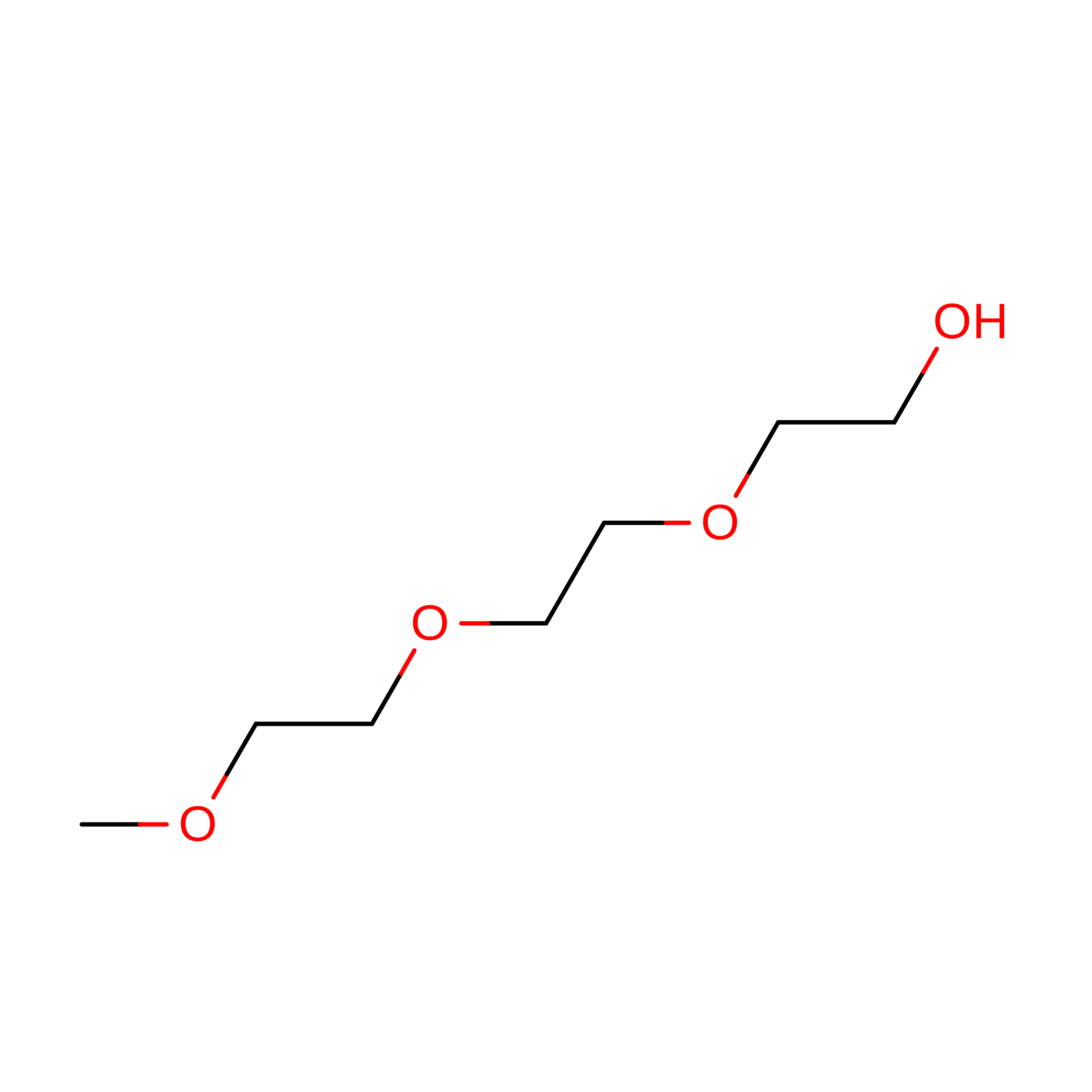
TOE

Query on TOE


Download:Ideal Coordinates CCD File
H [auth A],
L [auth B],
O [auth C]
2-[2-(2-METHOXY-ETHOXY)-ETHOXY]-ETHOXYL
C7 H16 O4
JLGLQAWTXXGVEM-UHFFFAOYSA-N
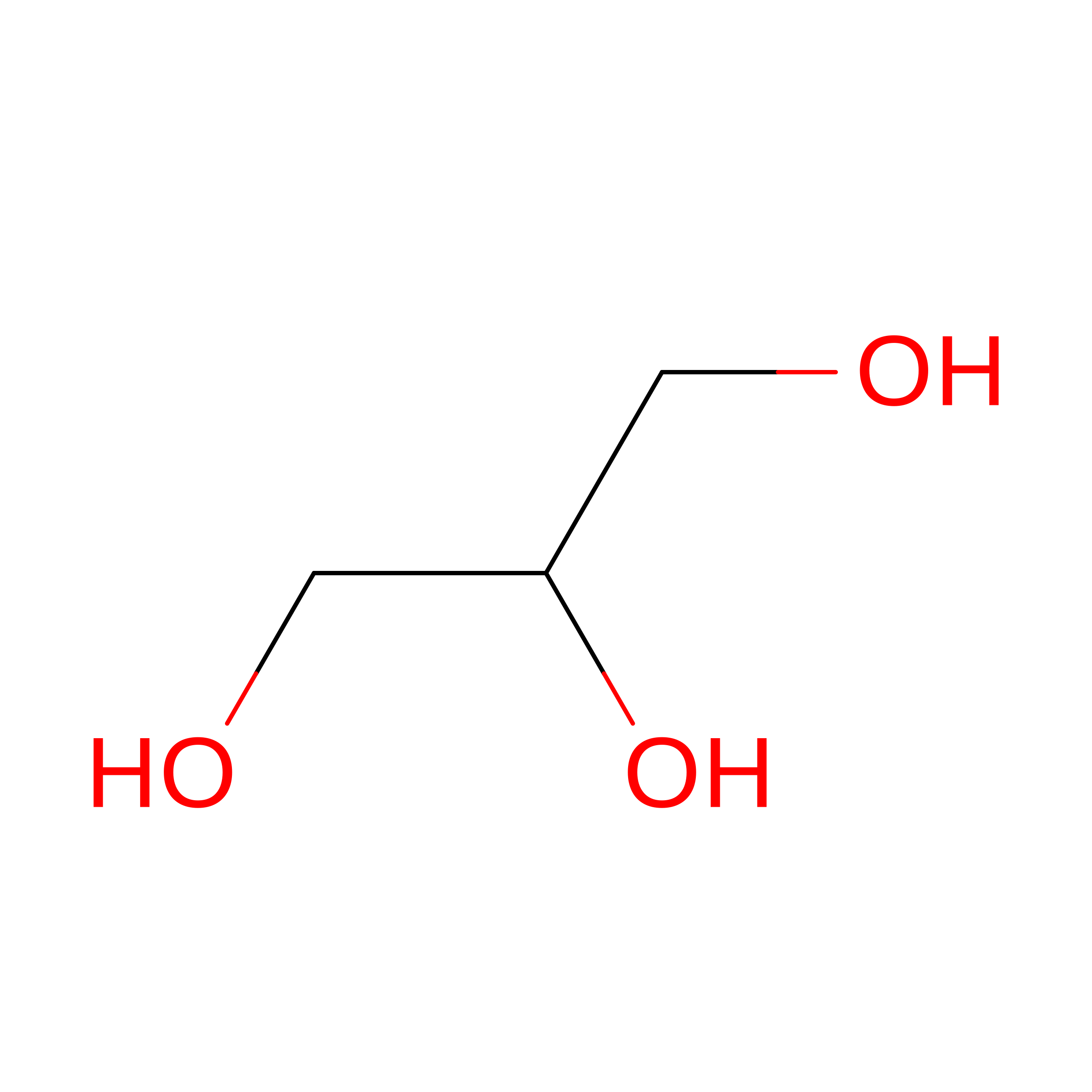
GOL

Query on GOL


Download:Ideal Coordinates CCD File
K [auth B]GLYCEROL
C3 H8 O3
PEDCQBHIVMGVHV-UHFFFAOYSA-N
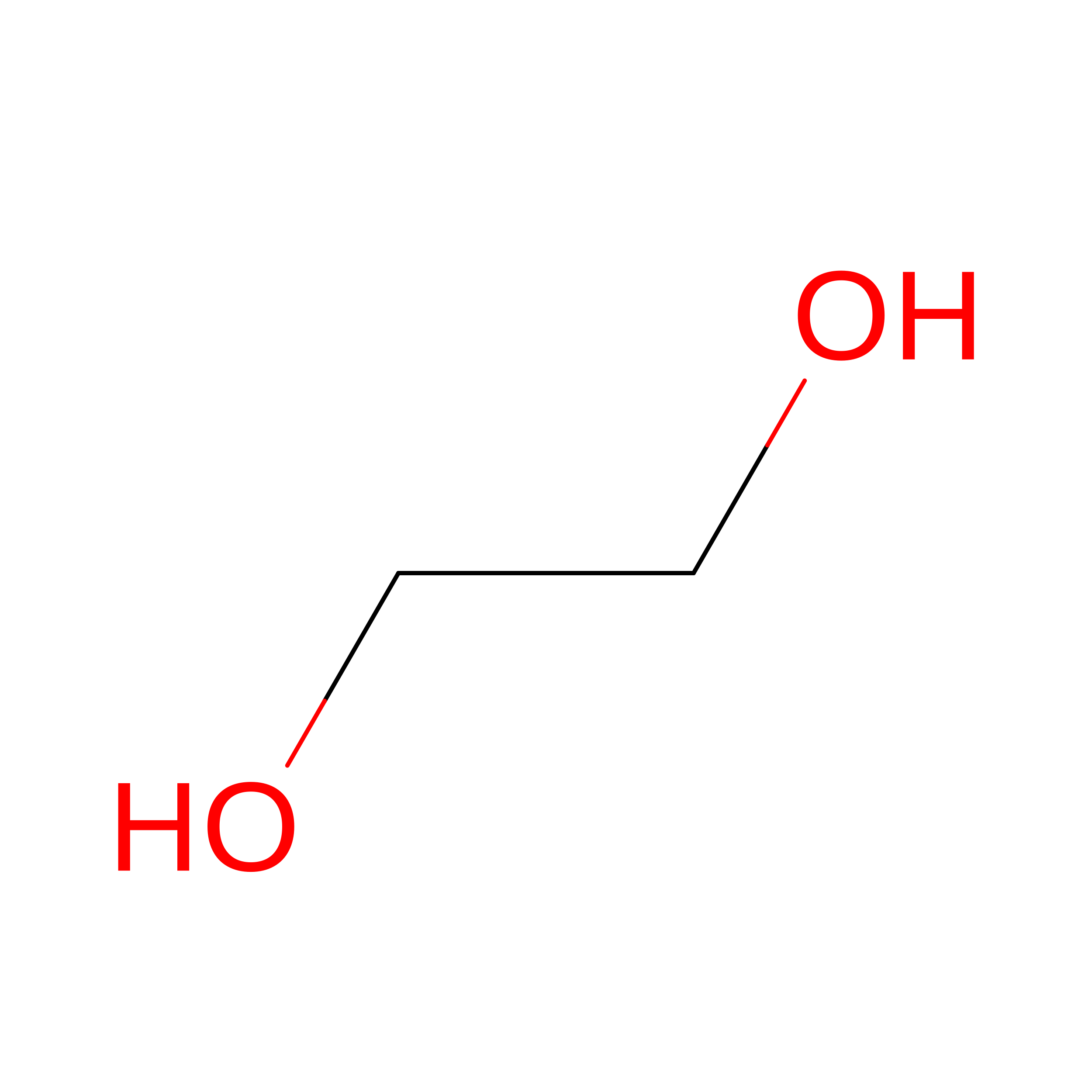
EDO

Query on EDO


Download:Ideal Coordinates CCD File
E [auth A],
F [auth A],
I [auth B],
M [auth C]
1,2-ETHANEDIOL
C2 H6 O2
LYCAIKOWRPUZTN-UHFFFAOYSA-N
K

Query on K


Download:Ideal Coordinates CCD File
G [auth A],
J [auth B],
N [auth C],
P [auth D]
POTASSIUM ION
K
NPYPAHLBTDXSSS-UHFFFAOYSA-N
Modified Residues  1 Unique
IDChains TypeFormula2D DiagramParent
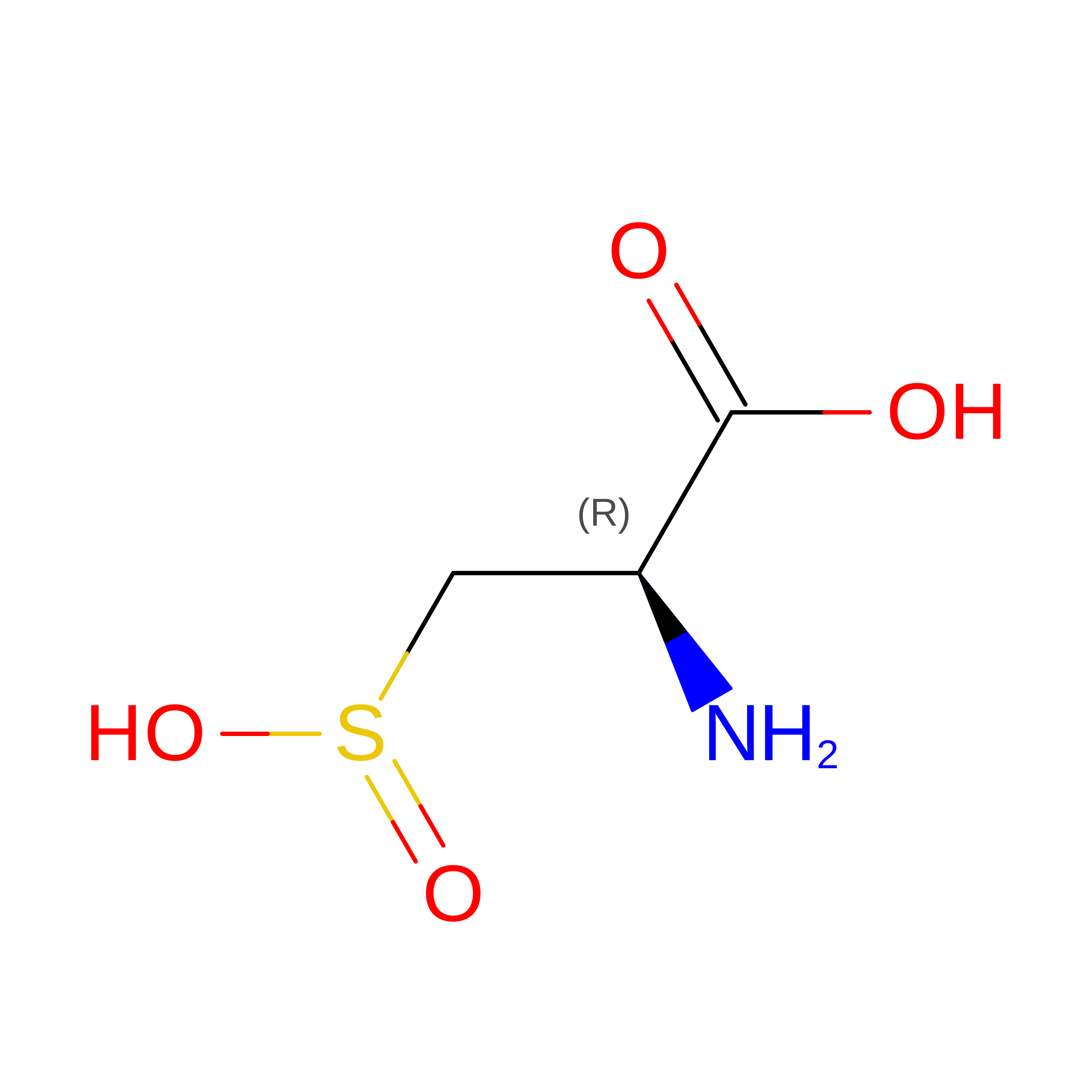
CSD
Query on CSD
A, C
L-PEPTIDE LINKINGC3 H7 N O4 SCYS

Experimental Data & Validation

Experimental Data

  • Method: X-RAY DIFFRACTION
  • Resolution: 2.55 Å
  • R-Value Free:  0.234 (Depositor), 0.227 (DCC) 
  • R-Value Work:  0.178 (Depositor) 
  • R-Value Observed: 0.181 (Depositor) 
Space Group: C 1 2 1
Unit Cell:
Length ( Å )Angle ( ˚ )
a = 177.637α = 90
b = 93.811β = 92.28
c = 128.864γ = 90
Software Package:
Software NamePurpose
PHENIXrefinement
XDSdata reduction
SCALAdata scaling
PHASERphasing

Structure Validation

View Full Validation Report


Ligand Structure Quality Assessment 


Entry History 

& Funding Information

Deposition Data


Funding OrganizationLocationGrant Number
PAPIITMexicoIN-220317

Revision History  (Full details and data files)

  • Version 1.0: 2018-10-03
    Type: Initial release
  • Version 1.1: 2023-10-04
    Changes: Data collection, Database references, Derived calculations, Refinement description
  • Version 1.2: 2024-10-16
    Changes: Structure summary
  • Version 1.3: 2025-04-30
    Changes: Database references