5ZKJ | pdb_00005zkj

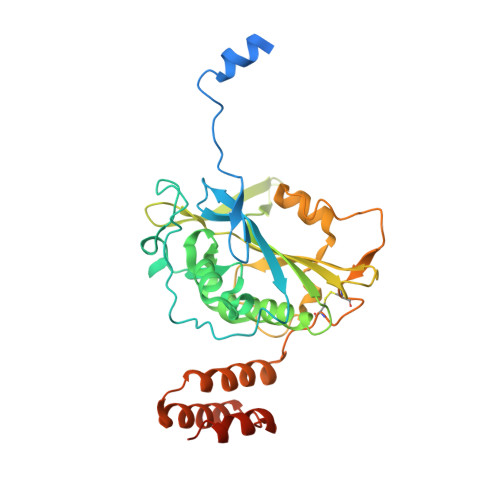
Human EXOG-H140A in complex with RNA/DNA hybrid duplex


Experimental Data Snapshot

  • Method: X-RAY DIFFRACTION
  • Resolution: 2.80 Å
  • R-Value Free: 
    0.227 (Depositor), 0.228 (DCC) 
  • R-Value Work: 
    0.181 (Depositor), 0.186 (DCC) 
  • R-Value Observed: 
    0.183 (Depositor) 

Starting Model: experimental
View more details

wwPDB Validation 3D Report Full Report

Validation slider image for 5ZKJ

This is version 1.4 of the entry. See complete history

Literature

A unique exonuclease ExoG cleaves between RNA and DNA in mitochondrial DNA replication.

Wu, C.C.Lin, J.L.J.Yang-Yen, H.F.Yuan, H.S.

(2019) Nucleic Acids Res 47: 5405-5419

  • DOI: https://doi.org/10.1093/nar/gkz241
  • Primary Citation Related Structures: 
    5ZKI, 5ZKJ, 6IID

  • PubMed Abstract: 

    Replication of sufficient mitochondrial DNA (mtDNA) is essential for maintaining mitochondrial functions in mammalian cells. During mtDNA replication, RNA primers must be removed before the nascent circular DNA strands rejoin. This process involves mitochondrial RNase H1, which removes most of the RNA primers but leaves two ribonucleotides attached to the 5' end of nascent DNA. A subsequent 5'-exonuclease is required to remove the residual ribonucleotides, however, it remains unknown if any mitochondrial 5'-exonuclease could remove two RNA nucleotides from a hybrid duplex DNA. Here, we report that human mitochondrial Exonuclease G (ExoG) may participate in this particular process by efficiently cleaving at RNA-DNA junctions to remove the 5'-end RNA dinucleotide in an RNA/DNA hybrid duplex. Crystal structures of human ExoG bound respectively with DNA, RNA/DNA hybrid and RNA-DNA chimeric duplexes uncover the underlying structural mechanism of how ExoG specifically recognizes and cleaves at RNA-DNA junctions of a hybrid duplex with an A-form conformation. This study hence establishes the molecular basis of ExoG functioning as a unique 5'-exonuclease to mediate the flap-independent RNA primer removal process during mtDNA replication to maintain mitochondrial genome integrity.


  • Organizational Affiliation
    • Institute of Molecular Biology, Academia Sinica, Taipei, Taiwan 11529, ROC.

Macromolecule Content 

  • Total Structure Weight: 93.5 kDa 
  • Atom Count: 5,878 
  • Modeled Residue Count: 648 
  • Deposited Residue Count: 744 
  • Unique protein chains: 1
  • Unique nucleic acid chains: 2

Macromolecules


Find similar proteins by:|  3D Structure
Entity ID: 1
MoleculeChains  Sequence LengthOrganismDetailsImage
Nuclease EXOG, mitochondrial
A, B
348Homo sapiensMutation(s): 1 
Gene Names: EXOGENDOGL1ENDOGL2ENGL
EC: 3.1.30
UniProt & NIH Common Fund Data Resources
Find proteins for Q9Y2C4 (Homo sapiens)
Explore Q9Y2C4 
Go to UniProtKB:  Q9Y2C4
PHAROS:  Q9Y2C4
GTEx:  ENSG00000157036 
Entity Groups
Sequence Clusters30% Identity50% Identity70% Identity90% Identity95% Identity100% Identity
UniProt GroupQ9Y2C4
Sequence Annotations
Expand
Reference Sequence
Find similar nucleic acids by:  Sequence
Entity ID: 2
MoleculeChains LengthOrganismImage
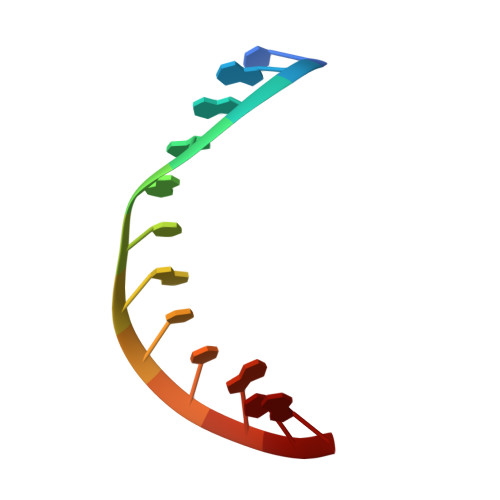
RNA (5'-R(P*CP*GP*GP*GP*AP*UP*GP*UP*CP*AP*CP*G)-3')
C, E
12synthetic construct
Sequence Annotations
Expand
Reference Sequence
Find similar nucleic acids by:  Sequence
Entity ID: 3
MoleculeChains LengthOrganismImage
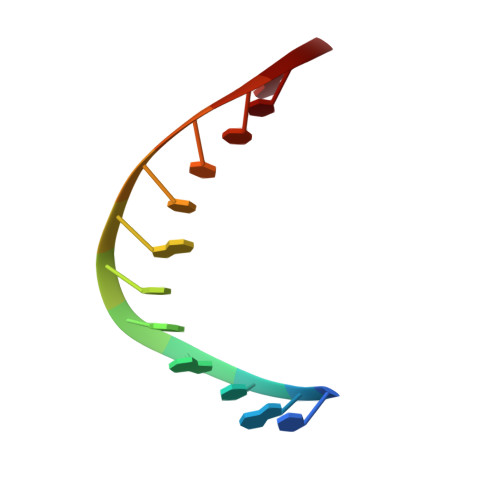
DNA (5'-D(*CP*GP*TP*GP*AP*CP*AP*TP*CP*CP*CP*G)-3')
D, F
12synthetic construct
Sequence Annotations
Expand
Reference Sequence

Experimental Data & Validation

Experimental Data

  • Method: X-RAY DIFFRACTION
  • Resolution: 2.80 Å
  • R-Value Free:  0.227 (Depositor), 0.228 (DCC) 
  • R-Value Work:  0.181 (Depositor), 0.186 (DCC) 
  • R-Value Observed: 0.183 (Depositor) 
Space Group: H 3
Unit Cell:
Length ( Å )Angle ( ˚ )
a = 167.576α = 90
b = 167.576β = 90
c = 105.438γ = 120
Software Package:
Software NamePurpose
PHENIXrefinement
HKL-2000data reduction
HKL-2000data scaling
PHASERphasing

Structure Validation

View Full Validation Report


Entry History 

Deposition Data

Revision History  (Full details and data files)

  • Version 1.0: 2019-04-03
    Type: Initial release
  • Version 1.1: 2019-04-17
    Changes: Data collection, Database references
  • Version 1.2: 2019-06-19
    Changes: Data collection, Database references
  • Version 1.3: 2023-11-22
    Changes: Data collection, Database references, Derived calculations, Refinement description
  • Version 1.4: 2024-10-30
    Changes: Structure summary