5Y95 | pdb_00005y95

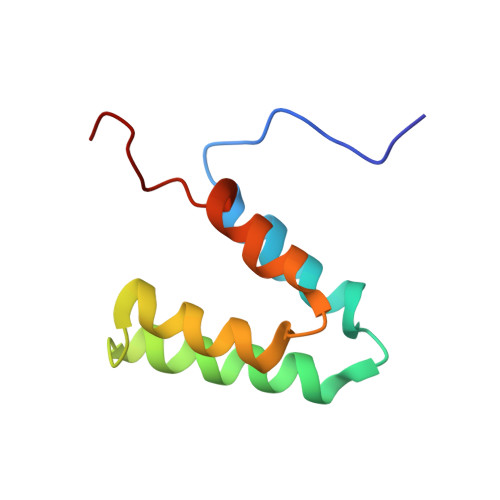
Haddock model of mSIN3B PAH1 domain


Experimental Data Snapshot

  • Method: SOLUTION NMR
  • Conformers Calculated: 200 
  • Conformers Submitted: 10 
  • Selection Criteria: structures with the lowest energy 

wwPDB Validation 3D Report Full Report

Validation slider image for 5Y95

This is version 1.4 of the entry. See complete history. 

Literature

A mimetic of the mSin3-binding helix of NRSF/REST ameliorates abnormal pain behavior in chronic pain models.

Ueda, H., Kurita, J.I., Neyama, H., Hirao, Y., Kouji, H., Mishina, T., Kasai, M., Nakano, H., Yoshimori, A., Nishimura, Y.

(2017) Bioorg Med Chem Lett 27: 4705-4709

  • DOI: https://doi.org/10.1016/j.bmcl.2017.09.006
  • Primary Citation Related Structures: 
    5Y95

  • PubMed Abstract: 

    The neuron-restrictive silencing factor NRSF/REST binds to neuron-restrictive silencing elements in neuronal genes and recruits corepressors such as mSin3 to inhibit epigenetically neuronal gene expression. Because dysregulation of NRSF/REST is related to neuropathic pain, here, we have designed compounds to target neuropathic pain based on the mSin3-binding helix structure of NRSF/REST and examined their ability to bind to mSin3 by NMR. One compound, mS-11, binds strongly to mSin3 with a binding mode similar to that of NRSF/REST. In a mouse model of neuropathic pain, mS-11 was found to ameliorate abnormal pain behavior and to reverse lost peripheral morphine analgesia. Furthermore, even in the less well epigenetically defined case of fibromyalgia, mS-11 ameliorated symptoms in a mouse model, suggesting that fibromyalgia is related to the dysfunction of NRSF/REST. Taken together, these findings show that the chemically optimized mimetic mS-11 can inhibit mSin3-NRSF/REST binding and successfully reverse lost peripheral and central morphine analgesia in mouse models of pain.


  • Organizational Affiliation: 
    • Department of Pharmacology and Therapeutic Innovation, Nagasaki University Graduate School of Biomedical Sciences, Nagasaki 852-8521, Japan.

Macromolecule Content 

  • Total Structure Weight: 9.08 kDa 
  • Atom Count: 639 
  • Modeled Residue Count: 80 
  • Deposited Residue Count: 80 
  • Unique protein chains: 1

Macromolecules

Find similar proteins by:|  3D Structure
Entity ID: 1
MoleculeChains  Sequence LengthOrganismDetailsImage
Paired amphipathic helix protein Sin3b80Mus musculusMutation(s): 0 
Gene Names: Sin3b, Kiaa0700
UniProt
Find proteins for Q62141 (Mus musculus)
Explore Q62141 
Go to UniProtKB:  Q62141
Entity Groups
Sequence Clusters30% Identity50% Identity70% Identity90% Identity95% Identity100% Identity
UniProt GroupQ62141
Sequence Annotations
Expand
Reference Sequence

Small Molecules

Ligands 1 Unique
IDChains Name / Formula / InChI Key2D Diagram3D Interactions
8TL

Query on 8TL


Download:Ideal Coordinates CCD File
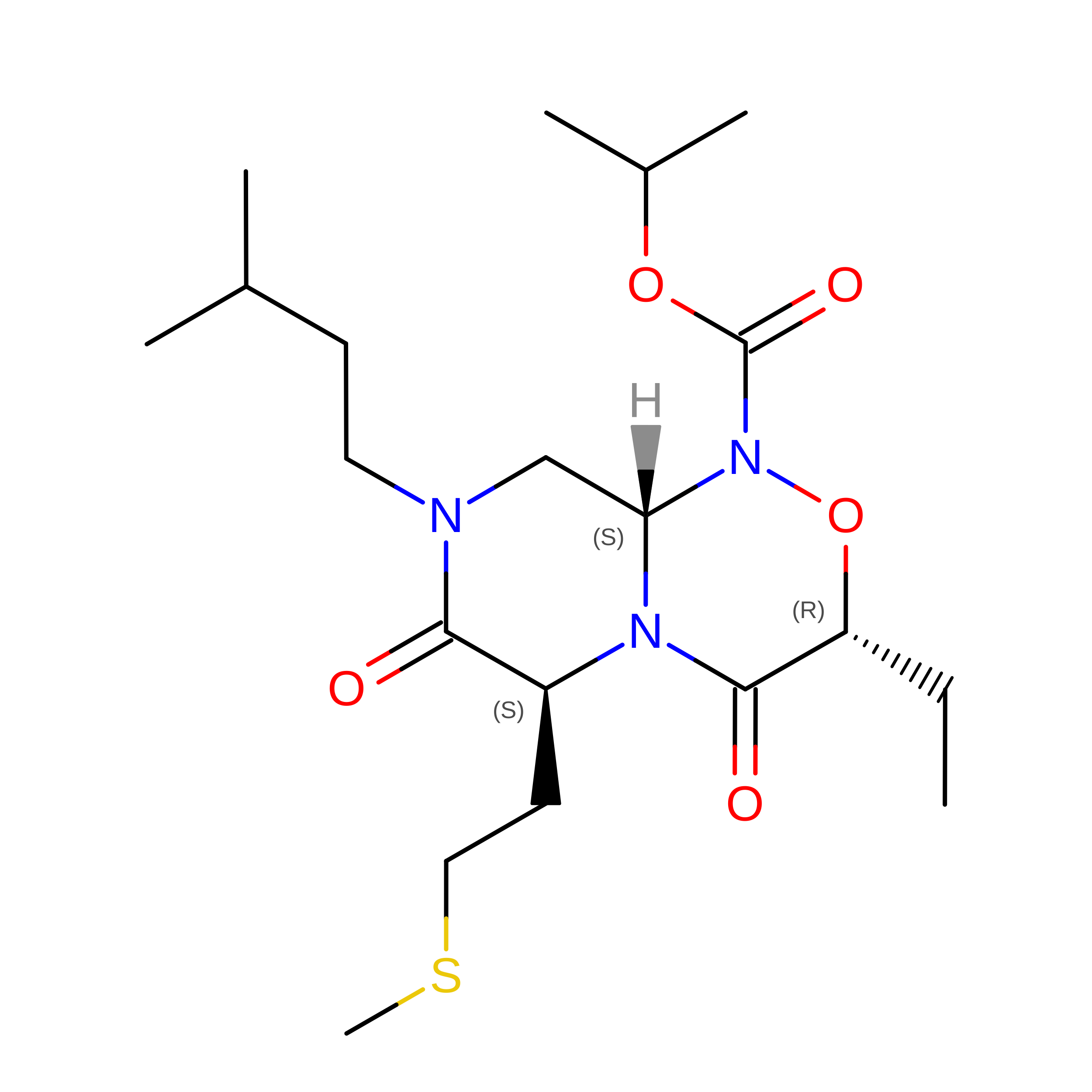
B [auth A]propan-2-yl (3R,6S,9aS)-3-ethyl-8-(3-methylbutyl)-6-(2-methylsulfanylethyl)-4,7-bis(oxidanylidene)-9,9a-dihydro-6H-pyrazino[2,1-c][1,2,4]oxadiazine-1-carboxylate
C20 H35 N3 O5 S
WWMMWXUYOOJAEO-BBWFWOEESA-N

Experimental Data & Validation

Experimental Data

  • Method: SOLUTION NMR
  • Conformers Calculated: 200 
  • Conformers Submitted: 10 
  • Selection Criteria: structures with the lowest energy 

Structure Validation

View Full Validation Report


Entry History 

Deposition Data

Revision History  (Full details and data files)

  • Version 1.0: 2017-10-04
    Type: Initial release
  • Version 1.1: 2017-12-06
    Changes: Database references
  • Version 1.2: 2023-06-14
    Changes: Data collection, Database references, Other
  • Version 1.3: 2024-05-29
    Changes: Data collection
  • Version 1.4: 2025-03-12
    Changes: Database references, Structure summary