5T2H | pdb_00005t2h

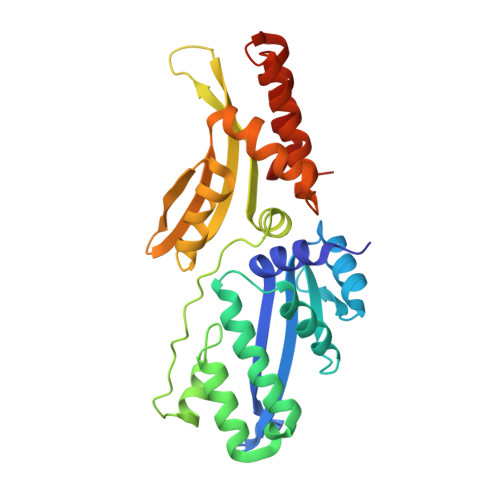
Engineered variant of I-OnuI meganuclease targeting the Human TCRa gene; harbors 43 point mutations relative to wild-type I-OnuI


Experimental Data Snapshot

  • Method: X-RAY DIFFRACTION
  • Resolution: 2.52 Å
  • R-Value Free: 
    0.265 (Depositor), 0.271 (DCC) 
  • R-Value Work: 
    0.212 (Depositor), 0.219 (DCC) 
  • R-Value Observed: 
    0.217 (Depositor) 

Starting Model: experimental
View more details

wwPDB Validation 3D Report Full Report

Validation slider image for 5T2H

This is version 1.4 of the entry. See complete history

Literature

Crystallographic analyses illustrate significant plasticity and efficient recoding of meganuclease target specificity.

Werther, R.Hallinan, J.P.Lambert, A.R.Havens, K.Pogson, M.Jarjour, J.Galizi, R.Windbichler, N.Crisanti, A.Nolan, T.Stoddard, B.L.

(2017) Nucleic Acids Res 45: 8621-8634

  • DOI: https://doi.org/10.1093/nar/gkx544
  • Primary Citation Related Structures: 
    5T2H, 5T2N, 5T2O

  • PubMed Abstract: 

    The retargeting of protein-DNA specificity, outside of extremely modular DNA binding proteins such as TAL effectors, has generally proved to be quite challenging. Here, we describe structural analyses of five different extensively retargeted variants of a single homing endonuclease, that have been shown to function efficiently in ex vivo and in vivo applications. The redesigned proteins harbor mutations at up to 53 residues (18%) of their amino acid sequence, primarily distributed across the DNA binding surface, making them among the most significantly reengineered ligand-binding proteins to date. Specificity is derived from the combined contributions of DNA-contacting residues and of neighboring residues that influence local structural organization. Changes in specificity are facilitated by the ability of all those residues to readily exchange both form and function. The fidelity of recognition is not precisely correlated with the fraction or total number of residues in the protein-DNA interface that are actually involved in DNA contacts, including directional hydrogen bonds. The plasticity of the DNA-recognition surface of this protein, which allows substantial retargeting of recognition specificity without requiring significant alteration of the surrounding protein architecture, reflects the ability of the corresponding genetic elements to maintain mobility and persistence in the face of genetic drift within potential host target sites.


  • Organizational Affiliation
    • Basic Sciences Division, Fred Hutchinson Cancer Research Center, 1100 Fairview Ave. N., Seattle, WA 98109, USA.

Macromolecule Content 

  • Total Structure Weight: 50.83 kDa 
  • Atom Count: 3,344 
  • Modeled Residue Count: 346 
  • Deposited Residue Count: 351 
  • Unique protein chains: 1
  • Unique nucleic acid chains: 2

Macromolecules


Find similar proteins by:|  3D Structure
Entity ID: 1
MoleculeChains  Sequence LengthOrganismDetailsImage
I-OnuI_e-hTCRa299synthetic constructMutation(s): 0 
Find similar nucleic acids by:  (by identity cutoff) 
Entity ID: 2
MoleculeChains LengthOrganismImage
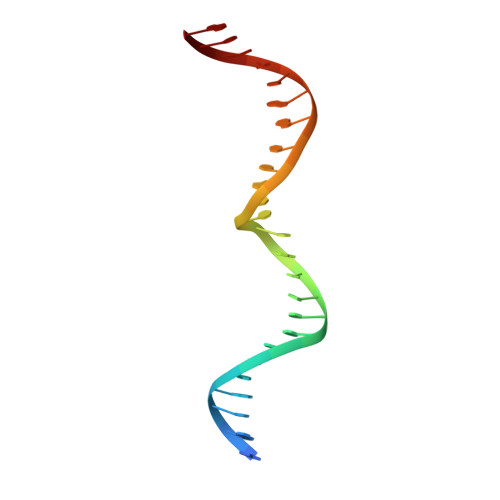
DNA (26-MER)26synthetic construct
Sequence Annotations
Expand
Reference Sequence
Find similar nucleic acids by:  (by identity cutoff) 
Entity ID: 3
MoleculeChains LengthOrganismImage
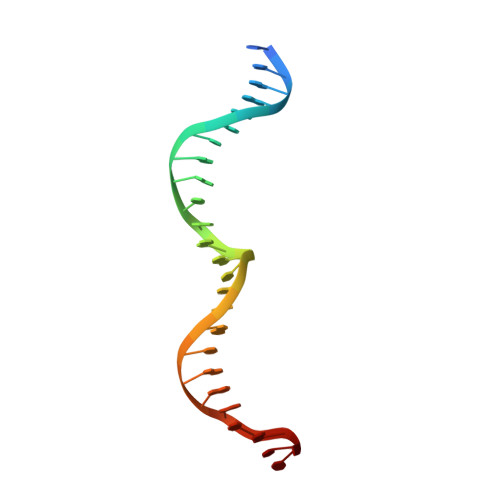
DNA (26-MER)26synthetic construct
Sequence Annotations
Expand
Reference Sequence

Experimental Data & Validation

Experimental Data

  • Method: X-RAY DIFFRACTION
  • Resolution: 2.52 Å
  • R-Value Free:  0.265 (Depositor), 0.271 (DCC) 
  • R-Value Work:  0.212 (Depositor), 0.219 (DCC) 
  • R-Value Observed: 0.217 (Depositor) 
Space Group: P 21 21 21
Unit Cell:
Length ( Å )Angle ( ˚ )
a = 39.696α = 90
b = 68.928β = 90
c = 157.53γ = 90
Software Package:
Software NamePurpose
PHENIXrefinement
HKL-2000data scaling
PHASERphasing
PDB_EXTRACTdata extraction
HKL-2000data reduction

Structure Validation

View Full Validation Report


Entry History 

& Funding Information

Deposition Data


Funding OrganizationLocationGrant Number
National Institutes of Health/National Institute of General Medical Sciences (NIH/NIGMS)United StatesNIH R01 GM105691
Bill & Melinda Gates FoundationUnited States--
bluebird bio, inc. (Corporate Funding)United States--

Revision History  (Full details and data files)

  • Version 1.0: 2017-05-03
    Type: Initial release
  • Version 1.1: 2017-09-27
    Changes: Author supporting evidence
  • Version 1.2: 2019-12-25
    Changes: Author supporting evidence
  • Version 1.3: 2021-06-23
    Changes: Database references, Derived calculations
  • Version 1.4: 2023-10-04
    Changes: Data collection, Database references, Refinement description