5LVQ | pdb_00005lvq

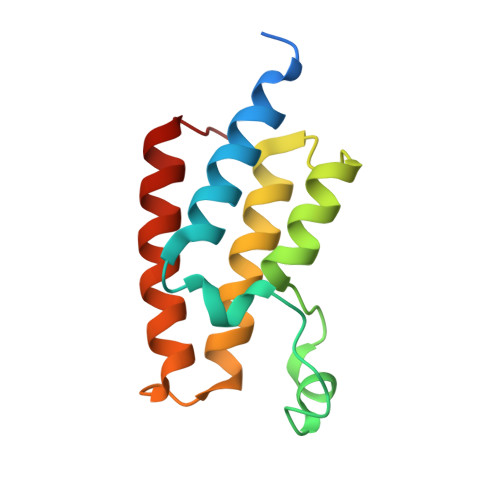
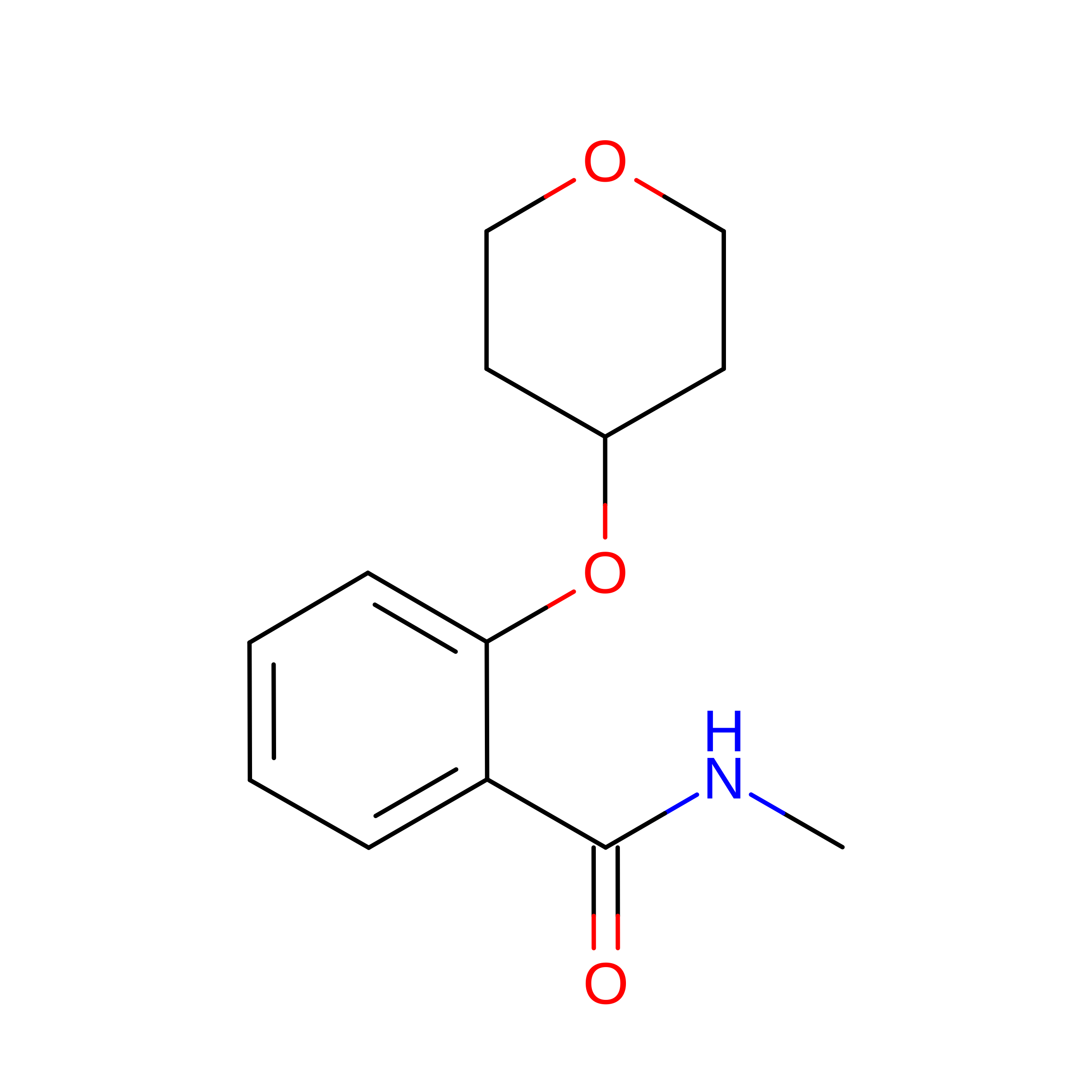
Crystal structure of human PCAF bromodomain in complex with compound-D (CPD-D), N-methyl-2-(tetrahydro-2H-pyran-4-yloxy)benzamide


Experimental Data Snapshot

  • Method: X-RAY DIFFRACTION
  • Resolution: 2.05 Å
  • R-Value Free: 
    0.218 (Depositor), 0.222 (DCC) 
  • R-Value Work: 
    0.180 (Depositor), 0.186 (DCC) 
  • R-Value Observed: 
    0.182 (Depositor) 

wwPDB Validation 3D Report Full Report

Validation slider image for 5LVQ

Ligand Structure Quality Assessment 


This is version 1.2 of the entry. See complete history

Literature

Discovery of New Bromodomain Scaffolds by Biosensor Fragment Screening.

Navratilova, I.Aristotelous, T.Picaud, S.Chaikuad, A.Knapp, S.Filappakopoulos, P.Hopkins, A.L.

(2016) ACS Med Chem Lett 7: 1213-1218

  • DOI: https://doi.org/10.1021/acsmedchemlett.6b00154
  • Primary Citation Related Structures: 
    5LUU, 5LVQ, 5LVR, 5TB6

  • PubMed Abstract: 

    The discovery of novel bromodomain inhibitors by fragment screening is complicated by the presence of dimethyl sulfoxide (DMSO), an acetyl-lysine mimetic, that can compromise the detection of low affinity fragments. We demonstrate surface plasmon resonance as a primary fragment screening approach for the discovery of novel bromodomain scaffolds, by describing a protocol to overcome the DMSO interference issue. We describe the discovery of several novel small molecules scaffolds that inhibit the bromodomains PCAF, BRD4, and CREBBP, representing canonical members of three out of the seven subfamilies of bromodomains. High-resolution crystal structures of the complexes of key fragments binding to BRD4(1), CREBBP, and PCAF were determined to provide binding mode data to aid the development of potent and selective inhibitors of PCAF, CREBBP, and BRD4.


  • Organizational Affiliation
    • Division of Biological Chemistry and Drug Discovery, School of Life Sciences, University of Dundee , Dow Street, Dundee DD1 5EH, United Kingdom.

Macromolecule Content 

  • Total Structure Weight: 28.97 kDa 
  • Atom Count: 1,983 
  • Modeled Residue Count: 216 
  • Deposited Residue Count: 238 
  • Unique protein chains: 1

Macromolecules

Find similar proteins by:|  3D Structure
Entity ID: 1
MoleculeChains  Sequence LengthOrganismDetailsImage
Histone acetyltransferase KAT2B
A, B
119Homo sapiensMutation(s): 0 
Gene Names: KAT2BPCAF
EC: 2.3.1.48 (PDB Primary Data), 2.3.1.57 (UniProt)
UniProt & NIH Common Fund Data Resources
Find proteins for Q92831 (Homo sapiens)
Explore Q92831 
Go to UniProtKB:  Q92831
PHAROS:  Q92831
GTEx:  ENSG00000114166 
Entity Groups
Sequence Clusters30% Identity50% Identity70% Identity90% Identity95% Identity100% Identity
UniProt GroupQ92831
Sequence Annotations
Expand
Reference Sequence

Small Molecules

Ligands 3 Unique
IDChains Name / Formula / InChI Key2D Diagram3D Interactions
2LX

Query on 2LX


Download:Ideal Coordinates CCD File
F [auth A]N-methyl-2-(tetrahydro-2H-pyran-4-yloxy)benzamide
C13 H17 N O3
WZBIMVSWUWZIHN-UHFFFAOYSA-N
DMS

Query on DMS


Download:Ideal Coordinates CCD File
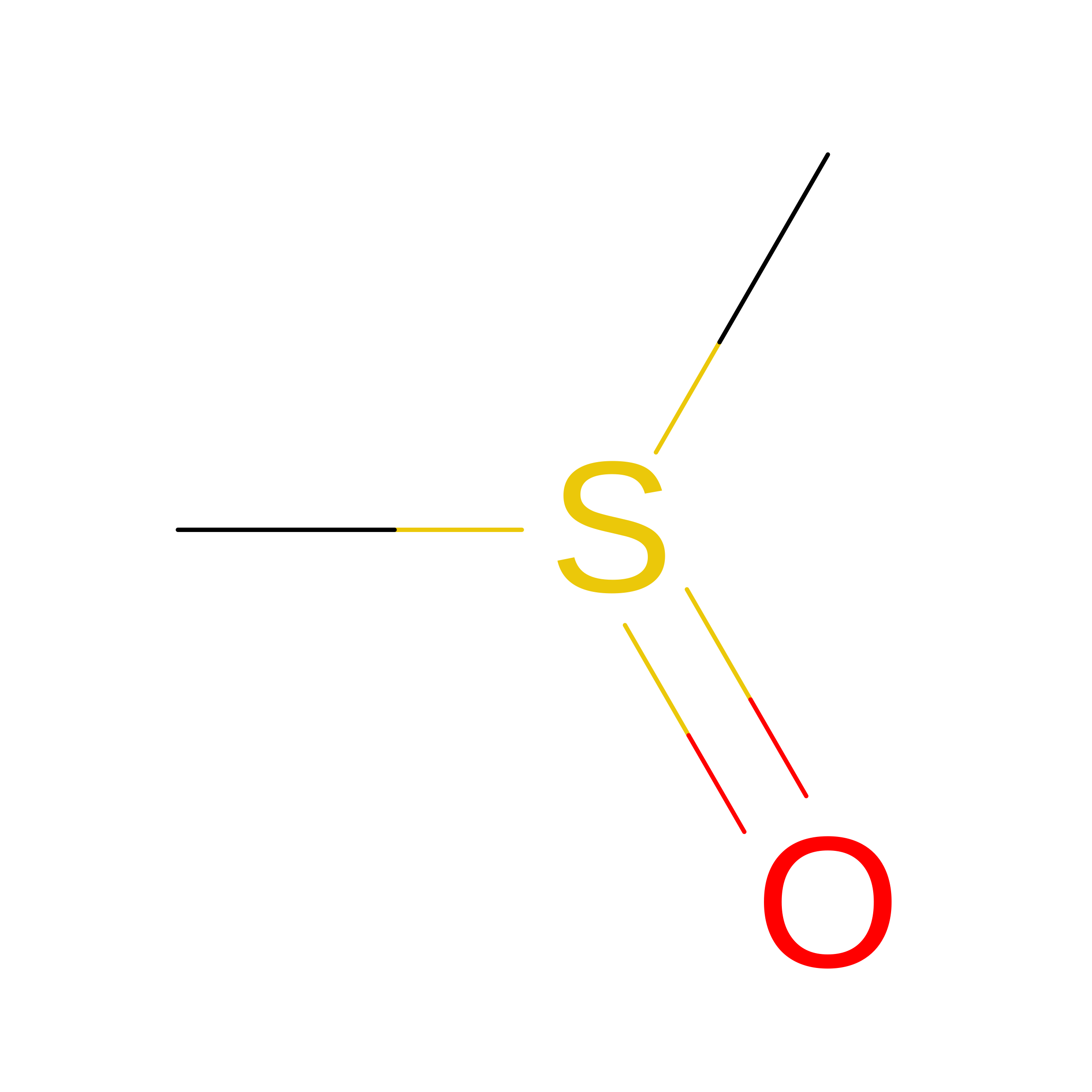
I [auth B]DIMETHYL SULFOXIDE
C2 H6 O S
IAZDPXIOMUYVGZ-UHFFFAOYSA-N
EDO

Query on EDO


Download:Ideal Coordinates CCD File
C [auth A],
D [auth A],
E [auth A],
G [auth B],
H [auth B]
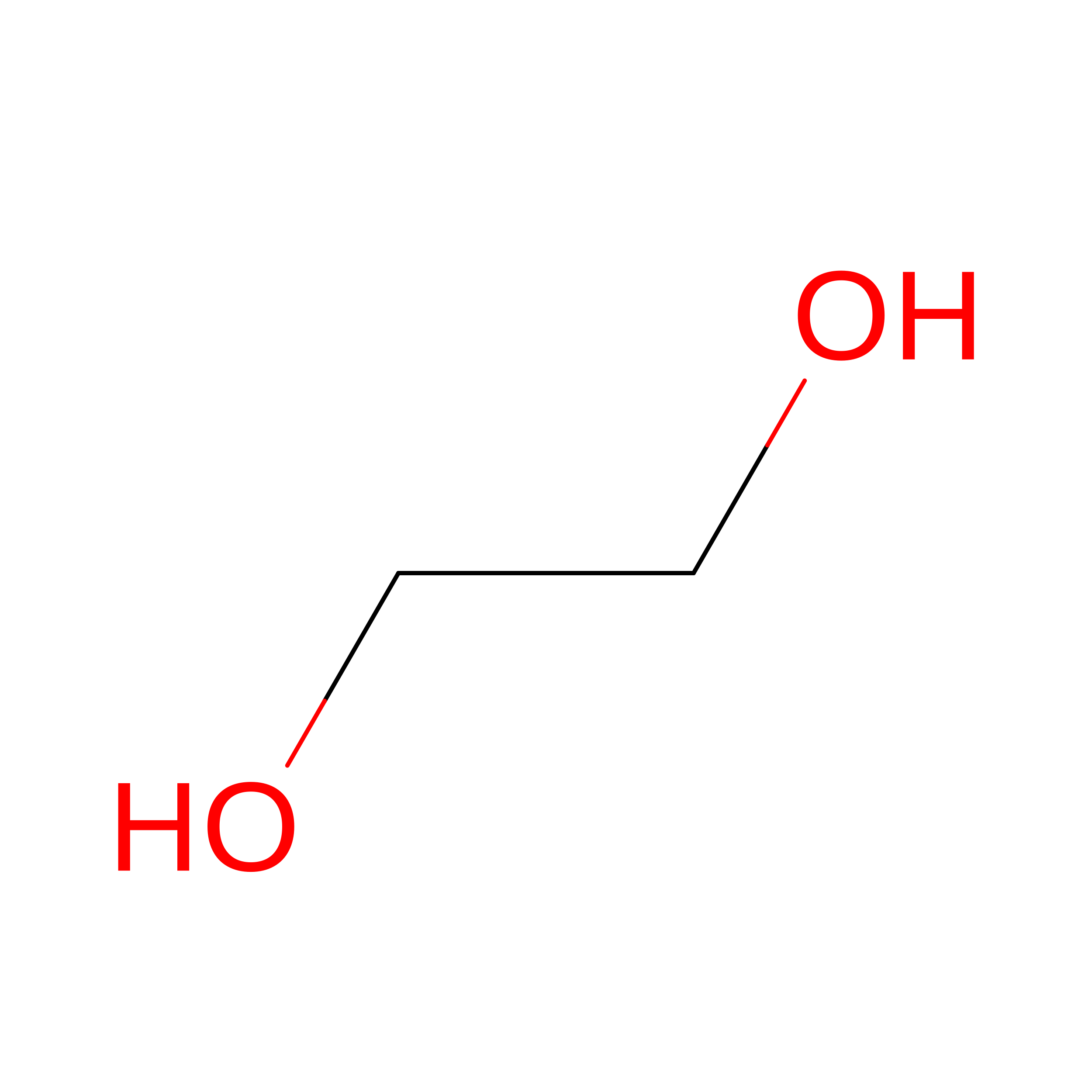
1,2-ETHANEDIOL
C2 H6 O2
LYCAIKOWRPUZTN-UHFFFAOYSA-N
Binding Affinity Annotations 
IDSourceBinding Affinity
2LX BindingDB:  5LVQ Kd: min: 7.30e+4, max: 4.59e+5 (nM) from 4 assay(s)

Experimental Data & Validation

Experimental Data

  • Method: X-RAY DIFFRACTION
  • Resolution: 2.05 Å
  • R-Value Free:  0.218 (Depositor), 0.222 (DCC) 
  • R-Value Work:  0.180 (Depositor), 0.186 (DCC) 
  • R-Value Observed: 0.182 (Depositor) 
Space Group: H 3
Unit Cell:
Length ( Å )Angle ( ˚ )
a = 99.859α = 90
b = 99.859β = 90
c = 100.762γ = 120
Software Package:
Software NamePurpose
REFMACrefinement
iMOSFLMdata reduction
SCALAdata scaling
PHASERphasing

Structure Validation

View Full Validation Report


Ligand Structure Quality Assessment 


Entry History 

Revision History  (Full details and data files)

  • Version 1.0: 2016-10-26
    Type: Initial release
  • Version 1.1: 2017-01-11
    Changes: Database references
  • Version 1.2: 2024-05-08
    Changes: Data collection, Database references, Refinement description