5KZP | pdb_00005kzp

Structure of the HCV1-C1 Antibody-Antigen Complex


Experimental Data Snapshot

  • Method: X-RAY DIFFRACTION
  • Resolution: 2.26 Å
  • R-Value Free: 
    0.261 (Depositor), 0.261 (DCC) 
  • R-Value Work: 
    0.218 (Depositor), 0.219 (DCC) 
  • R-Value Observed: 
    0.220 (Depositor) 

wwPDB Validation 3D Report Full Report

Validation slider image for 5KZP

This is version 1.3 of the entry. See complete history

Literature

Structure-Based Design of Hepatitis C Virus Vaccines That Elicit Neutralizing Antibody Responses to a Conserved Epitope.

Pierce, B.G.Boucher, E.N.Piepenbrink, K.H.Ejemel, M.Rapp, C.A.Thomas, W.D.Sundberg, E.J.Weng, Z.Wang, Y.

(2017) J Virol 91

  • DOI: https://doi.org/10.1128/JVI.01032-17
  • Primary Citation Related Structures: 
    5KZP

  • PubMed Abstract: 

    Despite recent advances in therapeutic options, hepatitis C virus (HCV) remains a severe global disease burden, and a vaccine can substantially reduce its incidence. Due to its extremely high sequence variability, HCV can readily escape the immune response; thus, an effective vaccine must target conserved, functionally important epitopes. Using the structure of a broadly neutralizing antibody in complex with a conserved linear epitope from the HCV E2 envelope glycoprotein (residues 412 to 423; epitope I), we performed structure-based design of immunogens to induce antibody responses to this epitope. This resulted in epitope-based immunogens based on a cyclic defensin protein, as well as a bivalent immunogen with two copies of the epitope on the E2 surface. We solved the X-ray structure of a cyclic immunogen in complex with the HCV1 antibody and confirmed preservation of the epitope conformation and the HCV1 interface. Mice vaccinated with our designed immunogens produced robust antibody responses to epitope I, and their serum could neutralize HCV. Notably, the cyclic designs induced greater epitope-specific responses and neutralization than the native peptide epitope. Beyond successfully designing several novel HCV immunogens, this study demonstrates the principle that neutralizing anti-HCV antibodies can be induced by epitope-based, engineered vaccines and provides the basis for further efforts in structure-based design of HCV vaccines. IMPORTANCE Hepatitis C virus is a leading cause of liver disease and liver cancer, with approximately 3% of the world's population infected. To combat this virus, an effective vaccine would have distinct advantages over current therapeutic options, yet experimental vaccines have not been successful to date, due in part to the virus's high sequence variability leading to immune escape. In this study, we rationally designed several vaccine immunogens based on the structure of a conserved epitope that is the target of broadly neutralizing antibodies. In vivo results in mice indicated that these antigens elicited epitope-specific neutralizing antibodies, with various degrees of potency and breadth. These promising results suggest that a rational design approach can be used to generate an effective vaccine for this virus.


  • Organizational Affiliation
    • Program in Bioinformatics and Integrative Biology, University of Massachusetts Medical School, Worcester, Massachusetts, USA pierce@umd.edu yang.wang@umassmed.edu.

Macromolecule Content 

  • Total Structure Weight: 199.92 kDa 
  • Atom Count: 14,615 
  • Modeled Residue Count: 1,811 
  • Deposited Residue Count: 1,816 
  • Unique protein chains: 3

Macromolecules

Find similar proteins by:|  3D Structure
Entity ID: 1
MoleculeChains  Sequence LengthOrganismDetailsImage
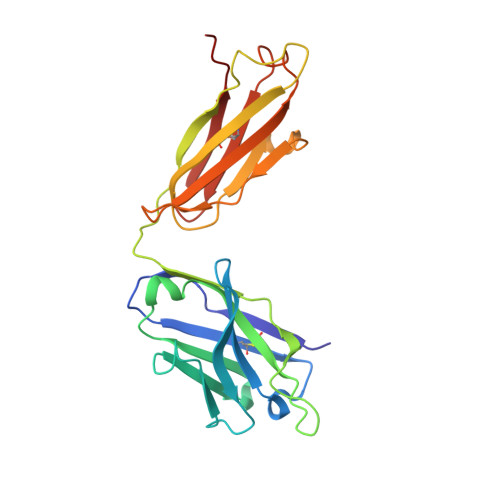
HCV1-C1 Antibody Fab Heavy ChainA [auth H],
D [auth E],
G [auth F],
J [auth G]
226Homo sapiensMutation(s): 0 
Find similar proteins by:|  3D Structure
Entity ID: 2
MoleculeChains  Sequence LengthOrganismDetailsImage
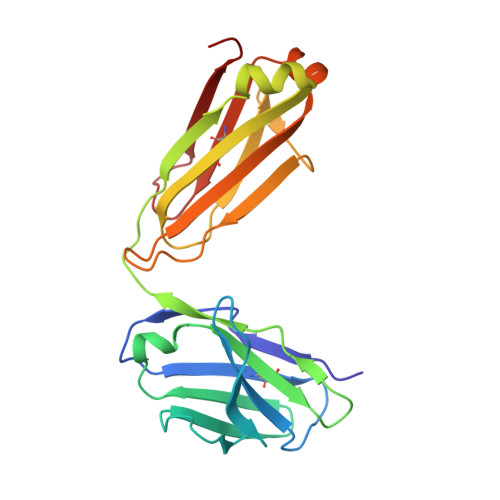
HCV1-C1 Antibody Fab Light ChainB [auth L],
E [auth I],
H [auth J],
K
213Homo sapiensMutation(s): 0 
Find similar proteins by:  Sequence   |   3D Structure  
Entity ID: 3
MoleculeChains  Sequence LengthOrganismDetailsImage
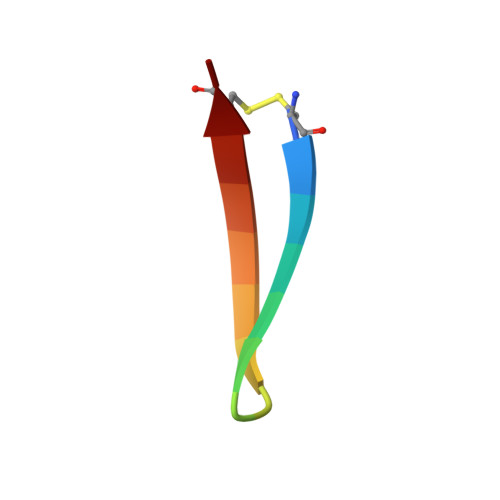
C1 EpitopeC [auth A],
F [auth B],
I [auth C],
L [auth D]
15Orthohepacivirus hominisMutation(s): 0 
UniProt
Find proteins for P26663 (Hepatitis C virus genotype 1b (isolate BK))
Explore P26663 
Go to UniProtKB:  P26663
Entity Groups
Sequence Clusters30% Identity50% Identity70% Identity90% Identity95% Identity100% Identity
UniProt GroupP26663
Sequence Annotations
Expand
Reference Sequence

Small Molecules

Ligands 2 Unique
IDChains Name / Formula / InChI Key2D Diagram3D Interactions
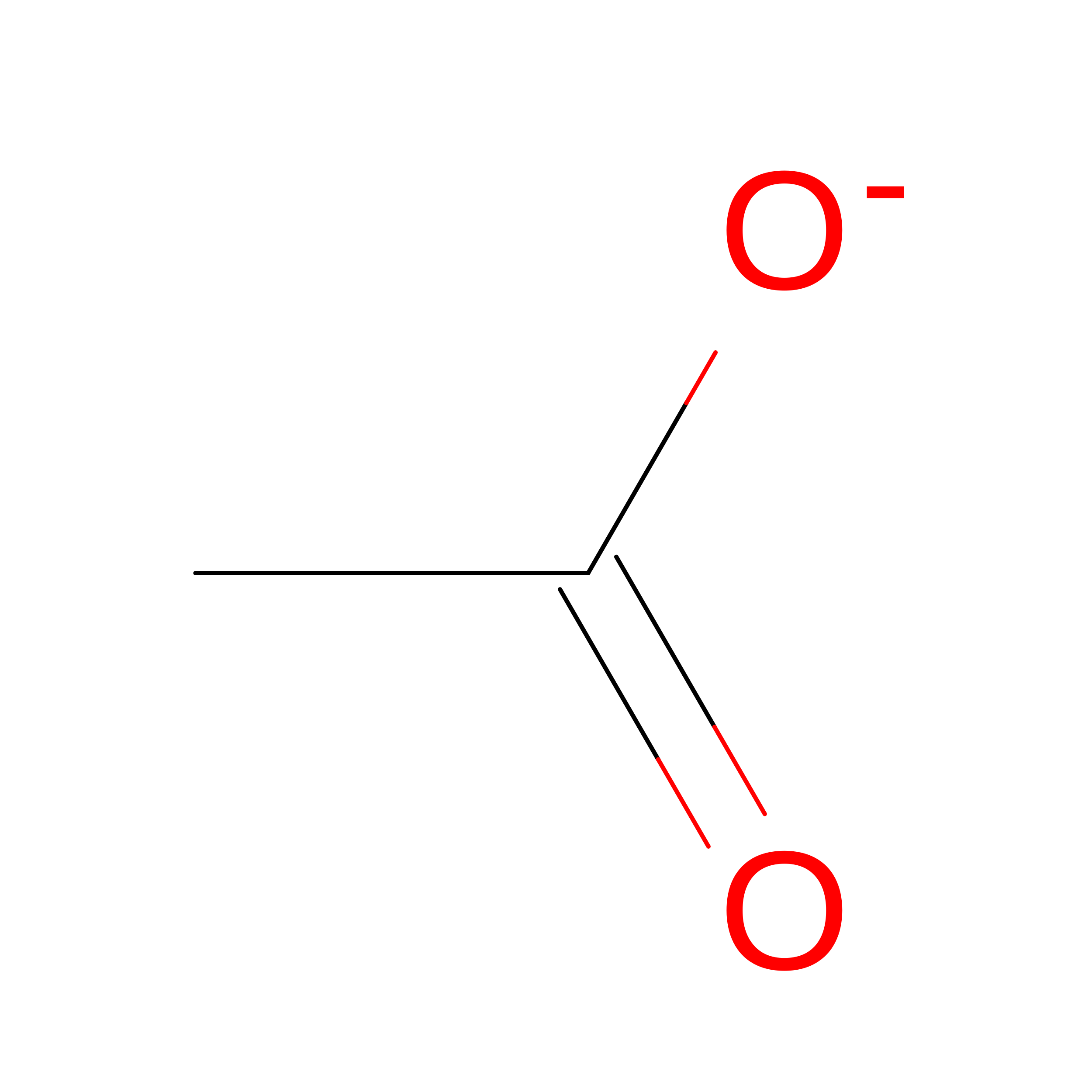
ACT

Query on ACT


Download:Ideal Coordinates CCD File
DA [auth G],
M [auth H],
S [auth E],
V [auth F]
ACETATE ION
C2 H3 O2
QTBSBXVTEAMEQO-UHFFFAOYSA-M
CA

Query on CA


Download:Ideal Coordinates CCD File
AA [auth J]
BA [auth J]
CA [auth C]
EA [auth G]
FA [auth G]
AA [auth J],
BA [auth J],
CA [auth C],
EA [auth G],
FA [auth G],
GA [auth K],
HA [auth K],
IA [auth K],
JA [auth K],
KA [auth K],
N [auth H],
O [auth H],
P [auth L],
Q [auth L],
R [auth A],
T [auth E],
U [auth I],
W [auth F],
X [auth F],
Y [auth F],
Z [auth F]
CALCIUM ION
Ca
BHPQYMZQTOCNFJ-UHFFFAOYSA-N

Experimental Data & Validation

Experimental Data

  • Method: X-RAY DIFFRACTION
  • Resolution: 2.26 Å
  • R-Value Free:  0.261 (Depositor), 0.261 (DCC) 
  • R-Value Work:  0.218 (Depositor), 0.219 (DCC) 
  • R-Value Observed: 0.220 (Depositor) 
Space Group: P 1
Unit Cell:
Length ( Å )Angle ( ˚ )
a = 47.07α = 91.84
b = 94.538β = 94.95
c = 126.758γ = 97.91
Software Package:
Software NamePurpose
PHENIXrefinement
XDSdata reduction
SCALAdata scaling
PHASERphasing

Structure Validation

View Full Validation Report


Entry History 

Deposition Data

Revision History  (Full details and data files)

  • Version 1.0: 2017-07-05
    Type: Initial release
  • Version 1.1: 2017-08-23
    Changes: Database references
  • Version 1.2: 2017-10-11
    Changes: Database references
  • Version 1.3: 2024-11-13
    Changes: Data collection, Database references, Derived calculations, Structure summary