Download Mendeley
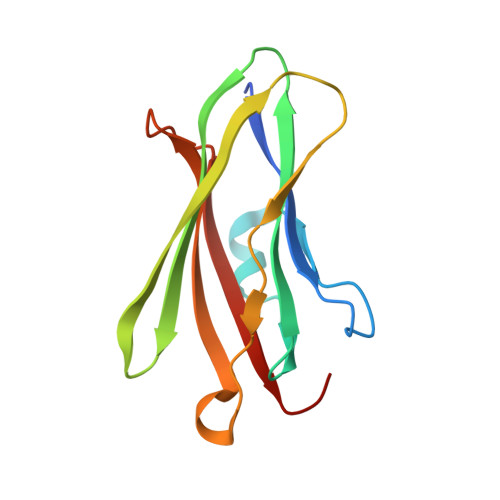
NMR characterization of weak interactions between RhoGDI2 and fragment screening hits.
Liu, J., Gao, J., Li, F., Ma, R., Wei, Q., Wang, A., Wu, J., Ruan, K.(2017) Biochim Biophys Acta 1861: 3061-3070
- PubMed: 27721047 Search on PubMed
- DOI: https://doi.org/10.1016/j.bbagen.2016.10.003
- Primary Citation Related Structures:
5H1D - PubMed Abstract:
The delineation of intrinsically weak interactions between novel targets and fragment screening hits has long limited the pace of hit-to-lead evolution. Rho guanine-nucleotide dissociation inhibitor 2 (RhoGDI2) is a novel target that lacks any chemical probes for the treatment of tumor metastasis. Protein-observed and ligand-observed NMR spectroscopy was used to characterize the weak interactions between RhoGDI2 and fragment screening hits. We identified three hits of RhoGDI2 using streamlined NMR fragment-based screening. The binding site residues were assigned using non-uniformly sampled C α - and H α -based three dimensional NMR spectra. The molecular docking to the proposed geranylgeranyl binding pocket of RhoGDI2 was guided by NMR restraints of chemical shift perturbations and ligand-observed transferred paramagnetic relaxation enhancement. We further validated the weak RhoGDI2-hit interactions using mutagenesis and structure-affinity analysis. Weak interactions between RhoGDI2 and fragment screening hits were delineated using an integrated NMR approach. Binders to RhoGDI2 as a potential anti-cancer target have been first reported, and their weak interactions were depicted using NMR spectroscopy. Our work highlights the powerfulness and the versatility of the integrative NMR techniques to provide valuable structural insight into the intrinsically weak interactions between RhoGDI2 and the fragment screening hits, which could hardly be conceived using other biochemical techniques.
- Hefei National Laboratory for Physical Science at the Microscale, School of Life Sciences, University of Science and Technology of China, Hefei, Anhui 230027, PR China.
Organizational Affiliation: