5GT1 | pdb_00005gt1

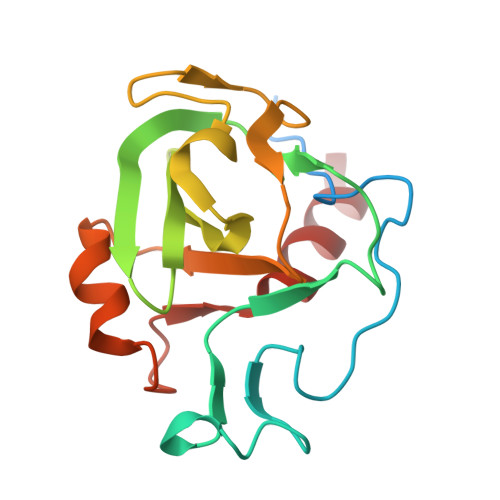
crystal structure of cbpa from L. salivarius REN


Experimental Data Snapshot

  • Method: X-RAY DIFFRACTION
  • Resolution: 1.85 Å
  • R-Value Free: 
    0.197 (Depositor), 0.196 (DCC) 
  • R-Value Work: 
    0.172 (Depositor), 0.171 (DCC) 
  • R-Value Observed: 
    0.173 (Depositor) 

Starting Model: experimental
View more details

wwPDB Validation 3D Report Full Report

Validation slider image for 5GT1

This is version 1.2 of the entry. See complete history

Literature

The Adhesion of Lactobacillus salivarius REN to a Human Intestinal Epithelial Cell Line Requires S-layer Proteins

Wang, R.Jiang, L.Zhang, M.Zhao, L.Hao, Y.Guo, H.Sang, Y.Zhang, H.Ren, F.

(2017) Sci Rep 7: 44029-44029

  • DOI: https://doi.org/10.1038/srep44029
  • Primary Citation Related Structures: 
    5GT1

  • PubMed Abstract: 

    Lactobacillus salivarius REN, a novel probiotic isolated from Chinese centenarians, can adhere to intestinal epithelial cells and subsequently colonize the host. We show here that the surface-layer protein choline-binding protein A (CbpA) of L. salivarius REN was involved in adherence to the human colorectal adenocarcinoma cell line HT-29. Adhesion of a cbpA deletion mutant was significantly reduced compared with that of wild-type, suggesting that CbpA acts as an adhesin that mediates the interaction between the bacterium and its host. To identify the molecular mechanism of adhesion, we determined the crystal structure of a truncated form of CbpA that is likely involved in binding to its cell-surface receptor. The crystal structure identified CbpA as a peptidase of the M23 family whose members harbor a zinc-dependent catalytic site. Therefore, we propose that CbpA acts as a multifunctional surface protein that cleaves the host extracellular matrix and participates in adherence. Moreover, we identified enolase as the CbpA receptor on the surface of HT-29 cells. The present study reveals a new class of surface-layer proteins as well as the molecular mechanism that may contribute to the ability of L. salivarius REN to colonize the human gut.


  • Organizational Affiliation
    • Beijing Advanced Innovation Center for Food Nutrition and Human Health, China Agricultural University, Beijing 100083, P. R. China.

Macromolecule Content 

  • Total Structure Weight: 19.13 kDa 
  • Atom Count: 1,321 
  • Modeled Residue Count: 153 
  • Deposited Residue Count: 174 
  • Unique protein chains: 1

Macromolecules

Find similar proteins by:|  3D Structure
Entity ID: 1
MoleculeChains  Sequence LengthOrganismDetailsImage
Choline binding protein A174Ligilactobacillus salivarius str. RenMutation(s): 0 
Gene Names: LsR_01470
UniProt
Find proteins for A0A0F7PV22 (Ligilactobacillus salivarius str. Ren)
Explore A0A0F7PV22 
Go to UniProtKB:  A0A0F7PV22
Entity Groups
Sequence Clusters30% Identity50% Identity70% Identity90% Identity95% Identity100% Identity
UniProt GroupA0A0F7PV22
Sequence Annotations
Expand
Reference Sequence

Experimental Data & Validation

Experimental Data

  • Method: X-RAY DIFFRACTION
  • Resolution: 1.85 Å
  • R-Value Free:  0.197 (Depositor), 0.196 (DCC) 
  • R-Value Work:  0.172 (Depositor), 0.171 (DCC) 
  • R-Value Observed: 0.173 (Depositor) 
Space Group: P 43 21 2
Unit Cell:
Length ( Å )Angle ( ˚ )
a = 95.724α = 90
b = 95.724β = 90
c = 39.318γ = 90
Software Package:
Software NamePurpose
REFMACrefinement
HKL-2000data reduction
HKL-2000data scaling
BALBESphasing

Structure Validation

View Full Validation Report


Entry History 

& Funding Information

Deposition Data


Funding OrganizationLocationGrant Number
National Natural Science Foundation of ChinaChina31401668

Revision History  (Full details and data files)

  • Version 1.0: 2017-07-19
    Type: Initial release
  • Version 1.1: 2017-10-18
    Changes: Structure summary
  • Version 1.2: 2023-11-08
    Changes: Data collection, Database references, Derived calculations, Refinement description