5CXR | pdb_00005cxr

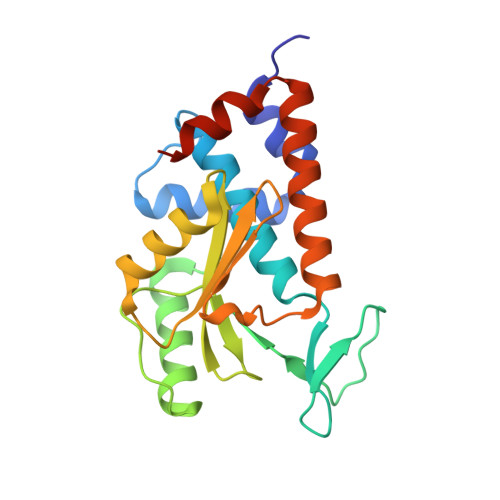
Influenza endonuclease complexed with 4-bromopyrazole


Experimental Data Snapshot

  • Method: X-RAY DIFFRACTION
  • Resolution: 2.00 Å
  • R-Value Free: 
    0.198 (Depositor), 0.200 (DCC) 
  • R-Value Work: 
    0.174 (Depositor), 0.177 (DCC) 
  • R-Value Observed: 
    0.175 (Depositor) 

wwPDB Validation 3D Report Full Report

Validation slider image for 5CXR

This is version 1.2 of the entry. See complete history

Literature

Rapid experimental SAD phasing and hot-spot identification with halogenated fragments.

Bauman, J.D.Harrison, J.J.Arnold, E.

(2016) IUCrJ 3: 51-60

  • DOI: https://doi.org/10.1107/S2052252515021259
  • Primary Citation Related Structures: 
    5CXR, 5CYQ

  • PubMed Abstract: 

    Through X-ray crystallographic fragment screening, 4-bromopyrazole was discovered to be a 'magic bullet' that is capable of binding at many of the ligand 'hot spots' found in HIV-1 reverse transcriptase (RT). The binding locations can be in pockets that are 'hidden' in the unliganded crystal form, allowing rapid identification of these sites for in silico screening. In addition to hot-spot identification, this ubiquitous yet specific binding provides an avenue for X-ray crystallographic phase determination, which can be a significant bottleneck in the determination of the structures of novel proteins. The anomalous signal from 4-bromopyrazole or 4-iodopyrazole was sufficient to determine the structures of three proteins (HIV-1 RT, influenza A endonuclease and proteinase K) by single-wavelength anomalous dispersion (SAD) from single crystals. Both compounds are inexpensive, readily available, safe and very soluble in DMSO or water, allowing efficient soaking into crystals.


  • Organizational Affiliation
    • Center for Advanced Biotechnology and Medicine, Department of Chemistry and Chemical Biology, Rutgers University , 679 Hoes Lane, Piscataway, NJ 08854, USA.

Macromolecule Content 

  • Total Structure Weight: 25.62 kDa 
  • Atom Count: 1,853 
  • Modeled Residue Count: 201 
  • Deposited Residue Count: 209 
  • Unique protein chains: 1

Macromolecules

Find similar proteins by:|  3D Structure
Entity ID: 1
MoleculeChains  Sequence LengthOrganismDetailsImage
endonuclease209Influenza A virus (A/California/02/2010(H1N1))Mutation(s): 0 
Gene Names: PA
EC: 3.1
UniProt
Find proteins for M9QLS3 (Influenza A virus)
Explore M9QLS3 
Go to UniProtKB:  M9QLS3
Entity Groups
Sequence Clusters30% Identity50% Identity70% Identity90% Identity95% Identity100% Identity
UniProt GroupM9QLS3
Sequence Annotations
Expand
Reference Sequence

Small Molecules

Ligands 4 Unique
IDChains Name / Formula / InChI Key2D Diagram3D Interactions
BYZ

Query on BYZ


Download:Ideal Coordinates CCD File
F [auth A],
G [auth A],
H [auth A],
I [auth A],
J [auth A]
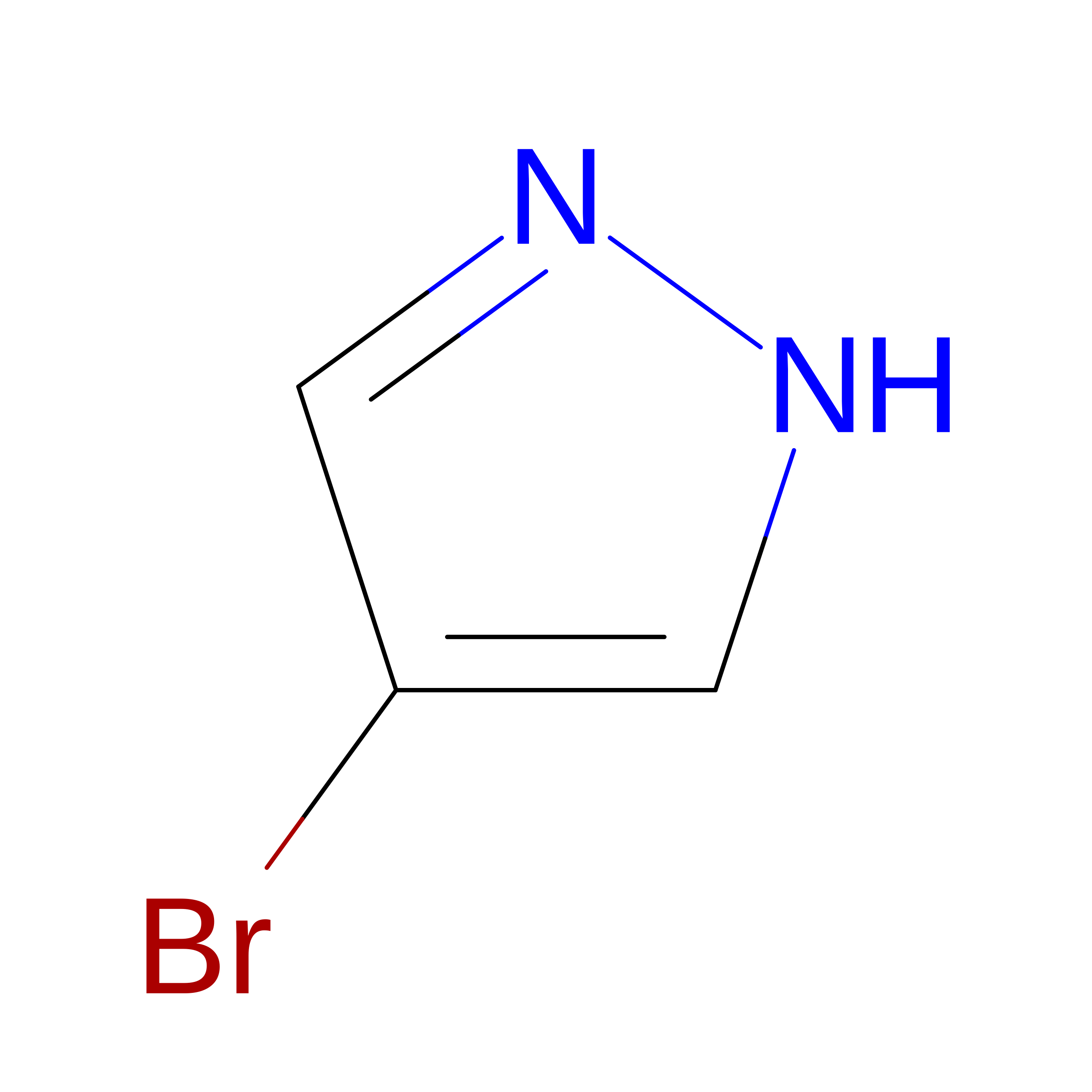
4-bromo-1H-pyrazole
C3 H3 Br N2
WVGCPEDBFHEHEZ-UHFFFAOYSA-N
SO4

Query on SO4


Download:Ideal Coordinates CCD File
K [auth A]SULFATE ION
O4 S
QAOWNCQODCNURD-UHFFFAOYSA-L
EDO

Query on EDO


Download:Ideal Coordinates CCD File
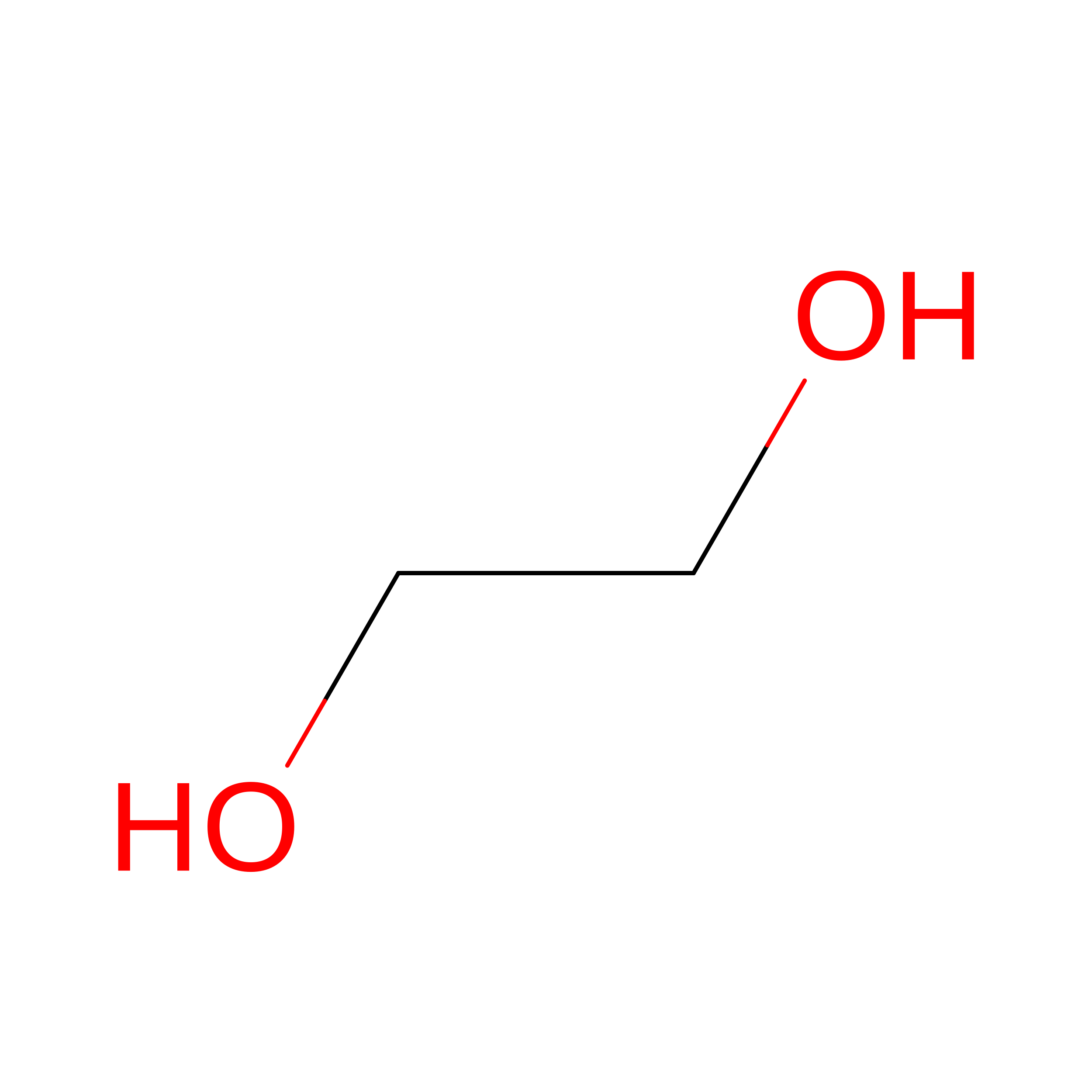
E [auth A]1,2-ETHANEDIOL
C2 H6 O2
LYCAIKOWRPUZTN-UHFFFAOYSA-N
MN

Query on MN


Download:Ideal Coordinates CCD File
B [auth A],
C [auth A],
D [auth A]
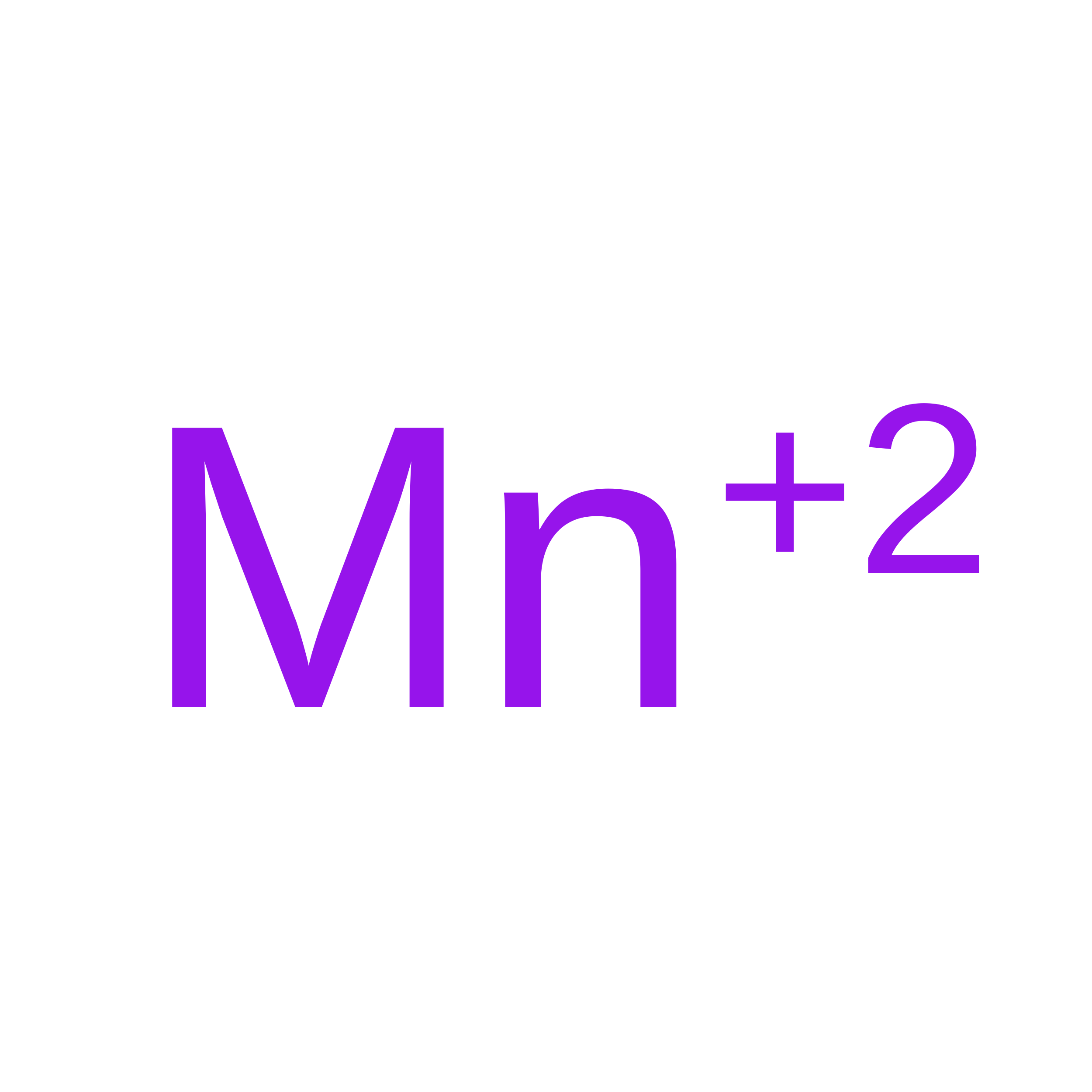
MANGANESE (II) ION
Mn
WAEMQWOKJMHJLA-UHFFFAOYSA-N

Experimental Data & Validation

Experimental Data

  • Method: X-RAY DIFFRACTION
  • Resolution: 2.00 Å
  • R-Value Free:  0.198 (Depositor), 0.200 (DCC) 
  • R-Value Work:  0.174 (Depositor), 0.177 (DCC) 
  • R-Value Observed: 0.175 (Depositor) 
Space Group: C 2 2 21
Unit Cell:
Length ( Å )Angle ( ˚ )
a = 87.905α = 90
b = 102.451β = 90
c = 66.062γ = 90
Software Package:
Software NamePurpose
PHENIXrefinement
DENZOdata reduction
SCALEPACKdata scaling
PHENIXphasing

Structure Validation

View Full Validation Report


Entry History 

Deposition Data

Revision History  (Full details and data files)

  • Version 1.0: 2015-12-30
    Type: Initial release
  • Version 1.1: 2018-04-18
    Changes: Data collection, Database references, Derived calculations, Structure summary
  • Version 1.2: 2024-03-06
    Changes: Data collection, Database references, Derived calculations, Structure summary