4MP7 | pdb_00004mp7

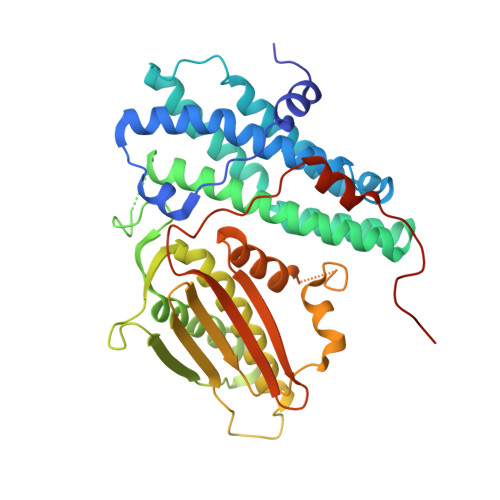
Crystal structure of pyruvate dehydrogenase kinase isoform 2 in complex with inhibitor PA7


Experimental Data Snapshot

  • Method: X-RAY DIFFRACTION
  • Resolution: 1.80 Å
  • R-Value Free: 
    0.205 (Depositor), 0.197 (DCC) 
  • R-Value Work: 
    0.191 (Depositor), 0.188 (DCC) 
  • R-Value Observed: 
    0.191 (Depositor) 

wwPDB Validation 3D Report Full Report

Validation slider image for 4MP7

Ligand Structure Quality Assessment 


This is version 1.2 of the entry. See complete history

Literature

Structure-guided Development of Specific Pyruvate Dehydrogenase Kinase Inhibitors Targeting the ATP-binding Pocket.

Tso, S.C.Qi, X.Gui, W.J.Wu, C.Y.Chuang, J.L.Wernstedt-Asterholm, I.Morlock, L.K.Owens, K.R.Scherer, P.E.Williams, N.S.Tambar, U.K.Wynn, R.M.Chuang, D.T.

(2014) J Biological Chem 289: 4432-4443

  • DOI: https://doi.org/10.1074/jbc.M113.533885
  • Primary Citation Related Structures: 
    4MP2, 4MP7, 4MPC, 4MPE, 4MPN

  • PubMed Abstract: 

    Pyruvate dehydrogenase kinase isoforms (PDKs 1-4) negatively regulate activity of the mitochondrial pyruvate dehydrogenase complex by reversible phosphorylation. PDK isoforms are up-regulated in obesity, diabetes, heart failure, and cancer and are potential therapeutic targets for these important human diseases. Here, we employed a structure-guided design to convert a known Hsp90 inhibitor to a series of highly specific PDK inhibitors, based on structural conservation in the ATP-binding pocket. The key step involved the substitution of a carbonyl group in the parent compound with a sulfonyl in the PDK inhibitors. The final compound of this series, 2-[(2,4-dihydroxyphenyl)sulfonyl]isoindoline-4,6-diol, designated PS10, inhibits all four PDK isoforms with IC50 = 0.8 μM for PDK2. The administration of PS10 (70 mg/kg) to diet-induced obese mice significantly augments pyruvate dehydrogenase complex activity with reduced phosphorylation in different tissues. Prolonged PS10 treatments result in improved glucose tolerance and notably lessened hepatic steatosis in the mouse model. The results support the pharmacological approach of targeting PDK to control both glucose and fat levels in obesity and type 2 diabetes.


  • Organizational Affiliation
    • From the Departments of Biochemistry and.

Macromolecule Content 

  • Total Structure Weight: 45.64 kDa 
  • Atom Count: 3,207 
  • Modeled Residue Count: 363 
  • Deposited Residue Count: 400 
  • Unique protein chains: 1

Macromolecules

Find similar proteins by:|  3D Structure
Entity ID: 1
MoleculeChains  Sequence LengthOrganismDetailsImage
[Pyruvate dehydrogenase [lipoamide]] kinase isozyme 2, mitochondrial400Homo sapiensMutation(s): 0 
Gene Names: PDK2PDHK2
EC: 2.7.11.2
UniProt & NIH Common Fund Data Resources
Find proteins for Q15119 (Homo sapiens)
Explore Q15119 
Go to UniProtKB:  Q15119
PHAROS:  Q15119
GTEx:  ENSG00000005882 
Entity Groups
Sequence Clusters30% Identity50% Identity70% Identity90% Identity95% Identity100% Identity
UniProt GroupQ15119
Sequence Annotations
Expand
Reference Sequence

Small Molecules

Ligands 2 Unique
IDChains Name / Formula / InChI Key2D Diagram3D Interactions
PFT

Query on PFT


Download:Ideal Coordinates CCD File
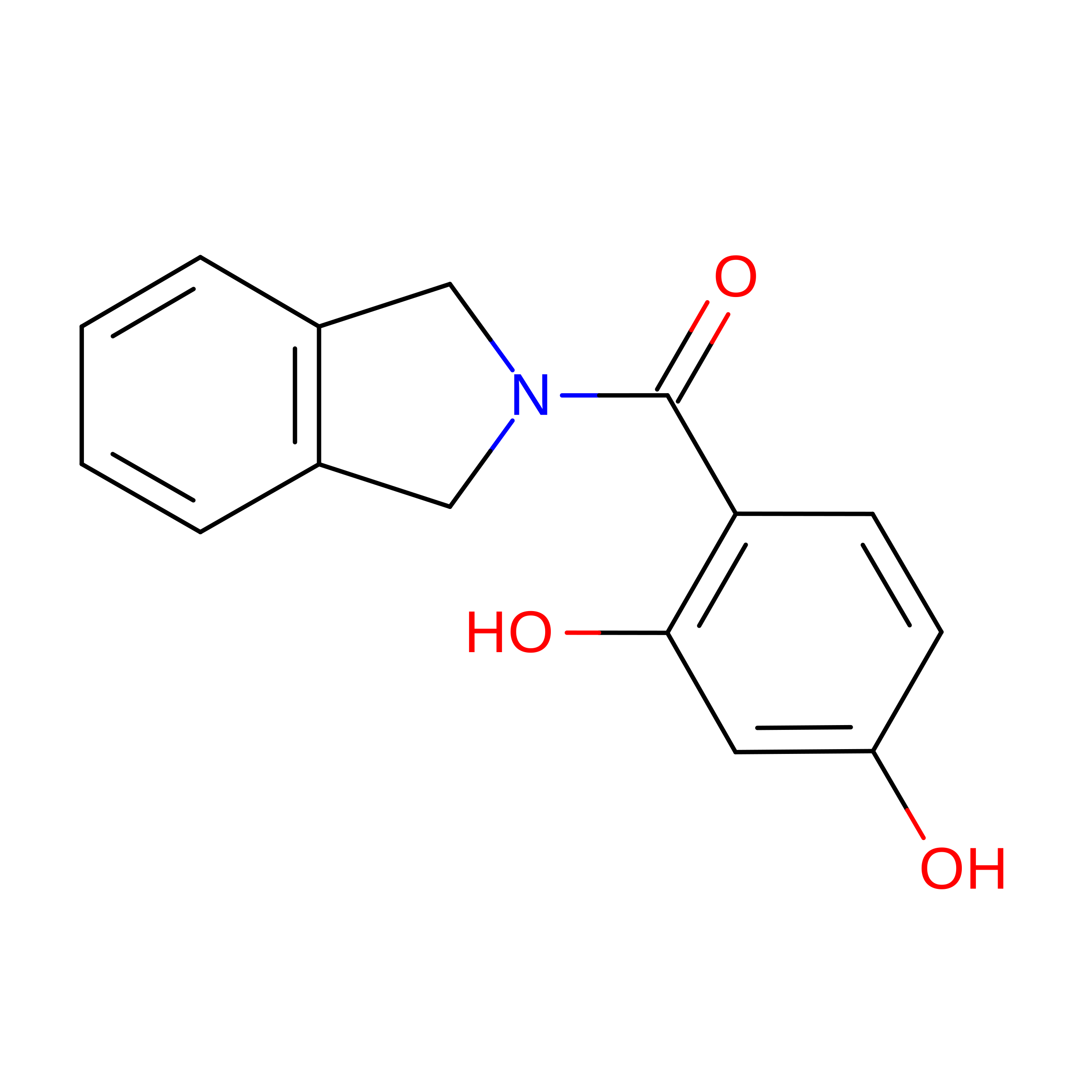
B [auth A]4-(1,3-dihydro-2H-isoindol-2-ylcarbonyl)benzene-1,3-diol
C15 H13 N O3
FYANAIGOGAIFAF-UHFFFAOYSA-N
TLA

Query on TLA


Download:Ideal Coordinates CCD File
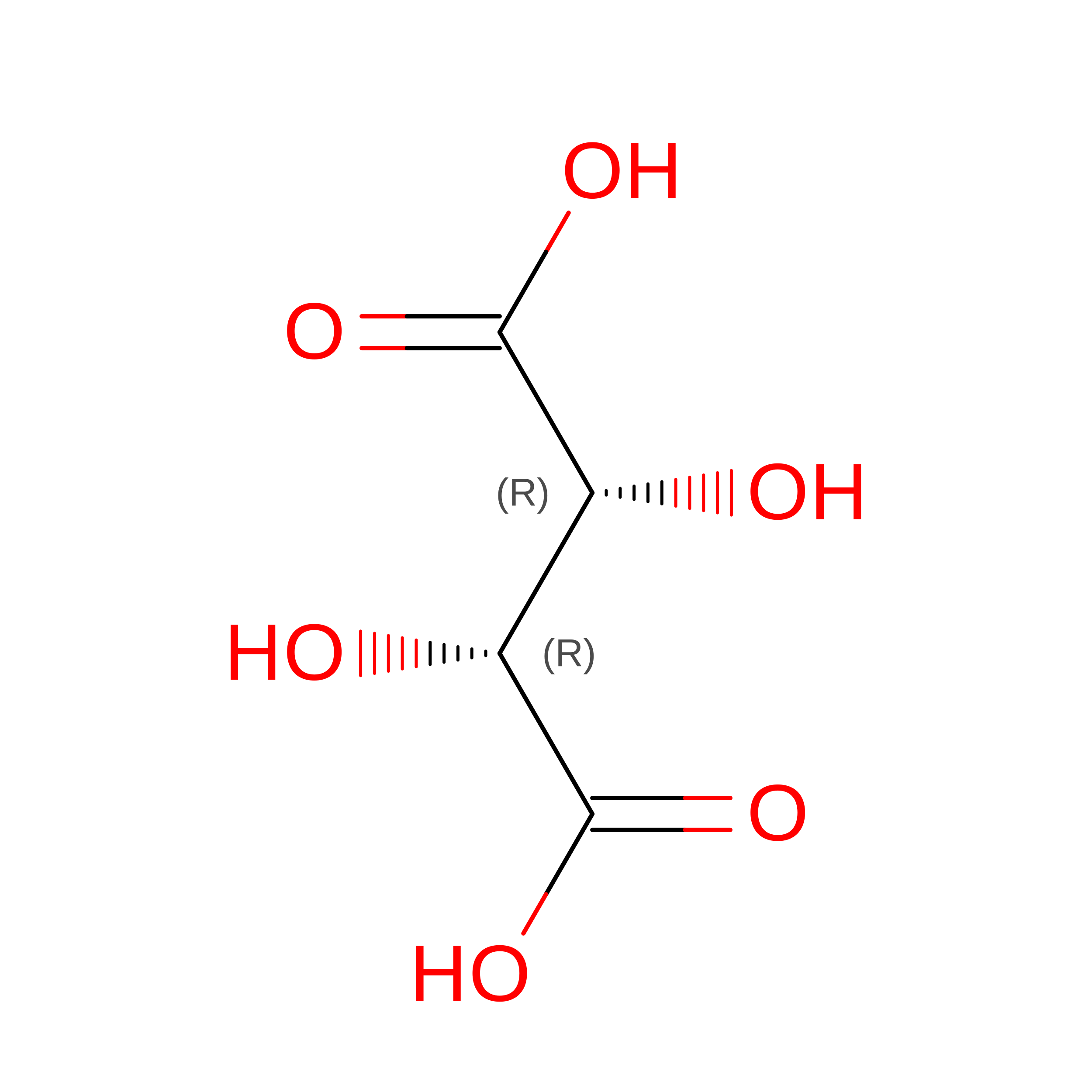
C [auth A]L(+)-TARTARIC ACID
C4 H6 O6
FEWJPZIEWOKRBE-JCYAYHJZSA-N
Binding Affinity Annotations 
IDSourceBinding Affinity
PFT BindingDB:  4MP7 Kd: 1827 (nM) from 1 assay(s)
IC50: 5680 (nM) from 1 assay(s)

Experimental Data & Validation

Experimental Data

  • Method: X-RAY DIFFRACTION
  • Resolution: 1.80 Å
  • R-Value Free:  0.205 (Depositor), 0.197 (DCC) 
  • R-Value Work:  0.191 (Depositor), 0.188 (DCC) 
  • R-Value Observed: 0.191 (Depositor) 
Space Group: I 41 2 2
Unit Cell:
Length ( Å )Angle ( ˚ )
a = 110.007α = 90
b = 110.007β = 90
c = 227.744γ = 90
Software Package:
Software NamePurpose
HKL-3000data collection
PHENIXmodel building
PHENIXrefinement
HKL-3000data reduction
HKL-3000data scaling
PHENIXphasing

Structure Validation

View Full Validation Report


Ligand Structure Quality Assessment 


Entry History 

Deposition Data

Revision History  (Full details and data files)

  • Version 1.0: 2014-01-01
    Type: Initial release
  • Version 1.1: 2014-03-05
    Changes: Database references
  • Version 1.2: 2024-02-28
    Changes: Data collection, Database references, Derived calculations