4JJJ | pdb_00004jjj

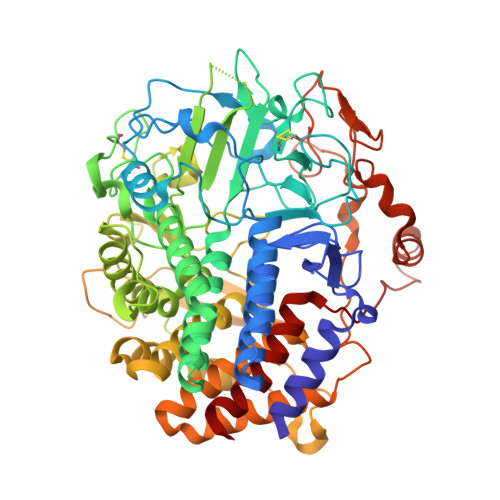
The structure of T. fusca GH48 D224N mutant


Experimental Data Snapshot

  • Method: X-RAY DIFFRACTION
  • Resolution: 1.60 Å
  • R-Value Free: 
    0.164 (Depositor), 0.172 (DCC) 
  • R-Value Work: 
    0.121 (Depositor), 0.135 (DCC) 
  • R-Value Observed: 
    0.124 (Depositor) 

Starting Model: experimental
View more details

wwPDB Validation 3D Report Full Report

Validation slider image for 4JJJ

This is version 2.2 of the entry. See complete history

Literature

Cel48A from Thermobifida fusca: structure and site directed mutagenesis of key residues.

Kostylev, M.Alahuhta, M.Chen, M.Brunecky, R.Himmel, M.E.Lunin, V.V.Brady, J.Wilson, D.B.

(2014) Biotechnol Bioeng 111: 664-673

  • DOI: https://doi.org/10.1002/bit.25139
  • Primary Citation Related Structures: 
    4JJJ

  • PubMed Abstract: 

    Lignocellulosic biomass is a potential source of sustainable transportation fuels, but efficient enzymatic saccharification of cellulose is a key challenge in its utilization. Cellulases from the glycoside hydrolase (GH) family 48 constitute an important component of bacterial biomass degrading systems and structures of three enzymes from this family have been previously published. We report a new crystal structure of TfCel48A, a reducing end directed exocellulase from Thermobifida fusca, which shows that this enzyme shares important structural features with the other members of the GH48 family. The active site tunnel entrance of the known GH48 exocellulases is enriched in aromatic residues, which are known to interact well with anhydroglucose units of cellulose. We carried out site-directed mutagenesis studies of these aromatic residues (Y97, F195, Y213, and W313) along with two non-aromatic residues (N212 and S311) also located around the tunnel entrance and a W315 residue inside the active site tunnel. Only the aromatic residues located around the tunnel entrance appear to be important for the ability of TfCel48A to access individual cellulose chains on bacterial cellulose (BC), a crystalline substrate. Both Trp residues were found to be important for the processivity of TfCel48A on BC and phosphoric acid swollen cellulose (PASC), but only W313 appears to play a role in the ability of the enzyme to access individual cellulose chains in BC. When acting on BC, reduced processivity was found to correlate with reduced enzyme activity. The reverse, however, is true when PASC is the substrate. Presumably, higher density of available cellulose chain ends and the amorphous nature of PASC explain the increased initial activity of mutants with lower processivity.


  • Organizational Affiliation
    • Department of Molecular Biology and Genetics, Cornell University, 458 Biotechnology Building, Ithaca, New York, 14853. mk377@cornell.edu.

Macromolecule Content 

  • Total Structure Weight: 75.44 kDa 
  • Atom Count: 6,750 
  • Modeled Residue Count: 636 
  • Deposited Residue Count: 642 
  • Unique protein chains: 1

Macromolecules

Find similar proteins by:|  3D Structure
Entity ID: 1
MoleculeChains  Sequence LengthOrganismDetailsImage
Cellulose 1,4-beta-cellobiosidase642Thermobifida fuscaMutation(s): 1 
Gene Names: Tfu_1959
EC: 3.2.1.91
UniProt
Find proteins for Q47NH7 (Thermobifida fusca (strain YX))
Explore Q47NH7 
Go to UniProtKB:  Q47NH7
Entity Groups
Sequence Clusters30% Identity50% Identity70% Identity90% Identity95% Identity100% Identity
UniProt GroupQ47NH7
Sequence Annotations
Expand
Reference Sequence

Oligosaccharides

Help  
Entity ID: 2
MoleculeChains Length2D Diagram GlycosylationD Interactions
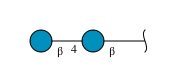
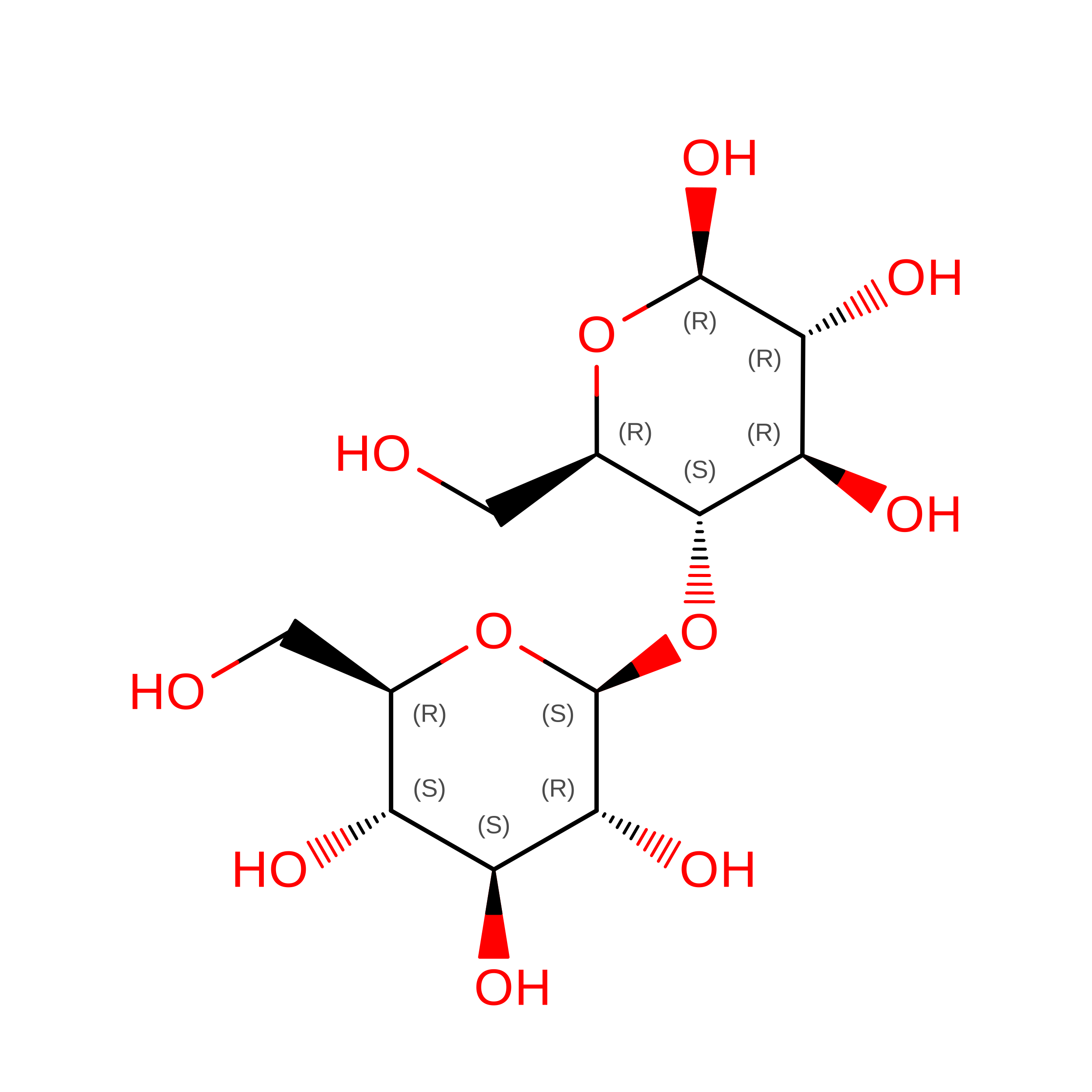
beta-D-glucopyranose-(1-4)-beta-D-glucopyranose
B
2N/A
Glycosylation Resources
GlyTouCan: G84824ZO
GlyCosmos: G84824ZO
Entity ID: 3
MoleculeChains Length2D Diagram GlycosylationD Interactions
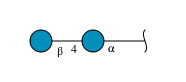
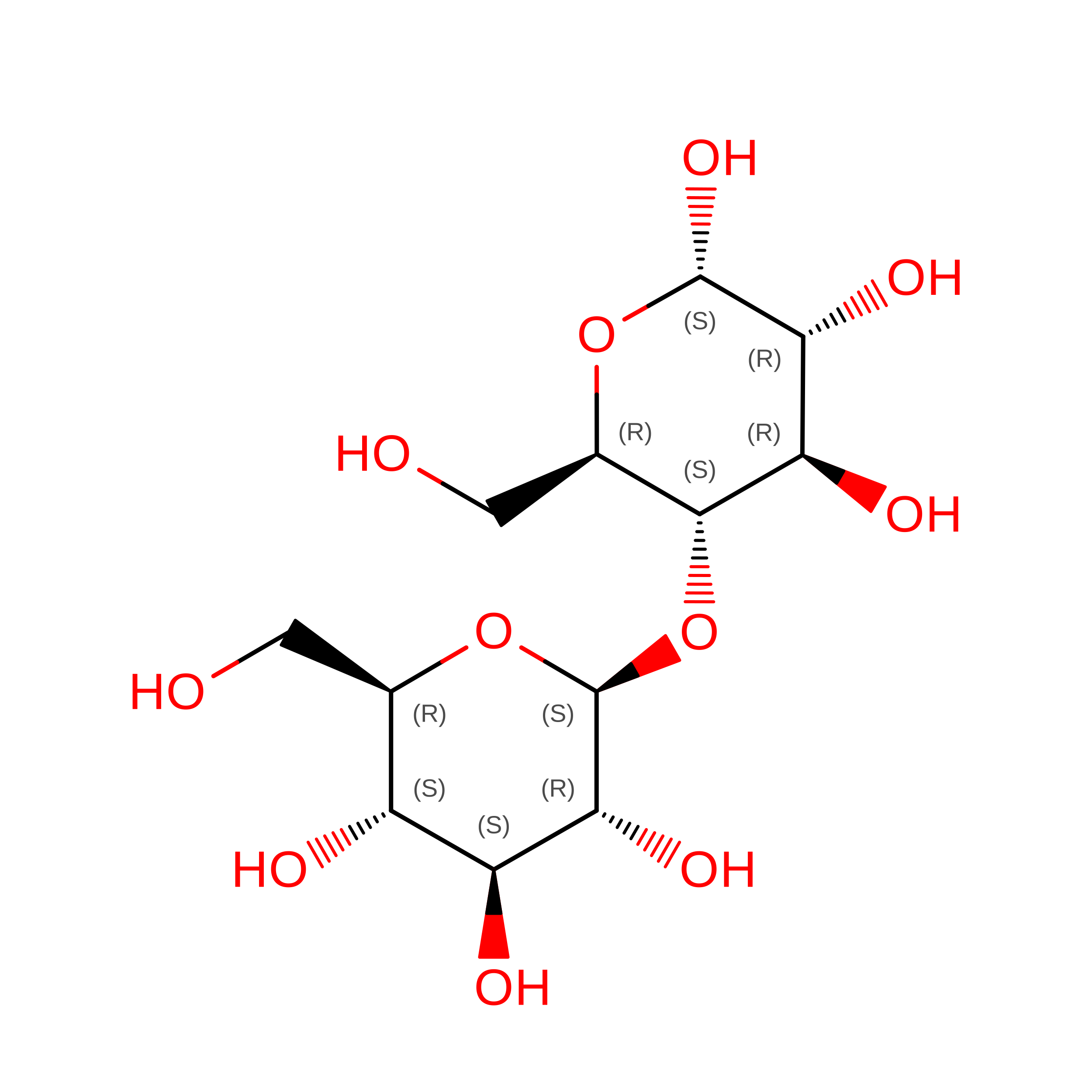
beta-D-glucopyranose-(1-4)-alpha-D-glucopyranose
C
2N/A
Glycosylation Resources
GlyTouCan: G86802XL
GlyCosmos: G86802XL
Entity ID: 4
MoleculeChains Length2D Diagram GlycosylationD Interactions
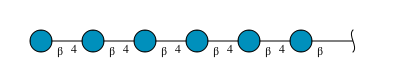
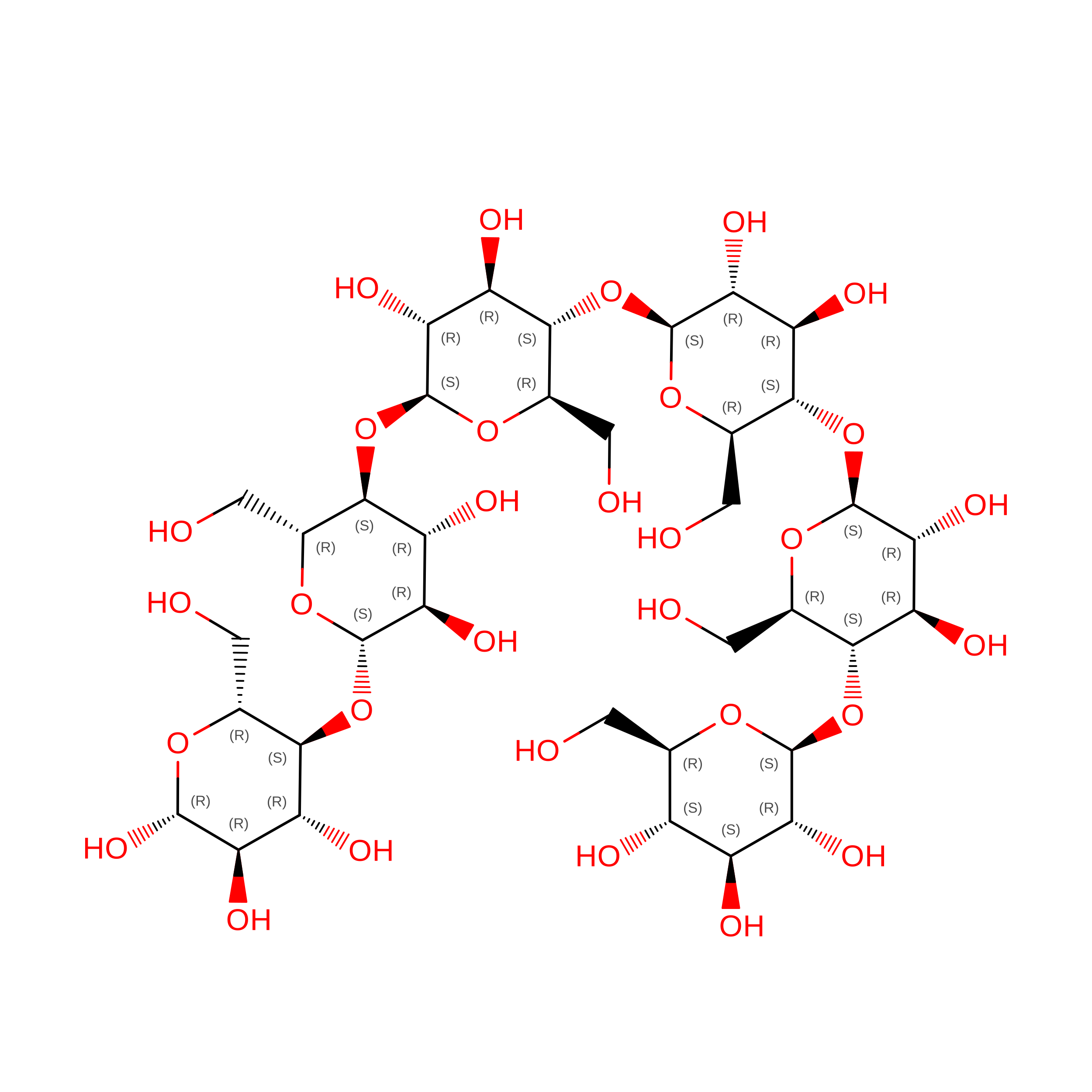
beta-D-glucopyranose-(1-4)-beta-D-glucopyranose-(1-4)-beta-D-glucopyranose-(1-4)-beta-D-glucopyranose-(1-4)-beta-D-glucopyranose-(1-4)-beta-D-glucopyranose
D
6N/A
Glycosylation Resources
GlyTouCan: G09454VW
GlyCosmos: G09454VW
GlyGen: G09454VW

Small Molecules

Ligands 6 Unique
IDChains Name / Formula / InChI Key2D Diagram3D Interactions
ZN

Query on ZN


Download:Ideal Coordinates CCD File
AA [auth A]
BA [auth A]
CA [auth A]
DA [auth A]
EA [auth A]
AA [auth A],
BA [auth A],
CA [auth A],
DA [auth A],
EA [auth A],
FA [auth A],
GA [auth A],
HA [auth A],
IA [auth A],
JA [auth A],
P [auth A],
Q [auth A],
R [auth A],
S [auth A],
T [auth A],
U [auth A],
V [auth A],
W [auth A],
X [auth A],
Y [auth A],
Z [auth A]
ZINC ION
Zn
PTFCDOFLOPIGGS-UHFFFAOYSA-N
EDO

Query on EDO


Download:Ideal Coordinates CCD File
MA [auth A]1,2-ETHANEDIOL
C2 H6 O2
LYCAIKOWRPUZTN-UHFFFAOYSA-N
ACT

Query on ACT


Download:Ideal Coordinates CCD File
KA [auth A],
LA [auth A]
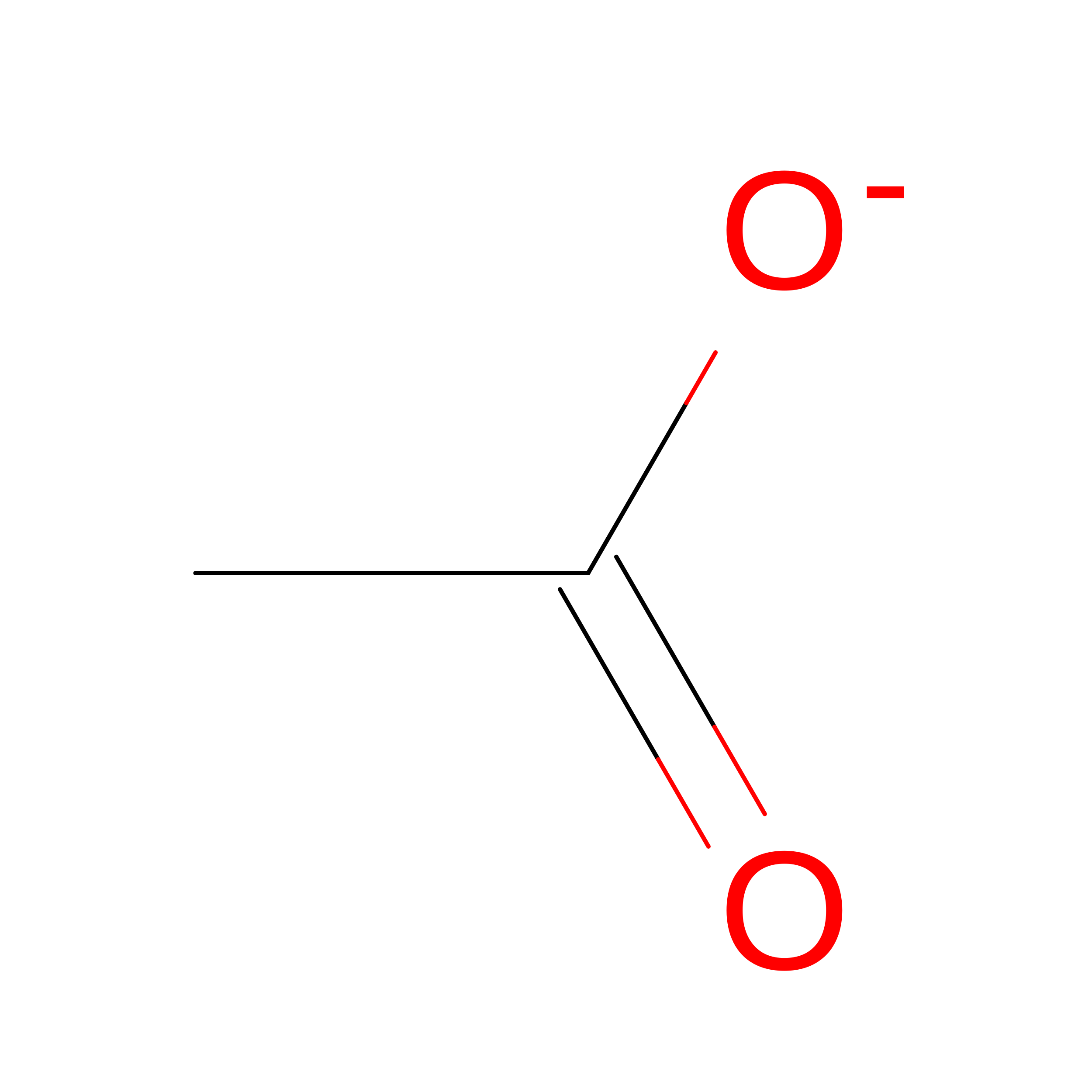
ACETATE ION
C2 H3 O2
QTBSBXVTEAMEQO-UHFFFAOYSA-M
FE

Query on FE


Download:Ideal Coordinates CCD File
L [auth A],
M [auth A],
N [auth A],
O [auth A]
FE (III) ION
Fe
VTLYFUHAOXGGBS-UHFFFAOYSA-N
CA

Query on CA


Download:Ideal Coordinates CCD File
E [auth A],
F [auth A],
G [auth A],
H [auth A]
CALCIUM ION
Ca
BHPQYMZQTOCNFJ-UHFFFAOYSA-N
NA

Query on NA


Download:Ideal Coordinates CCD File
I [auth A],
J [auth A],
K [auth A]
SODIUM ION
Na
FKNQFGJONOIPTF-UHFFFAOYSA-N

Experimental Data & Validation

Experimental Data

  • Method: X-RAY DIFFRACTION
  • Resolution: 1.60 Å
  • R-Value Free:  0.164 (Depositor), 0.172 (DCC) 
  • R-Value Work:  0.121 (Depositor), 0.135 (DCC) 
  • R-Value Observed: 0.124 (Depositor) 
Space Group: P 1 21 1
Unit Cell:
Length ( Å )Angle ( ˚ )
a = 56.458α = 90
b = 88.494β = 113.72
c = 66.753γ = 90
Software Package:
Software NamePurpose
PROTEUM PLUSdata collection
MOLREPphasing
REFMACrefinement
PROTEUM PLUSdata reduction
PROTEUM PLUSdata scaling

Structure Validation

View Full Validation Report


Entry History 

Deposition Data

Revision History  (Full details and data files)

  • Version 1.0: 2014-07-30
    Type: Initial release
  • Version 2.0: 2020-07-29
    Type: Remediation
    Reason: Carbohydrate remediation
    Changes: Atomic model, Data collection, Database references, Derived calculations, Non-polymer description, Structure summary
  • Version 2.1: 2023-09-20
    Changes: Data collection, Database references, Refinement description, Structure summary
  • Version 2.2: 2024-10-30
    Changes: Structure summary