4ITQ | pdb_00004itq

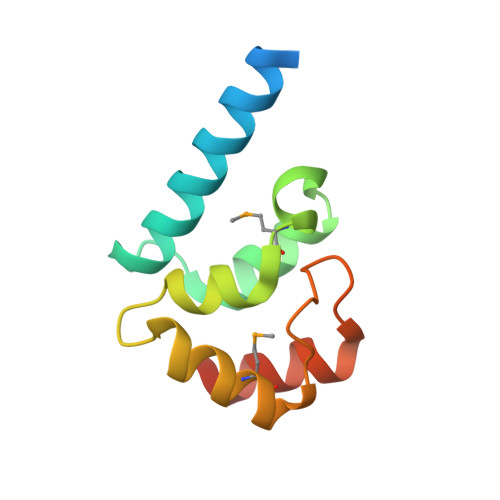
Crystal structure of hypothetical protein SCO1480 bound to DNA


Experimental Data Snapshot

  • Method: X-RAY DIFFRACTION
  • Resolution: 2.70 Å
  • R-Value Free: 
    0.315 (Depositor), 0.308 (DCC) 
  • R-Value Work: 
    0.262 (Depositor), 0.266 (DCC) 
  • R-Value Observed: 
    0.267 (Depositor) 

wwPDB Validation 3D Report Full Report

Validation slider image for 4ITQ

This is version 1.2 of the entry. See complete history

Literature

A novel nucleoid-associated protein specific to the actinobacteria.

Swiercz, J.P.Nanji, T.Gloyd, M.Guarne, A.Elliot, M.A.

(2013) Nucleic Acids Res 41: 4171-4184

  • DOI: https://doi.org/10.1093/nar/gkt095
  • Primary Citation Related Structures: 
    4ITQ

  • PubMed Abstract: 

    Effective chromosome organization is central to the functioning of any cell. In bacteria, this organization is achieved through the concerted activity of multiple nucleoid-associated proteins. These proteins are not, however, universally conserved, and different groups of bacteria have distinct subsets that contribute to chromosome architecture. Here, we describe the characterization of a novel actinobacterial-specific protein in Streptomyces coelicolor. We show that sIHF (SCO1480) associates with the nucleoid and makes important contributions to chromosome condensation and chromosome segregation during Streptomyces sporulation. It also affects antibiotic production, suggesting an additional role in gene regulation. In vitro, sIHF binds DNA in a length-dependent but sequence-independent manner, without any obvious structural preferences. It does, however, impact the activity of topoisomerase, significantly altering DNA topology. The sIHF-DNA co-crystal structure reveals sIHF to be composed of two domains: a long N-terminal helix and a C-terminal helix-two turns-helix domain with two separate DNA interaction sites, suggesting a potential role in bridging DNA molecules.


  • Organizational Affiliation
    • Department of Biology and Institute for Infectious Disease Research, McMaster University, 1280 Main Street West, Hamilton, Ontario, Canada.

Macromolecule Content 

  • Total Structure Weight: 16.57 kDa 
  • Atom Count: 1,005 
  • Modeled Residue Count: 106 
  • Deposited Residue Count: 123 
  • Unique protein chains: 1
  • Unique nucleic acid chains: 2

Macromolecules


Find similar proteins by:|  3D Structure
Entity ID: 1
MoleculeChains  Sequence LengthOrganismDetailsImage
Putative uncharacterized protein SCO1480107Streptomyces coelicolor A3(2)Mutation(s): 0 
Gene Names: SCO1480
UniProt
Find proteins for Q9KXR9 (Streptomyces coelicolor (strain ATCC BAA-471 / A3(2) / M145))
Explore Q9KXR9 
Go to UniProtKB:  Q9KXR9
Entity Groups
Sequence Clusters30% Identity50% Identity70% Identity90% Identity95% Identity100% Identity
UniProt GroupQ9KXR9
Sequence Annotations
Expand
Reference Sequence
Find similar nucleic acids by:  Sequence
Entity ID: 2
MoleculeChains LengthOrganismImage
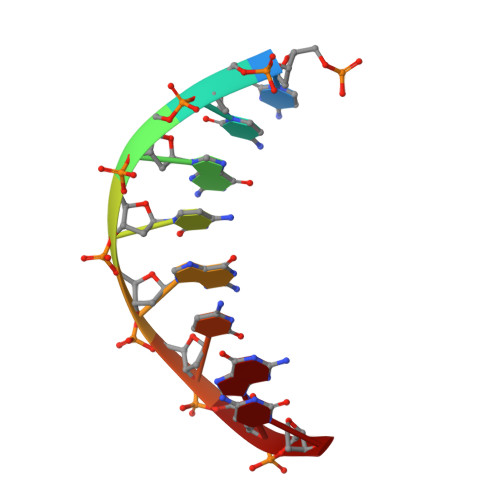
5'-D(P*CP*CP*GP*CP*GP*CP*GP*C)-3'8N/A
Sequence Annotations
Expand
Reference Sequence
Find similar nucleic acids by:  Sequence
Entity ID: 3
MoleculeChains LengthOrganismImage
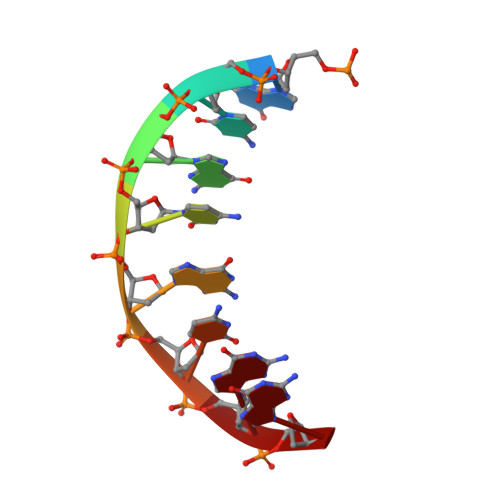
5'-D(P*GP*CP*GP*CP*GP*CP*GP*G)-3'8N/A
Sequence Annotations
Expand
Reference Sequence

Small Molecules

Modified Residues  1 Unique
IDChains TypeFormula2D DiagramParent
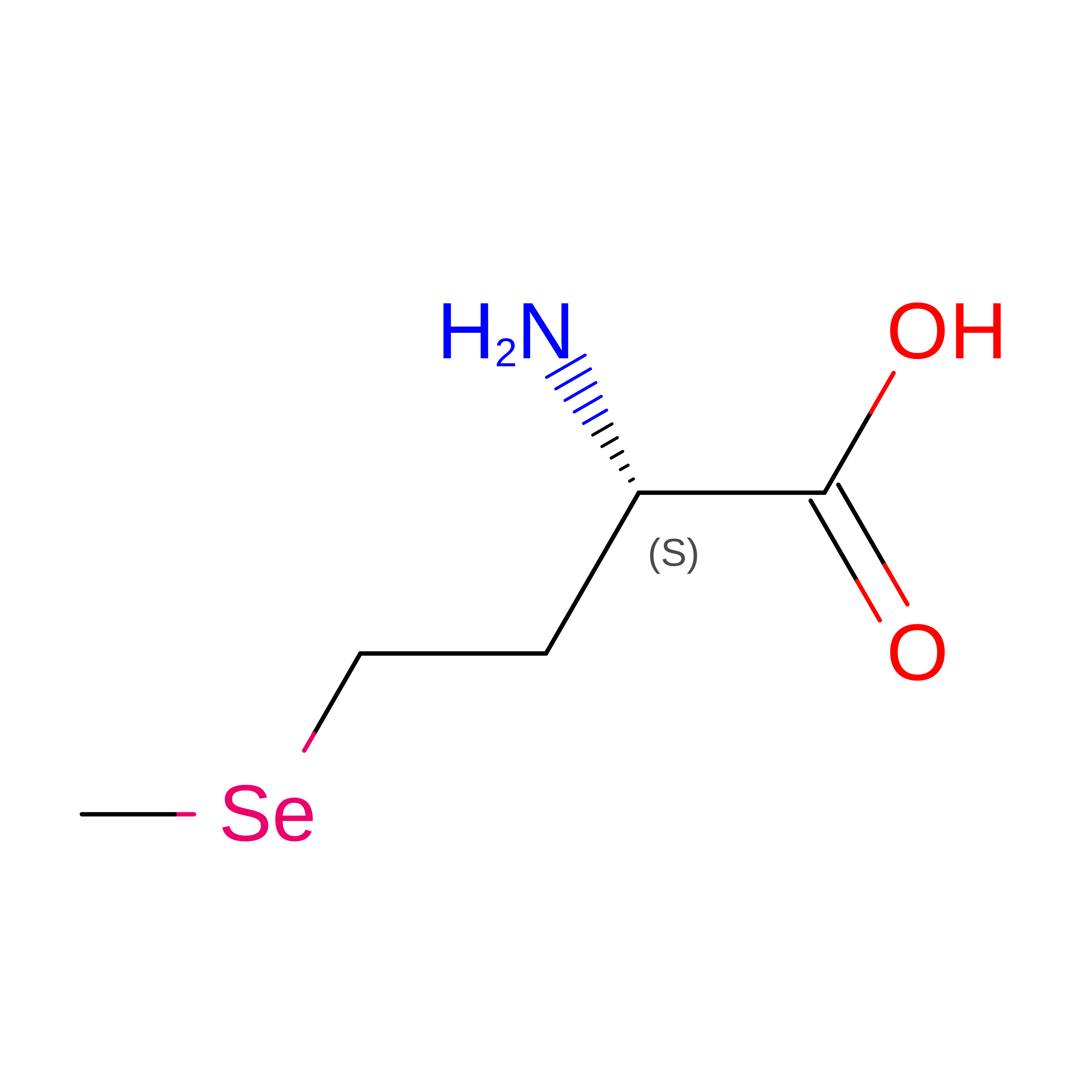
MSE
Query on MSE
A
L-PEPTIDE LINKINGC5 H11 N O2 SeMET

Experimental Data & Validation

Experimental Data

  • Method: X-RAY DIFFRACTION
  • Resolution: 2.70 Å
  • R-Value Free:  0.315 (Depositor), 0.308 (DCC) 
  • R-Value Work:  0.262 (Depositor), 0.266 (DCC) 
  • R-Value Observed: 0.267 (Depositor) 
Space Group: C 2 2 21
Unit Cell:
Length ( Å )Angle ( ˚ )
a = 43.42α = 90
b = 71.782β = 90
c = 102.925γ = 90
Software Package:
Software NamePurpose
CBASSdata collection
AutoSolphasing
PHENIXrefinement
HKL-2000data reduction
HKL-2000data scaling

Structure Validation

View Full Validation Report


Entry History 

Deposition Data

Revision History  (Full details and data files)

  • Version 1.0: 2013-03-27
    Type: Initial release
  • Version 1.1: 2013-05-22
    Changes: Database references
  • Version 1.2: 2024-11-27
    Changes: Data collection, Database references, Derived calculations, Structure summary