4FZP | pdb_00004fzp

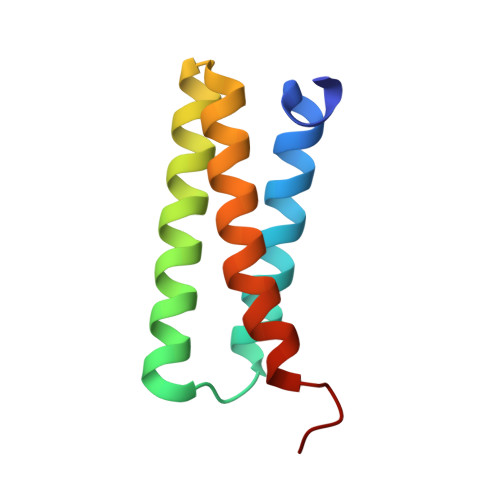
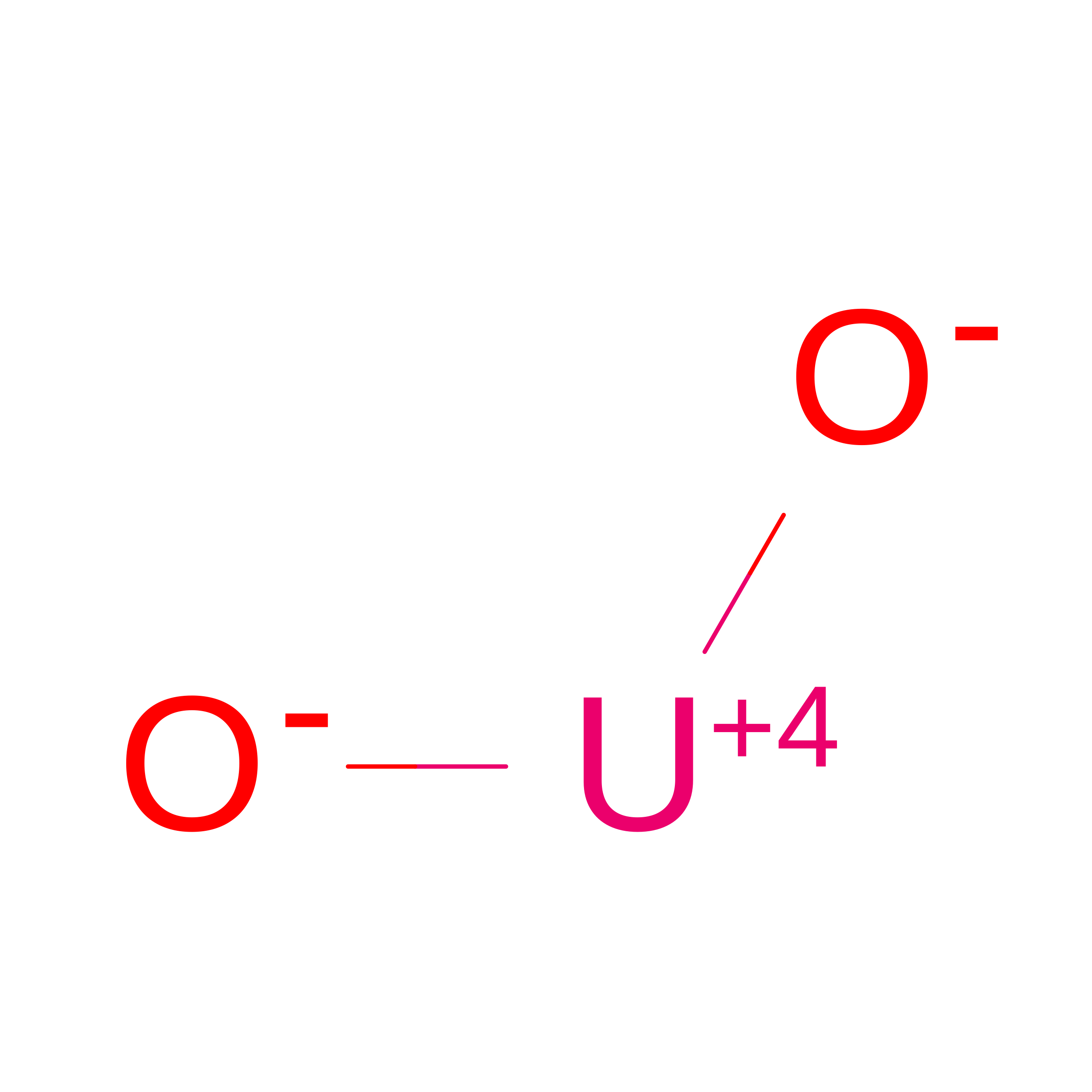
Crystal Structure of the uranyl binding protein complexed with uranyl


Experimental Data Snapshot

  • Method: X-RAY DIFFRACTION
  • Resolution: 1.29 Å
  • R-Value Free: 
    0.188 (Depositor), 0.185 (DCC) 
  • R-Value Work: 
    0.179 (Depositor), 0.179 (DCC) 
  • R-Value Observed: 
    0.180 (Depositor) 

wwPDB Validation 3D Report Full Report

Validation slider image for 4FZP

This is version 2.0 of the entry. See complete history. 

Literature

A protein engineered to bind uranyl selectively and with femtomolar affinity.

Zhou, L., Bosscher, M., Zhang, C., Ozcubukcu, S., Zhang, L., Zhang, W., Li, C.J., Liu, J., Jensen, M.P., Lai, L., He, C.

(2014) Nat Chem 6: 236-241

  • DOI: https://doi.org/10.1038/nchem.1856
  • Primary Citation Related Structures: 
    4FZO, 4FZP

  • PubMed Abstract: 

    Uranyl (UO2(2+)), the predominant aerobic form of uranium, is present in the ocean at a concentration of ~3.2 parts per 10(9) (13.7 nM); however, the successful enrichment of uranyl from this vast resource has been limited by the high concentrations of metal ions of similar size and charge, which makes it difficult to design a binding motif that is selective for uranyl. Here we report the design and rational development of a uranyl-binding protein using a computational screening process in the initial search for potential uranyl-binding sites. The engineered protein is thermally stable and offers very high affinity and selectivity for uranyl with a Kd of 7.4 femtomolar (fM) and >10,000-fold selectivity over other metal ions. We also demonstrated that the uranyl-binding protein can repeatedly sequester 30-60% of the uranyl in synthetic sea water. The chemical strategy employed here may be applied to engineer other selective metal-binding proteins for biotechnology and remediation applications.


  • Organizational Affiliation: 
    • 1] Department of Chemistry and Institute for Biophysical Dynamics, The University of Chicago, 929 East 57th Street, Chicago, Illinois 60637, USA [2].

Macromolecule Content 

  • Total Structure Weight: 19.63 kDa 
  • Atom Count: 1,471 
  • Modeled Residue Count: 161 
  • Deposited Residue Count: 164 
  • Unique protein chains: 1

Macromolecules

Find similar proteins by:|  3D Structure
Entity ID: 1
MoleculeChains  Sequence LengthOrganismDetailsImage
uranyl binding protein
A, B
82Methanothermobacter thermautotrophicus str. Delta HMutation(s): 0 
Gene Names: MTH_1690
UniProt
Find proteins for O27725 (Methanothermobacter thermautotrophicus (strain ATCC 29096 / DSM 1053 / JCM 10044 / NBRC 100330 / Delta H))
Explore O27725 
Go to UniProtKB:  O27725
Entity Groups
Sequence Clusters30% Identity50% Identity70% Identity90% Identity95% Identity100% Identity
UniProt GroupO27725
Sequence Annotations
Expand
Reference Sequence

Experimental Data & Validation

Experimental Data

  • Method: X-RAY DIFFRACTION
  • Resolution: 1.29 Å
  • R-Value Free:  0.188 (Depositor), 0.185 (DCC) 
  • R-Value Work:  0.179 (Depositor), 0.179 (DCC) 
  • R-Value Observed: 0.180 (Depositor) 
Space Group: P 21 21 21
Unit Cell:
Length ( Å )Angle ( ˚ )
a = 44.032α = 90
b = 46.929β = 90
c = 65.756γ = 90
Software Package:
Software NamePurpose
PHENIXrefinement
PDB_EXTRACTdata extraction
HKL-2000data collection
HKL-2000data reduction
HKL-2000data scaling
PHASESphasing

Structure Validation

View Full Validation Report


Entry History 

Deposition Data

Revision History  (Full details and data files)

  • Version 1.0: 2013-12-11
    Type: Initial release
  • Version 1.1: 2014-05-21
    Changes: Database references
  • Version 1.2: 2024-02-28
    Changes: Data collection, Database references, Derived calculations
  • Version 2.0: 2026-08-12
    Type: Remediation
    Reason: Metalloprotein remediation
    Changes: Derived calculations, Non-polymer description, Structure summary