4CQA | pdb_00004cqa

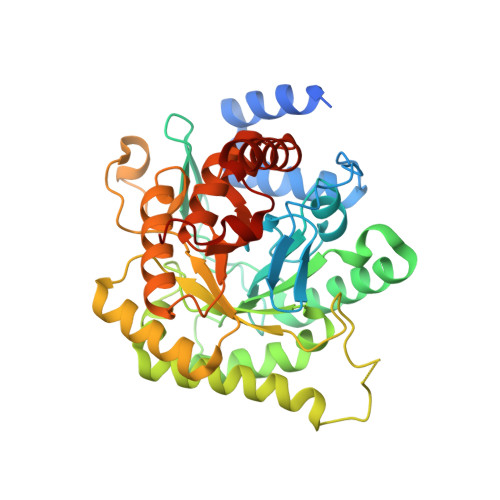
Plasmodium falciparum dihydroorotate dehydrogenase (DHODH) in complex with IDI-6273


Experimental Data Snapshot

  • Method: X-RAY DIFFRACTION
  • Resolution: 2.82 Å
  • R-Value Free: 
    0.230 (Depositor), 0.243 (DCC) 
  • R-Value Work: 
    0.171 (Depositor), 0.189 (DCC) 
  • R-Value Observed: 
    0.173 (Depositor) 

wwPDB Validation 3D Report Full Report

Validation slider image for 4CQA

Ligand Structure Quality Assessment 


This is version 1.5 of the entry. See complete history

Literature

In Vitro Resistance Selections for Plasmodium Falciparum Dihydroorotate Dehydrogenase Inhibitors Give Mutants with Multiple Point Mutations in the Drug-Binding Site and Altered Growth.

Ross, L.S.Javier Gamo, F.Lafuente-Monasterio, M.J.E.Singh, O.M.P.Rowland, P.Wiegand, R.C.Wirth, D.F.

(2014) J Biological Chem 289: 17980

  • DOI: https://doi.org/10.1074/jbc.M114.558353
  • Primary Citation Related Structures: 
    4CQ8, 4CQ9, 4CQA

  • PubMed Abstract: 

    Malaria is a preventable and treatable disease; yet half of the world's population lives at risk of infection, and an estimated 660,000 people die of malaria-related causes every year. Rising drug resistance threatens to make malaria untreatable, necessitating both the discovery of new antimalarial agents and the development of strategies to identify and suppress the emergence and spread of drug resistance. We focused on in-development dihydroorotate dehydrogenase (DHODH) inhibitors. Characterizing resistance pathways for antimalarial agents not yet in clinical use will increase our understanding of the potential for resistance. We identified resistance mechanisms of Plasmodium falciparum (Pf) DHODH inhibitors via in vitro resistance selections. We found 11 point mutations in the PfDHODH target. Target gene amplification and unknown mechanisms also contributed to resistance, albeit to a lesser extent. These mutant parasites were often hypersensitive to other PfDHODH inhibitors, which immediately suggested a novel combination therapy approach to preventing resistance. Indeed, a combination of wild-type and mutant-type selective inhibitors led to resistance far less often than either drug alone. The effects of point mutations in PfDHODH were corroborated with purified recombinant wild-type and mutant-type PfDHODH proteins, which showed the same trends in drug response as the cognate cell lines. Comparative growth assays demonstrated that two mutant parasites grew less robustly than their wild-type parent, and the purified protein of those mutants showed a decrease in catalytic efficiency, thereby suggesting a reason for the diminished growth rate. Co-crystallography of PfDHODH with three inhibitors suggested that hydrophobic interactions are important for drug binding and selectivity.


  • Organizational Affiliation
    • From the Department of Immunology and Infectious Diseases, Harvard School of Public Health, Boston, Massachusetts 02115.

Macromolecule Content 

  • Total Structure Weight: 92.68 kDa 
  • Atom Count: 6,119 
  • Modeled Residue Count: 739 
  • Deposited Residue Count: 802 
  • Unique protein chains: 1

Macromolecules

Find similar proteins by:|  3D Structure
Entity ID: 1
MoleculeChains  Sequence LengthOrganismDetailsImage
DIHYDROOROTATE DEHYDROGENASE
A, B
401Plasmodium falciparumMutation(s): 0 
EC: 1.3.3.1 (PDB Primary Data), 1.3.5.2 (UniProt)
UniProt
Find proteins for Q08210 (Plasmodium falciparum (isolate 3D7))
Explore Q08210 
Go to UniProtKB:  Q08210
Entity Groups
Sequence Clusters30% Identity50% Identity70% Identity90% Identity95% Identity100% Identity
UniProt GroupQ08210
Sequence Annotations
Expand
Reference Sequence

Small Molecules

Ligands 3 Unique
IDChains Name / Formula / InChI Key2D Diagram3D Interactions
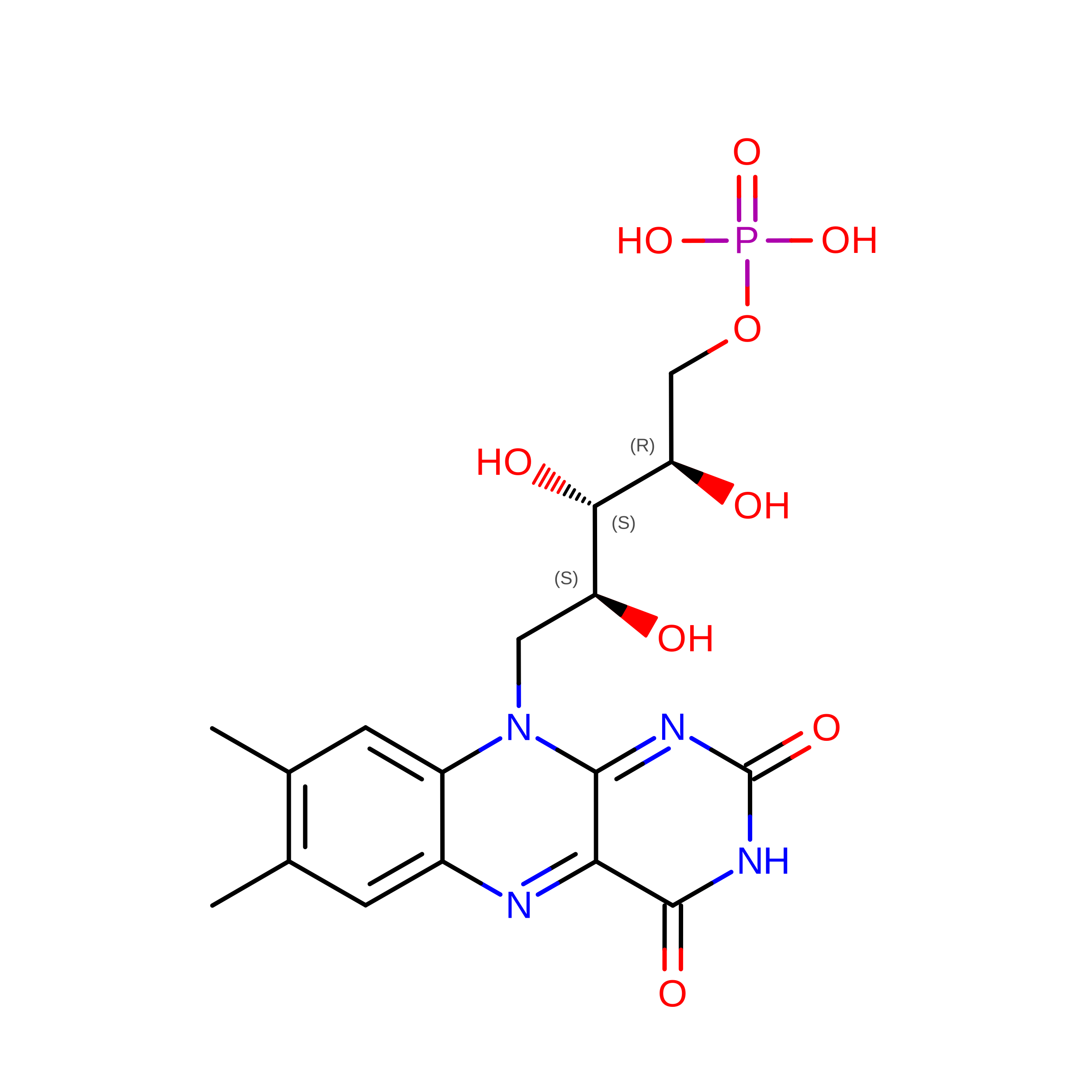
FMN

Query on FMN


Download:Ideal Coordinates CCD File
C [auth A],
F [auth B]
FLAVIN MONONUCLEOTIDE
C17 H21 N4 O9 P
FVTCRASFADXXNN-SCRDCRAPSA-N
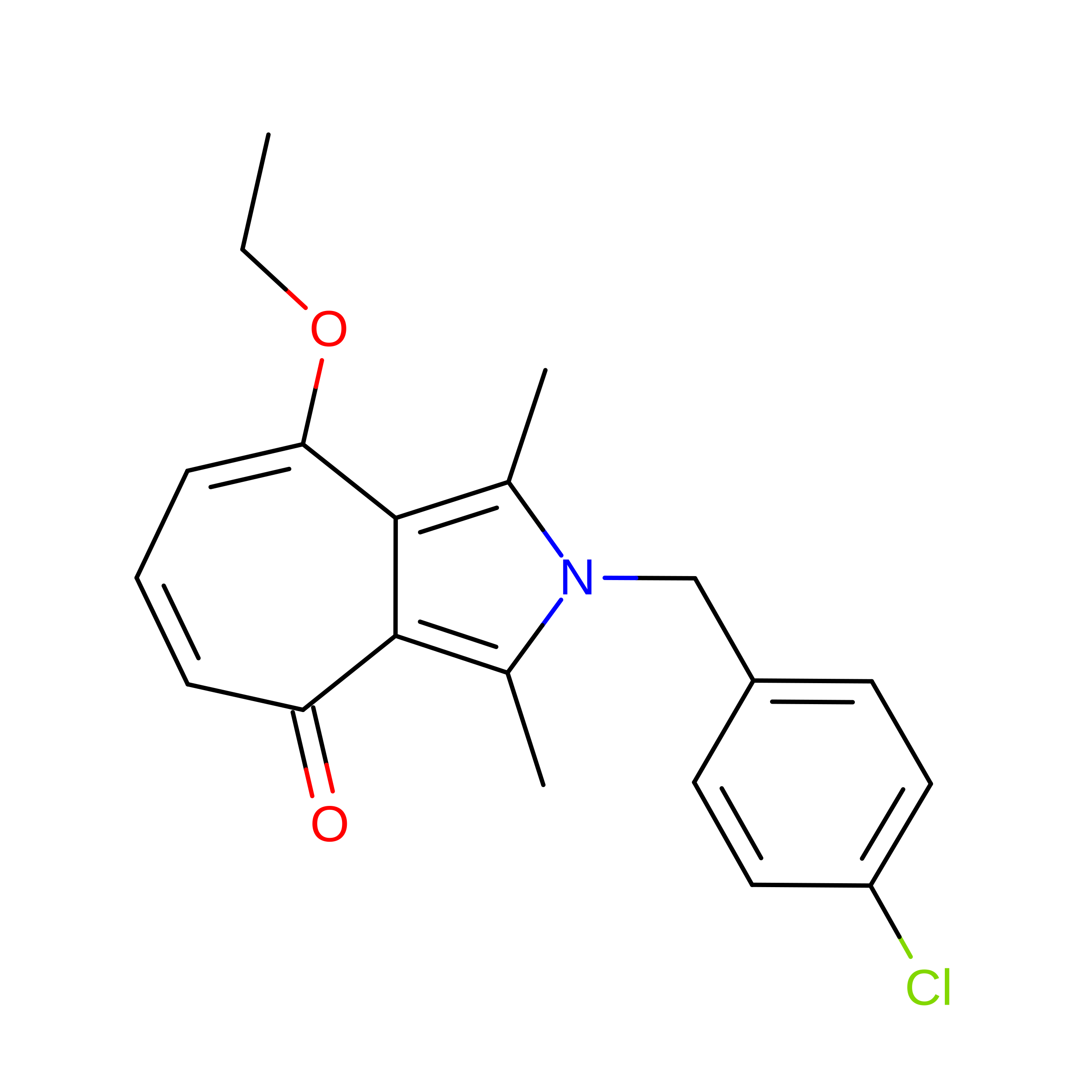
ID6

Query on ID6


Download:Ideal Coordinates CCD File
E [auth A],
H [auth B]
2-(4-chlorobenzyl)-8-ethoxy-1,3-dimethylcyclohepta[c]pyrrol-4(2H)-one
C20 H20 Cl N O2
PTQJXFLYSQXYEP-UHFFFAOYSA-N
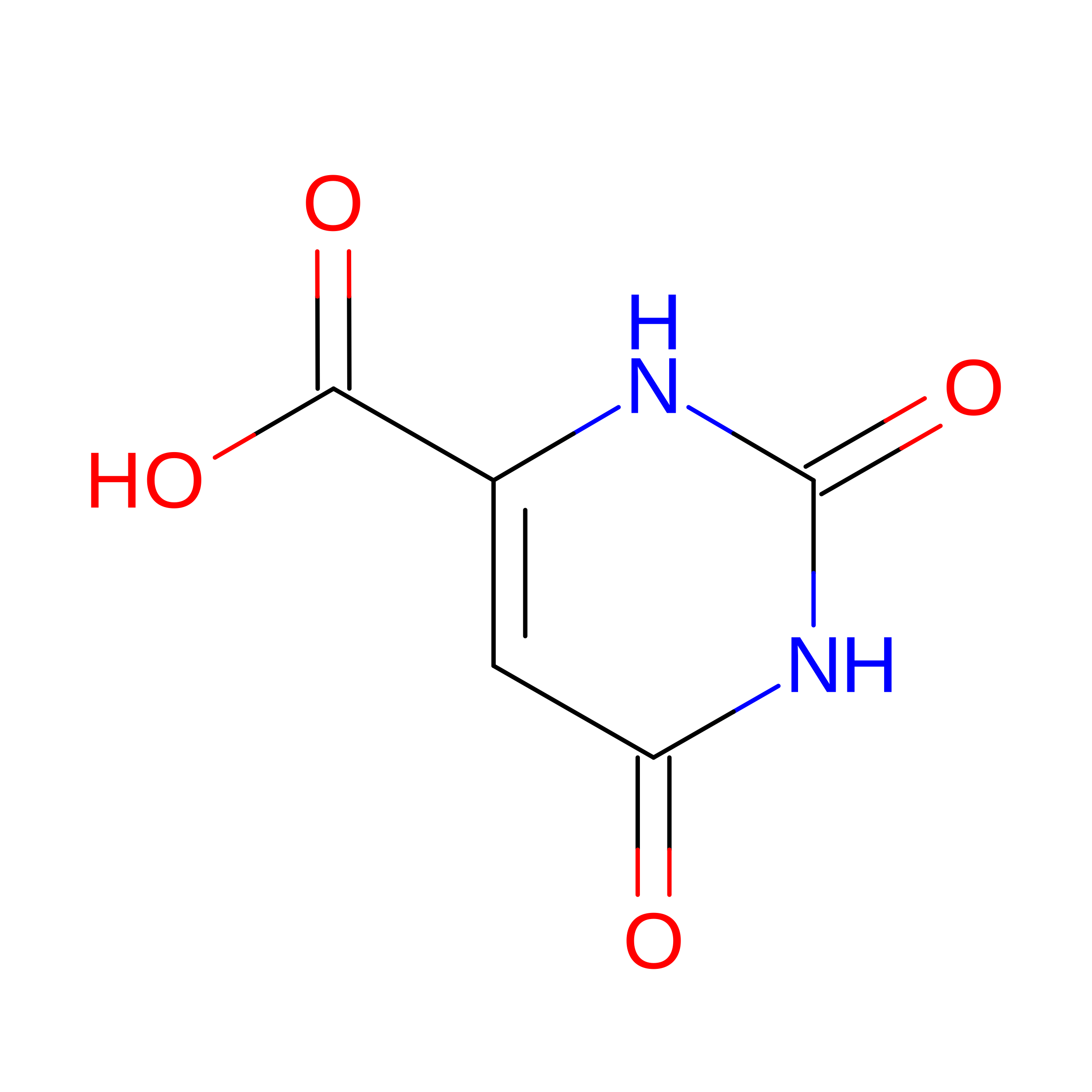
ORO

Query on ORO


Download:Ideal Coordinates CCD File
D [auth A],
G [auth B]
OROTIC ACID
C5 H4 N2 O4
PXQPEWDEAKTCGB-UHFFFAOYSA-N
Binding Affinity Annotations 
IDSourceBinding Affinity
ID6 BindingDB:  4CQA IC50: 1.35e+4 (nM) from 1 assay(s)

Experimental Data & Validation

Experimental Data

  • Method: X-RAY DIFFRACTION
  • Resolution: 2.82 Å
  • R-Value Free:  0.230 (Depositor), 0.243 (DCC) 
  • R-Value Work:  0.171 (Depositor), 0.189 (DCC) 
  • R-Value Observed: 0.173 (Depositor) 
Space Group: P 1 21 1
Unit Cell:
Length ( Å )Angle ( ˚ )
a = 52.95α = 90
b = 166.41β = 107.91
c = 63.16γ = 90
Software Package:
Software NamePurpose
BUSTERrefinement
XDSdata reduction
SCALAdata scaling

Structure Validation

View Full Validation Report


Ligand Structure Quality Assessment 


Entry History 

Deposition Data

  • Released Date: 2014-04-30 
  • Deposition Author(s): Rowland, P.

Revision History  (Full details and data files)

  • Version 1.0: 2014-04-30
    Type: Initial release
  • Version 1.1: 2014-05-14
    Changes: Database references
  • Version 1.2: 2014-08-13
    Changes: Database references
  • Version 1.3: 2019-03-06
    Changes: Data collection, Experimental preparation, Other
  • Version 1.4: 2019-05-08
    Changes: Data collection, Experimental preparation
  • Version 1.5: 2024-05-08
    Changes: Data collection, Database references, Derived calculations, Other