4C3O | pdb_00004c3o

Structure and function of an oxygen tolerant NiFe hydrogenase from Salmonella


Experimental Data Snapshot

  • Method: X-RAY DIFFRACTION
  • Resolution: 3.20 Å
  • R-Value Free: 
    0.205 (Depositor), 0.199 (DCC) 
  • R-Value Work: 
    0.158 (Depositor), 0.160 (DCC) 
  • R-Value Observed: 
    0.161 (Depositor) 

Starting Model: experimental
View more details

wwPDB Validation 3D Report Full Report

Validation slider image for 4C3O

This is version 2.2 of the entry. See complete history

Literature

How the Structure of the Large Subunit Controls Function in an Oxygen-Tolerant [Nife]-Hydrogenase.

Bowman, L.Flanagan, L.Fyfe, P.K.Parkin, A.Hunter, W.N.Sargent, F.

(2014) Biochem J 458: 449

  • DOI: https://doi.org/10.1042/BJ20131520
  • Primary Citation Related Structures: 
    4C3O

  • PubMed Abstract: 

    Salmonella enterica is an opportunistic pathogen that produces a [NiFe]-hydrogenase under aerobic conditions. In the present study, genetic engineering approaches were used to facilitate isolation of this enzyme, termed Hyd-5. The crystal structure was determined to a resolution of 3.2 Å and the hydro-genase was observed to comprise associated large and small subunits. The structure indicated that His229 from the large subunit was close to the proximal [4Fe-3S] cluster in the small subunit. In addition, His229 was observed to lie close to a buried glutamic acid (Glu73), which is conserved in oxygen-tolerant hydrogenases. His229 and Glu73 of the Hyd-5 large subunit were found to be important in both hydrogen oxidation activity and the oxygen-tolerance mechanism. Substitution of His229 or Glu73 with alanine led to a loss in the ability of Hyd-5 to oxidize hydrogen in air. Furthermore, the H229A variant was found to have lost the overpotential requirement for activity that is always observed with oxygen-tolerant [NiFe]-hydrogenases. It is possible that His229 has a role in stabilizing the super-oxidized form of the proximal cluster in the presence of oxygen, and it is proposed that Glu73could play a supporting role in fine-tuning the chemistry of His229 to enable this function.


  • Organizational Affiliation
    • *Division of Molecular Microbiology, College of Life Sciences, University of Dundee, Dundee DD1 5EH, Scotland, U.K.

Macromolecule Content 

  • Total Structure Weight: 292.38 kDa 
  • Atom Count: 20,051 
  • Modeled Residue Count: 2,537 
  • Deposited Residue Count: 2,592 
  • Unique protein chains: 2

Macromolecules

Find similar proteins by:|  3D Structure
Entity ID: 1
MoleculeChains  Sequence LengthOrganismDetailsImage
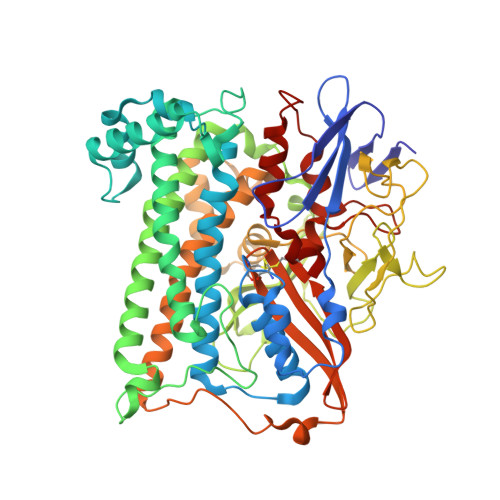
HYDROGENASE-1 LARGE SUBUNIT
A, C, E
585Salmonella enterica subsp. enterica serovar Typhimurium str. LT2Mutation(s): 0 
EC: 1.12.7.2 (PDB Primary Data), 1.12.99.6 (UniProt)
UniProt
Find proteins for Q8ZPH0 (Salmonella typhimurium (strain LT2 / SGSC1412 / ATCC 700720))
Explore Q8ZPH0 
Go to UniProtKB:  Q8ZPH0
Entity Groups
Sequence Clusters30% Identity50% Identity70% Identity90% Identity95% Identity100% Identity
UniProt GroupQ8ZPH0
Sequence Annotations
Expand
Reference Sequence
Find similar proteins by:|  3D Structure
Entity ID: 2
MoleculeChains  Sequence LengthOrganismDetailsImage
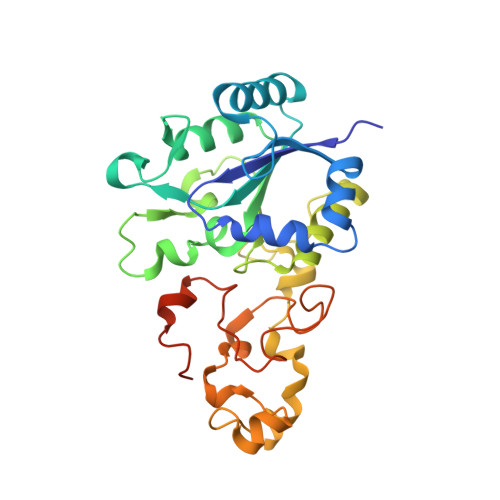
HYDROGENASE-1 SMALL SUBUNIT
B, D, F
279Salmonella enterica subsp. enterica serovar Typhimurium str. LT2Mutation(s): 0 
EC: 1.12.7.2 (PDB Primary Data), 1.12.99.6 (UniProt)
UniProt
Find proteins for Q8ZPG9 (Salmonella typhimurium (strain LT2 / SGSC1412 / ATCC 700720))
Explore Q8ZPG9 
Go to UniProtKB:  Q8ZPG9
Entity Groups
Sequence Clusters30% Identity50% Identity70% Identity90% Identity95% Identity100% Identity
UniProt GroupQ8ZPG9
Sequence Annotations
Expand
Reference Sequence

Small Molecules

Ligands 7 Unique
IDChains Name / Formula / InChI Key2D Diagram3D Interactions
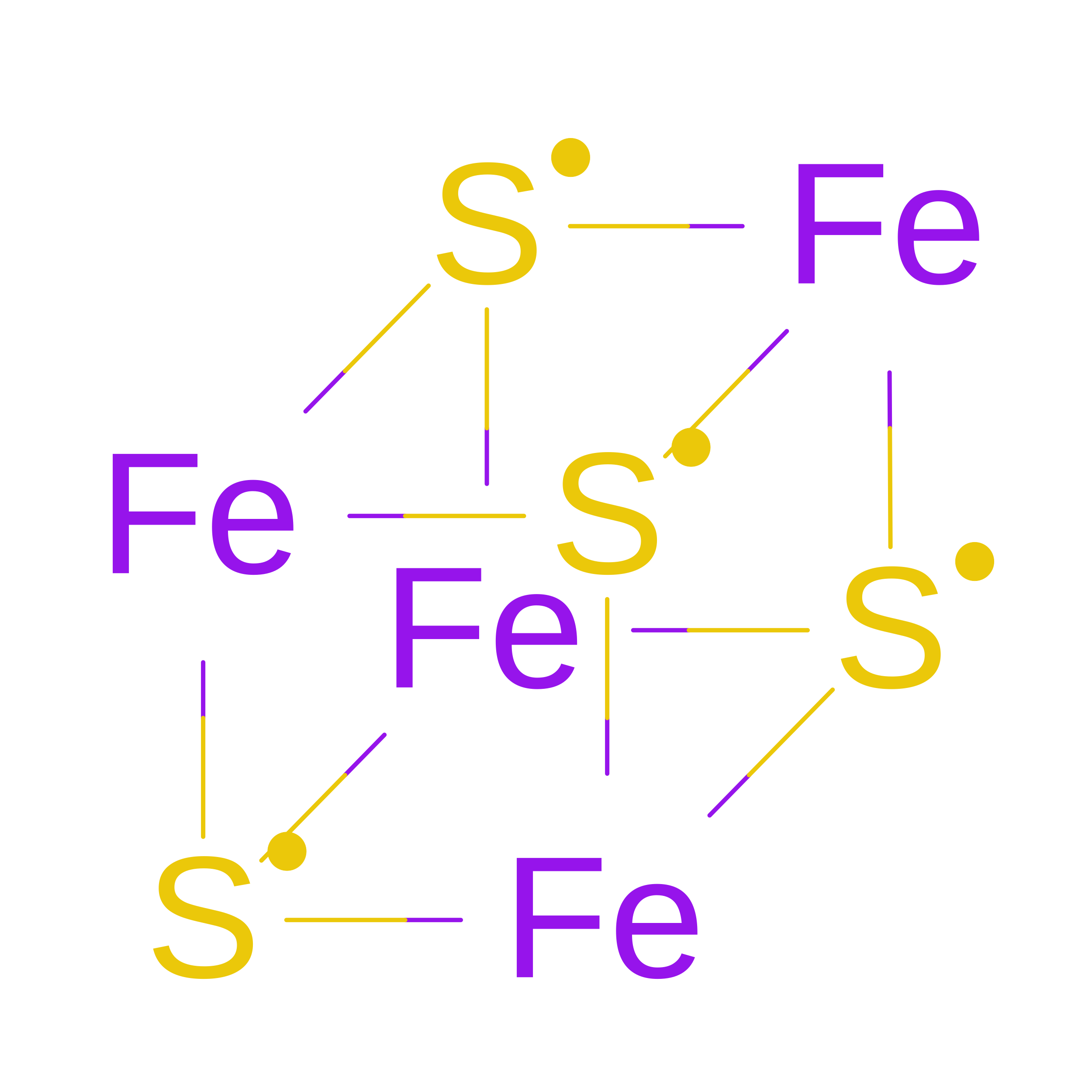
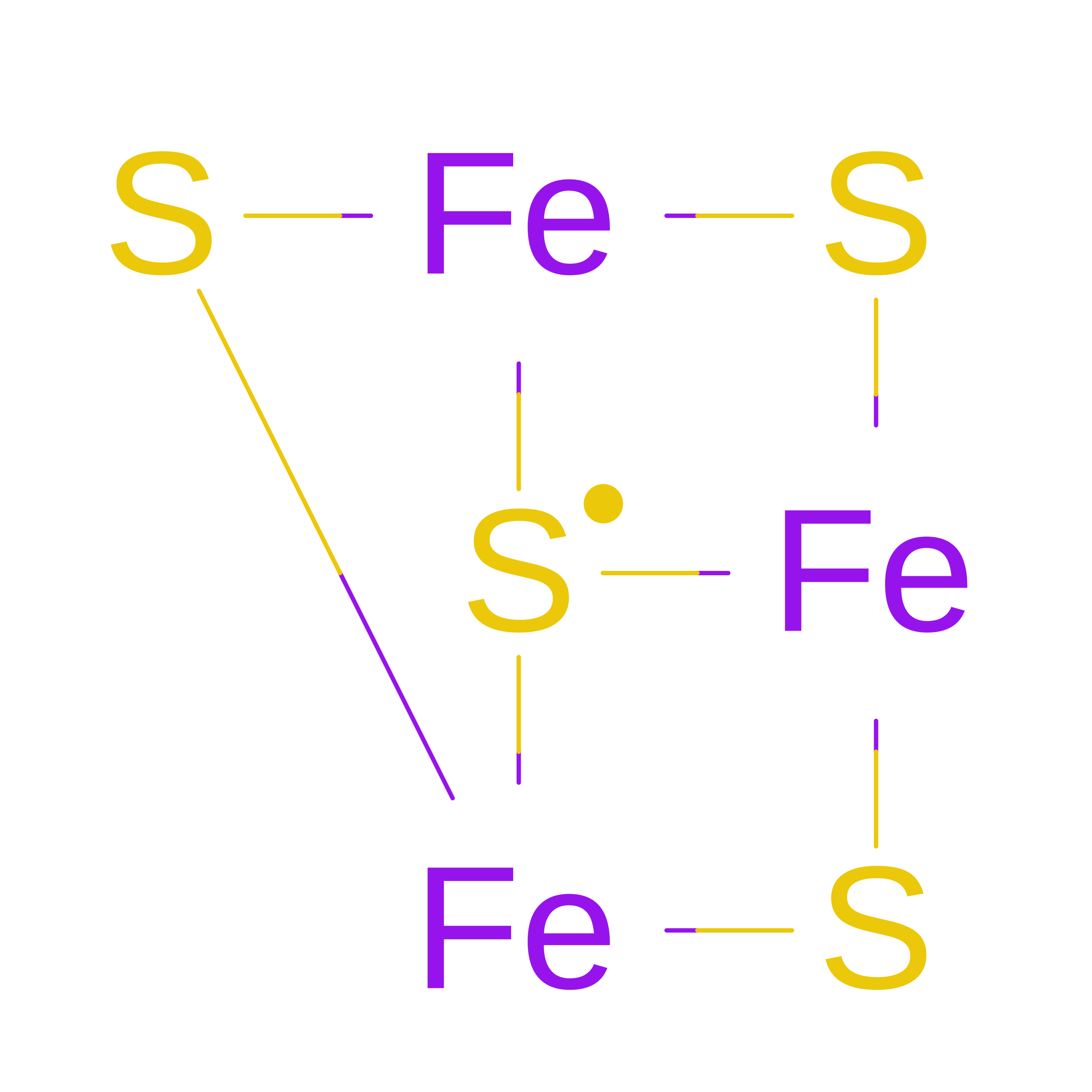
SF4

Query on SF4


Download:Ideal Coordinates CCD File
AA [auth F],
M [auth B],
S [auth D]
IRON/SULFUR CLUSTER
Fe4 S4
LJBDFODJNLIPKO-UHFFFAOYSA-N
F4S

Query on F4S


Download:Ideal Coordinates CCD File
O [auth B],
U [auth D],
Z [auth F]
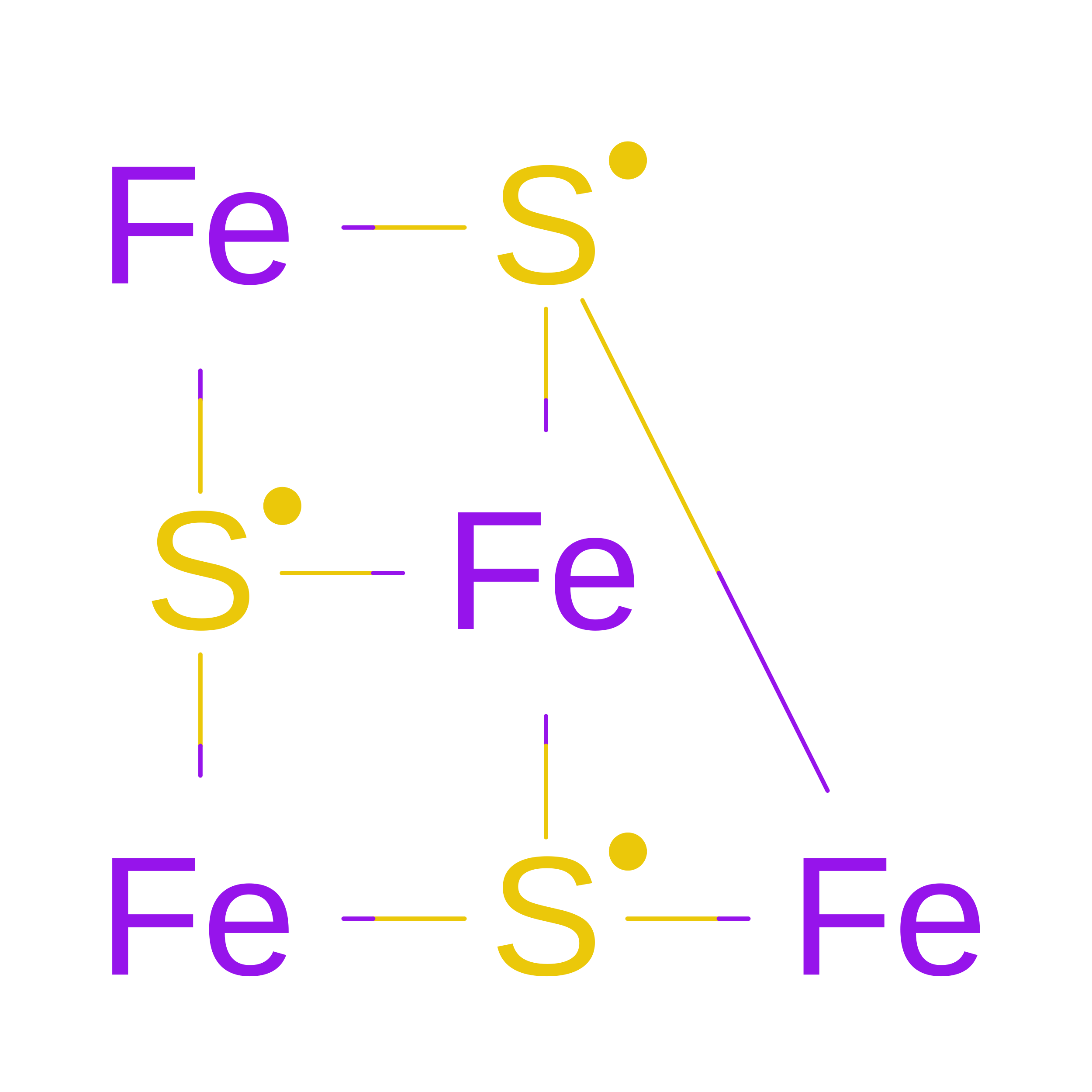
FE4-S3 CLUSTER
Fe4 S3
QQACTBFBZNWJMV-UHFFFAOYSA-N
F3S

Query on F3S


Download:Ideal Coordinates CCD File
BA [auth F],
N [auth B],
T [auth D]
FE3-S4 CLUSTER
Fe3 S4
FCXHZBQOKRZXKS-UHFFFAOYSA-N
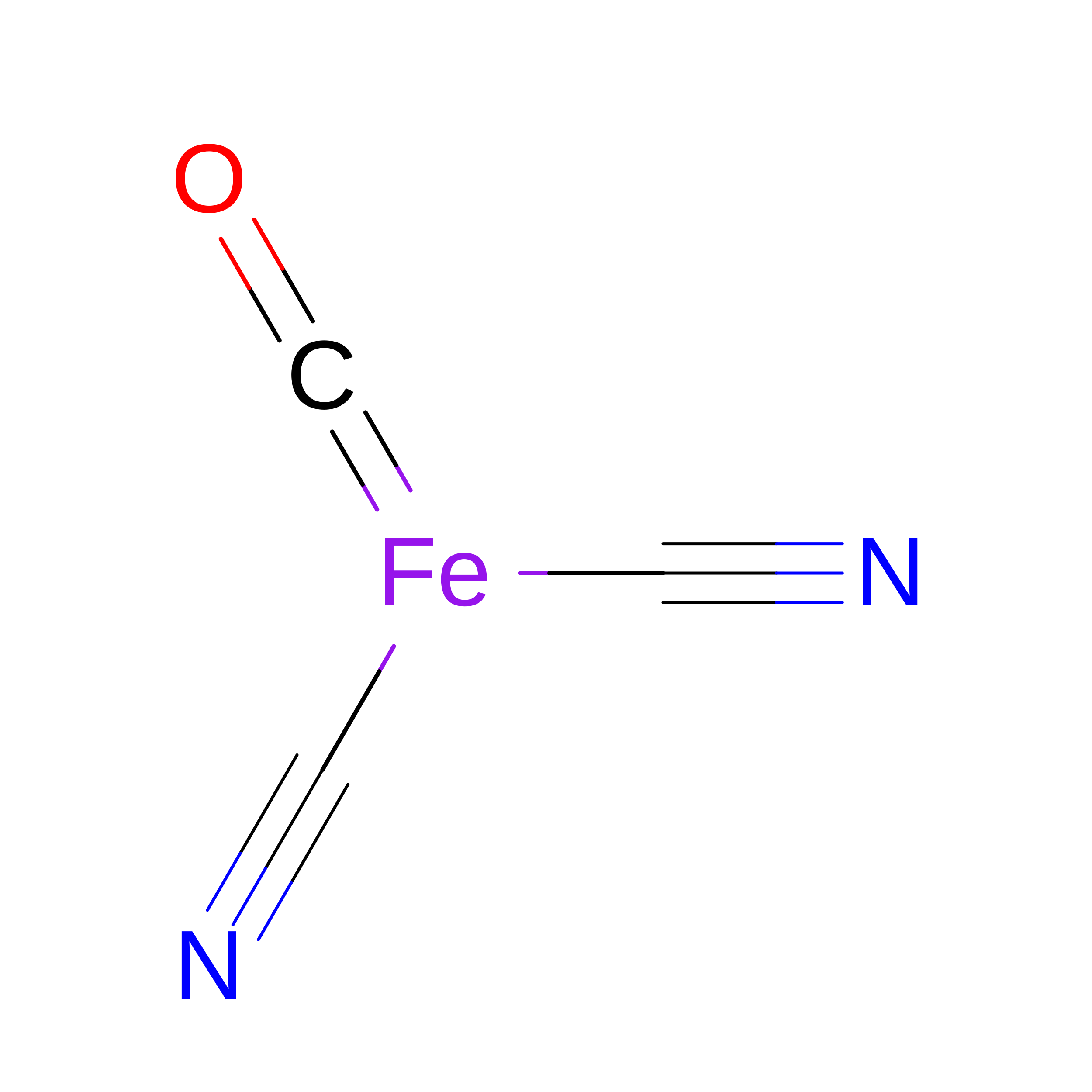
NFU

Query on NFU


Download:Ideal Coordinates CCD File
G [auth A],
Q [auth C],
V [auth E]
formyl[bis(hydrocyanato-1kappaC)]ironnickel(Fe-Ni)
C3 H Fe N2 Ni O
QCZROEOIPZWDEO-UHFFFAOYSA-N
SO4

Query on SO4


Download:Ideal Coordinates CCD File
CA [auth F],
P [auth B]
SULFATE ION
O4 S
QAOWNCQODCNURD-UHFFFAOYSA-L
CL

Query on CL


Download:Ideal Coordinates CCD File
H [auth A]
I [auth A]
J [auth A]
K [auth A]
W [auth E]
H [auth A],
I [auth A],
J [auth A],
K [auth A],
W [auth E],
X [auth E]
CHLORIDE ION
Cl
VEXZGXHMUGYJMC-UHFFFAOYSA-M
MG

Query on MG


Download:Ideal Coordinates CCD File
L [auth A],
R [auth C],
Y [auth E]
MAGNESIUM ION
Mg
JLVVSXFLKOJNIY-UHFFFAOYSA-N

Experimental Data & Validation

Experimental Data

  • Method: X-RAY DIFFRACTION
  • Resolution: 3.20 Å
  • R-Value Free:  0.205 (Depositor), 0.199 (DCC) 
  • R-Value Work:  0.158 (Depositor), 0.160 (DCC) 
  • R-Value Observed: 0.161 (Depositor) 
Space Group: I 1 2 1
Unit Cell:
Length ( Å )Angle ( ˚ )
a = 115.46α = 90
b = 122.21β = 95.56
c = 227.82γ = 90
Software Package:
Software NamePurpose
REFMACrefinement
XDSdata reduction
SCALAdata scaling
MOLREPphasing

Structure Validation

View Full Validation Report


Entry History 

Deposition Data

Revision History  (Full details and data files)

  • Version 1.0: 2014-01-29
    Type: Initial release
  • Version 1.1: 2014-03-12
    Changes: Source and taxonomy
  • Version 2.0: 2018-06-27
    Changes: Atomic model, Data collection, Derived calculations
  • Version 2.1: 2023-12-20
    Changes: Data collection, Database references, Derived calculations, Other, Refinement description
  • Version 2.2: 2024-11-13
    Changes: Structure summary