Download Mendeley
Expression of proteins in Escherichia coli as fusions with maltose-binding protein to rescue non-expressed targets in a high-throughput protein-expression and purification pipeline.
Hewitt, S.N., Choi, R., Kelley, A., Crowther, G.J., Napuli, A.J., Van Voorhis, W.C.(2011) Acta Crystallogr Sect F Struct Biol Cryst Commun 67: 1006-1009
- PubMed: 21904041 Search on PubMedSearch on PubMed Central
- DOI: https://doi.org/10.1107/S1744309111022159
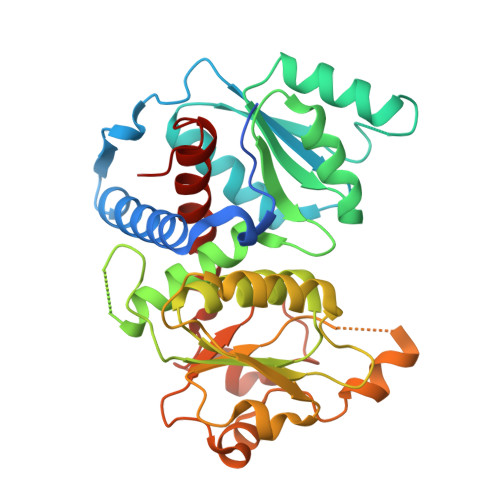
- Primary Citation Related Structures:
3SDS, 3TL6, 3U40 - PubMed Abstract:
Despite recent advances, the expression of heterologous proteins in Escherichia coli for crystallization remains a nontrivial challenge. The present study investigates the efficacy of maltose-binding protein (MBP) fusion as a general strategy for rescuing the expression of target proteins. From a group of sequence-verified clones with undetectable levels of protein expression in an E. coli T7 expression system, 95 clones representing 16 phylogenetically diverse organisms were selected for recloning into a chimeric expression vector with an N-terminal histidine-tagged MBP. PCR-amplified inserts were annealed into an identical ligation-independent cloning region in an MBP-fusion vector and were analyzed for expression and solubility by high-throughput nickel-affinity binding. This approach yielded detectable expression of 72% of the clones; soluble expression was visible in 62%. However, the solubility of most proteins was marginal to poor upon cleavage of the MBP tag. This study offers large-scale evidence that MBP can improve the soluble expression of previously non-expressing proteins from a variety of eukaryotic and prokaryotic organisms. While the behavior of the cleaved proteins was disappointing, further refinements in MBP tagging may permit the more widespread use of MBP-fusion proteins in crystallographic studies.
- Seattle Structural Genomics Center for Infectious Disease (SSGCID), University of Washington, WA 98195, USA.
Organizational Affiliation: