Download Mendeley
Interaction of antidiabetic alpha-glucosidase inhibitors and gut bacteria alpha-glucosidase.
Tan, K., Tesar, C., Wilton, R., Jedrzejczak, R.P., Joachimiak, A.(2018) Protein Sci 27: 1498-1508
- PubMed: 29761590 Search on PubMedSearch on PubMed Central
- DOI: https://doi.org/10.1002/pro.3444
- Primary Citation Related Structures:
3PHA, 3POC, 6C9X, 6C9Z, 6CA1, 6CA3 - PubMed Abstract:
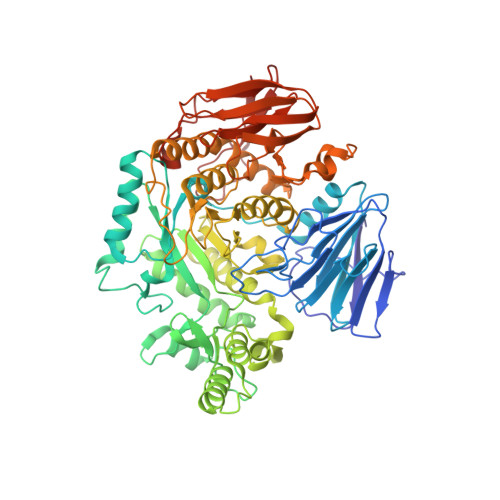
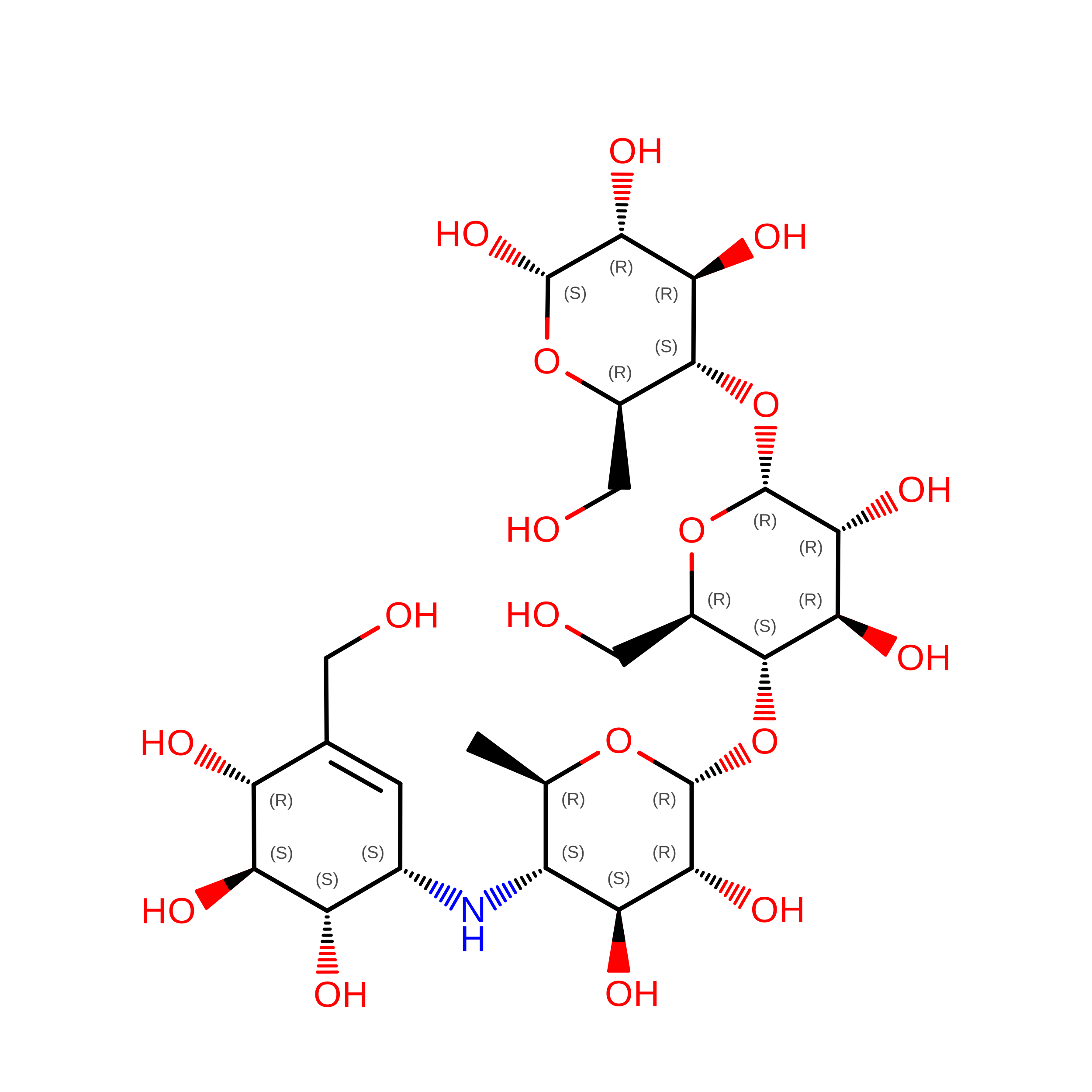
Carbohydrate hydrolyzing α-glucosidases are commonly found in microorganisms present in the human intestine microbiome. We have previously reported crystal structures of an α-glucosidase from the human gut bacterium Blaubia (Ruminococcus) obeum (Ro-αG1) and its substrate preference/specificity switch. This novel member of the GH31 family is a structural homolog of human intestinal maltase-glucoamylase (MGAM) and sucrase-isomaltase (SI) with a highly conserved active site that is predicted to be common in Ro-αG1 homologs among other species that colonize the human gut. In this report, we present structures of Ro-αG1 in complex with the antidiabetic α-glucosidase inhibitors voglibose, miglitol, and acarbose and supporting binding data. The in vitro binding of these antidiabetic drugs to Ro-αG1 suggests the potential for unintended in vivo crossreaction of the α-glucosidase inhibitors to bacterial α-glucosidases that are present in gut microorganism communities. Moreover, analysis of these drug-bound enzyme structures could benefit further antidiabetic drug development.
- Midwest Center for Structural Genomics and Structural Biology Center, Biosciences, Argonne National Laboratory, Argonne, Illinois, 60439.
Organizational Affiliation: