3KFT | pdb_00003kft

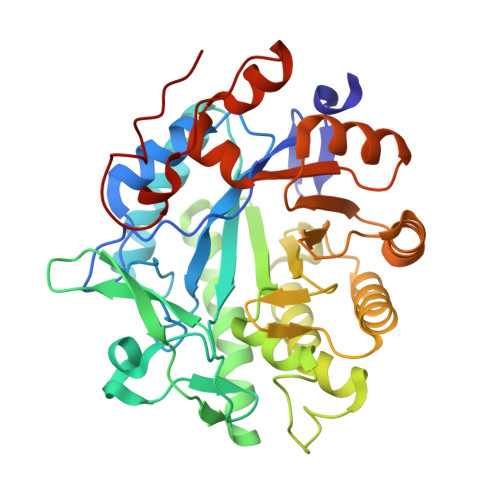
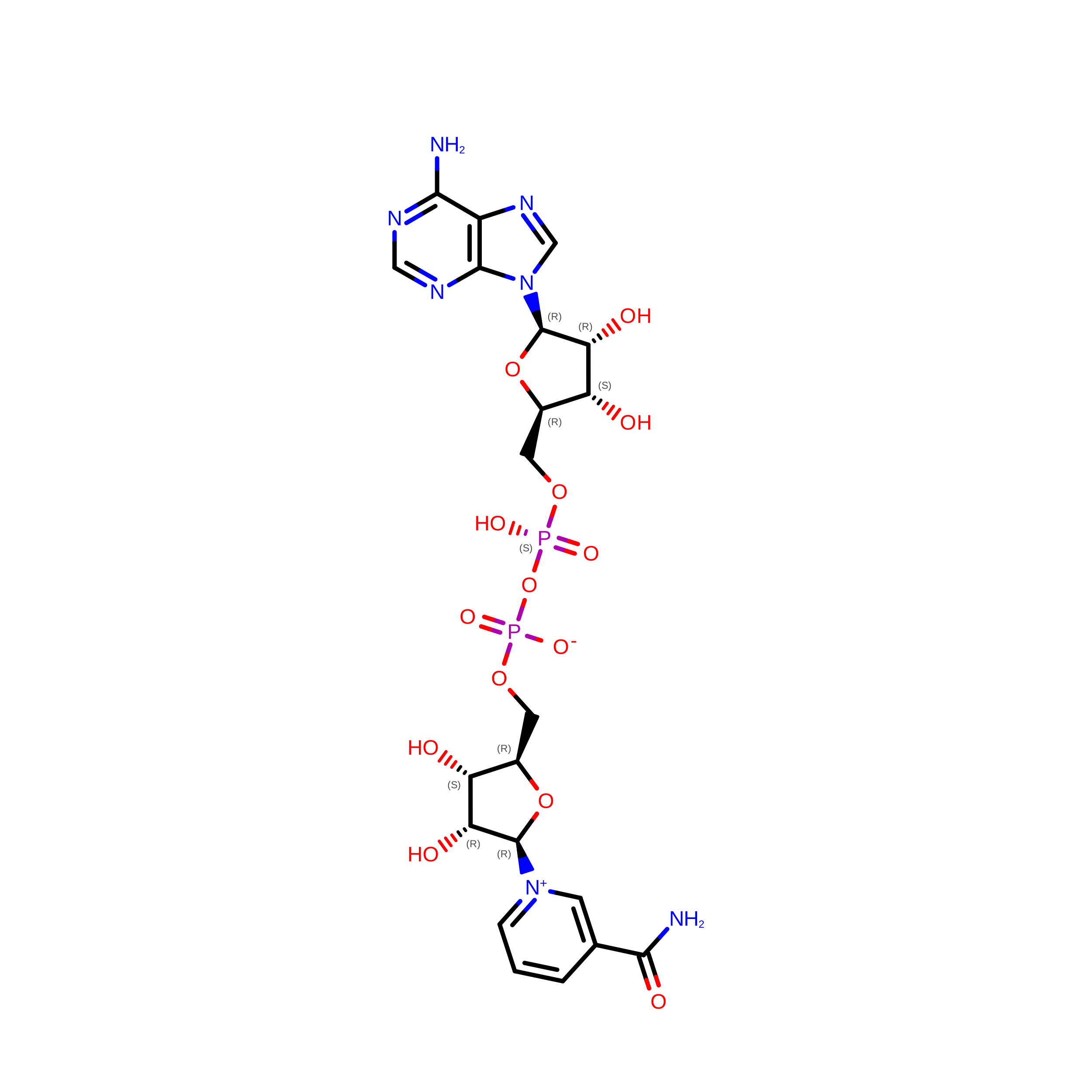
Crystal structure of Pentaerythritol Tetranitrate Reductase complex with 1,4,5,6-tetrahydro NADH


Experimental Data Snapshot

  • Method: X-RAY DIFFRACTION
  • Resolution: 2.10 Å
  • R-Value Free: 
    0.223 (Depositor), 0.221 (DCC) 
  • R-Value Work: 
    0.163 (Depositor), 0.162 (DCC) 
  • R-Value Observed: 
    0.166 (Depositor) 

wwPDB Validation 3D Report Full Report

Validation slider image for 3KFT

Ligand Structure Quality Assessment 


This is version 1.2 of the entry. See complete history

Literature

Evidence to support the hypothesis that promoting vibrations enhance the rate of an enzyme catalyzed H-tunneling reaction.

Pudney, C.R.Hay, S.Levy, C.Pang, J.Sutcliffe, M.J.Leys, D.Scrutton, N.S.

(2009) J Am Chem Soc 131: 17072-17073

  • DOI: https://doi.org/10.1021/ja908469m
  • Primary Citation Related Structures: 
    3KFT

  • PubMed Abstract: 

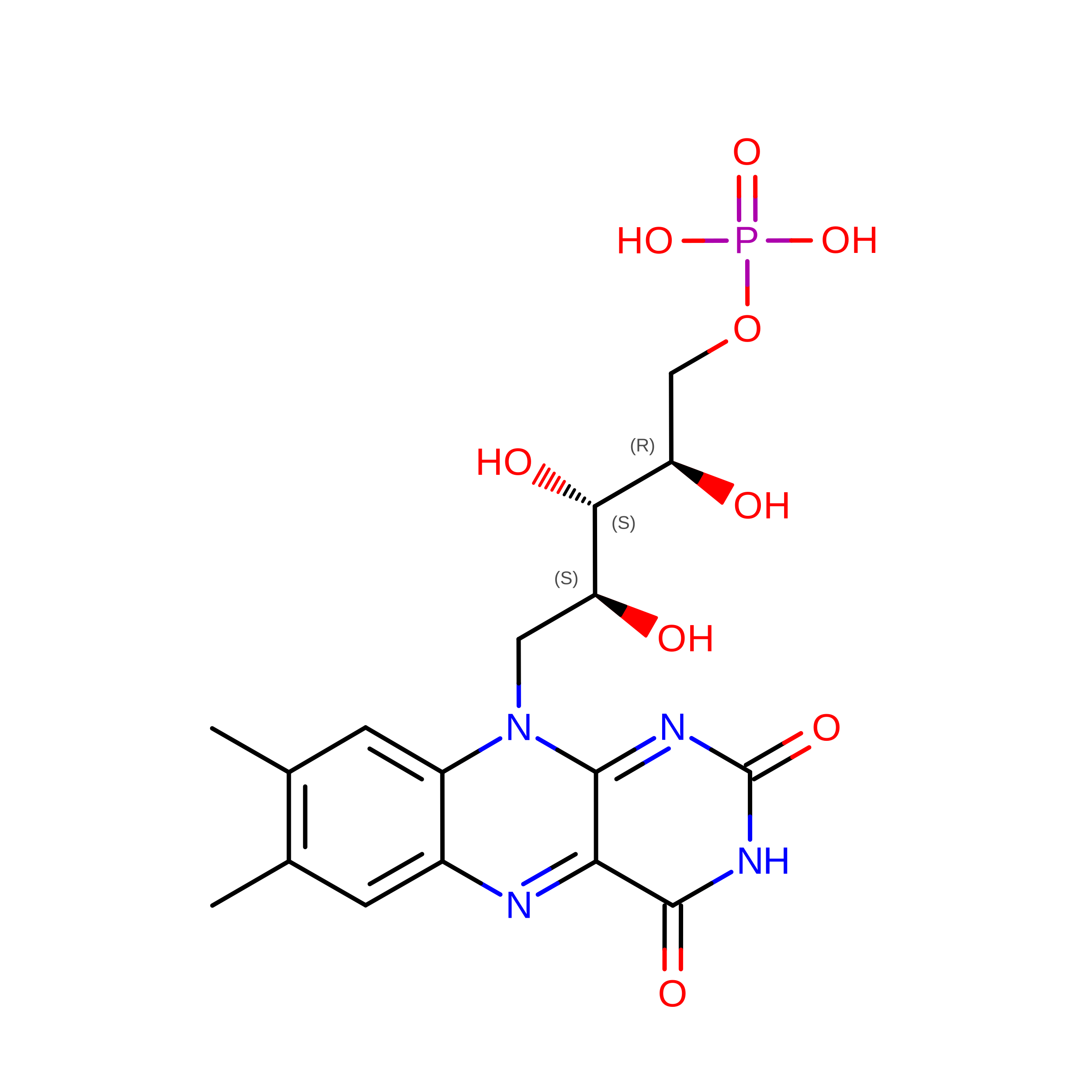
    In recent years there has been a shift away from transition state theory models for H-transfer reactions. Models that incorporate tunneling as the mechanism of H-transfer are now recognized as a better description of such reactions. Central to many models of H-tunneling is the notion that specific vibrational modes of the protein and/or substrate can increase the probability of a H-tunneling reaction, modes that are termed promoting vibrations. Thus far there has been limited evidence that promoting vibrations can increase the rate of H-transfer. In the present communication we examine the single hydride transfer from both NADPH and NADH to FMN in the reductive half-reaction of pentaerythritol tetranitrate reductase (PETNR). We find that there is a significant promoting vibration with NADPH but not with NADH and that the observed rate of hydride transfer is significantly (approximately 15x) faster with NADPH. We rule out differences in rate due to variation in driving force and the donor-acceptor distance, suggesting it is the promoting vibration with NADPH that is the origin of the increased observed rate. This study therefore provides direct evidence that promoting vibrations can lead to an increase in rate.


  • Organizational Affiliation
    • Manchester Interdisciplinary Biocentre, University of Manchester, 131 Princess Street, Manchester, M1 7DN, UK.

Macromolecule Content 

  • Total Structure Weight: 81.05 kDa 
  • Atom Count: 6,213 
  • Modeled Residue Count: 716 
  • Deposited Residue Count: 728 
  • Unique protein chains: 1

Macromolecules

Find similar proteins by:|  3D Structure
Entity ID: 1
MoleculeChains  Sequence LengthOrganismDetailsImage
Pentaerythritol tetranitrate reductase
A, B
364Enterobacter cloacaeMutation(s): 0 
Gene Names: onr
UniProt
Find proteins for P71278 (Enterobacter cloacae)
Explore P71278 
Go to UniProtKB:  P71278
Entity Groups
Sequence Clusters30% Identity50% Identity70% Identity90% Identity95% Identity100% Identity
UniProt GroupP71278
Sequence Annotations
Expand
Reference Sequence

Experimental Data & Validation

Experimental Data

  • Method: X-RAY DIFFRACTION
  • Resolution: 2.10 Å
  • R-Value Free:  0.223 (Depositor), 0.221 (DCC) 
  • R-Value Work:  0.163 (Depositor), 0.162 (DCC) 
  • R-Value Observed: 0.166 (Depositor) 
Space Group: P 65
Unit Cell:
Length ( Å )Angle ( ˚ )
a = 57.15α = 90
b = 57.15β = 90
c = 410.85γ = 120
Software Package:
Software NamePurpose
DNAdata collection
PHASERphasing
PHENIXrefinement
XDSdata reduction
XSCALEdata scaling

Structure Validation

View Full Validation Report


Ligand Structure Quality Assessment 


Entry History 

Deposition Data

Revision History  (Full details and data files)

  • Version 1.0: 2010-02-02
    Type: Initial release
  • Version 1.1: 2011-07-13
    Changes: Version format compliance
  • Version 1.2: 2024-02-21
    Changes: Data collection, Database references, Derived calculations