Download Mendeley
Cryo-EM Structures Reveal Upstream DNA Interactions within the Mitochondrial Transcription Initiation Complex.
Sharkey, R.E., Schroeder, C., Deng, X., Smith, J., Hernandez, A.J., Gao, Y.(2026) J Biol Chem : 113611-113611
- PubMed: 42810682 Search on PubMed
- DOI: https://doi.org/10.1016/j.jbc.2026.113611
- Primary Citation Related Structures:
37FJ, 37FK - PubMed Abstract:
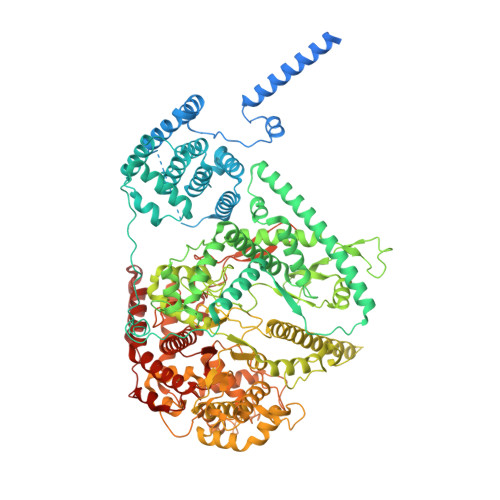
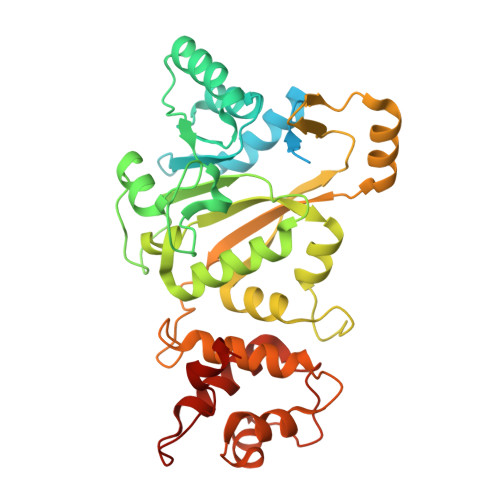
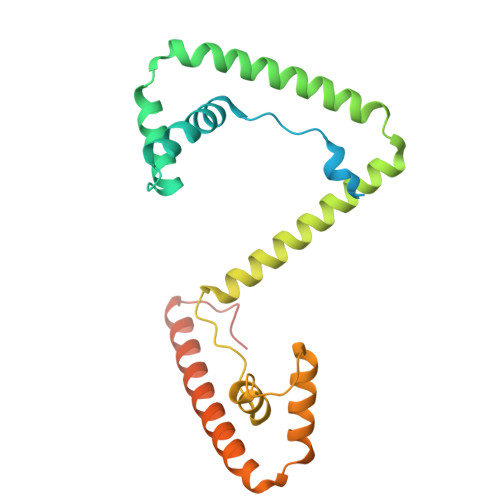
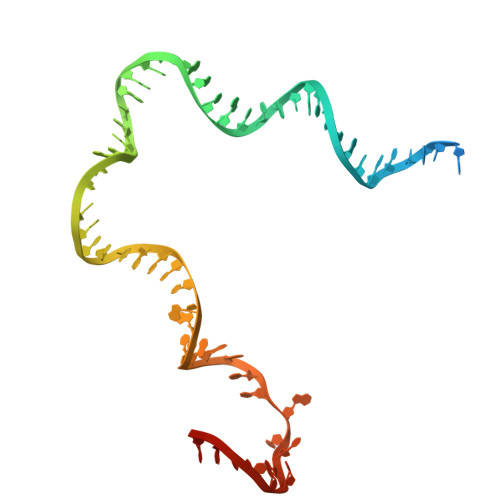
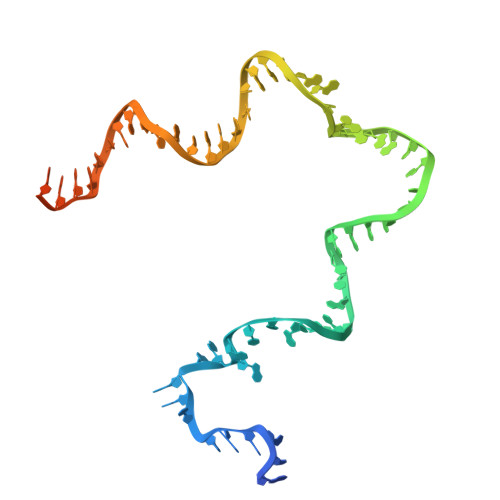
Mitochondrial DNA transcription is essential for cellular energy production and is carried out by a streamlined transcription system in which transcription factor A (TFAM), transcription factor B2, and the mitochondrial RNA polymerase (PolRMT) assemble at defined promoters to initiate transcription. Previous structural studies elucidated the core initiation mechanism but relied on truncated promoter templates that excluded upstream regulatory DNA interactions. Here, we present two conformations of mitochondrial transcription initiation complexes assembled on the heavy-strand promote: a TFAM-bound complex with extended upstream DNA and a TFAM-free complex containing short linear DNA. The TFAM-bound structure reveals a transcription-stimulatory interface between PolRMT and the upstream DNA, termed upstream backbone interface, enabled by TFAM-induced promoter bending. Consistent with this structural observation, upstream backbone interface truncation reduces transcription from all mitochondrial DNA promoters, an effect abolished by mutation of the PolRMT interface. In contrast, the TFAM-free structure reveals a transcription-inhibitory interaction of linear upstream DNA with the PolRMT tether helix, which would sterically clash with TFAM binding. Deletion of the tether helix increases off-target transcription, supporting an autoinhibitory role that enhances promoter specificity. Together, these findings reveal how interactions of TFAM and PolRMT with upstream DNA influence activity and specificity of mitochondrial transcription initiation.
- Department of BioSciences, Rice University, Houston, Texas, USA.
Organizational Affiliation: