Download Mendeley
Unreacted RSV Polymerase Structures Expand the Post-Translocation Landscape of the Nucleotide Addition Cycle.
Cao, D., Zhou, E., Sim, J., Liang, B.(2026) Microorganisms 14
- PubMed: 42655145 Search on PubMedSearch on PubMed Central
- DOI: https://doi.org/10.3390/microorganisms14081801
- Primary Citation Related Structures:
36PT, 36PU - PubMed Abstract:
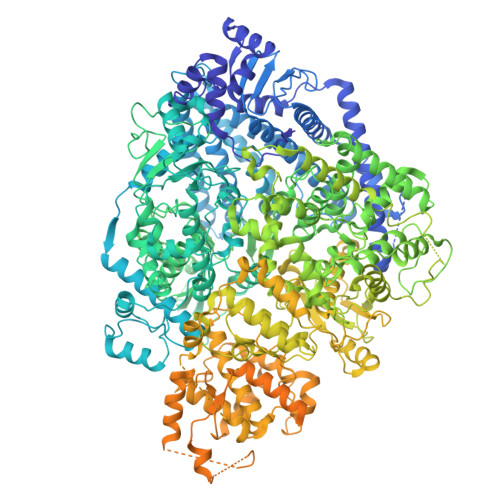
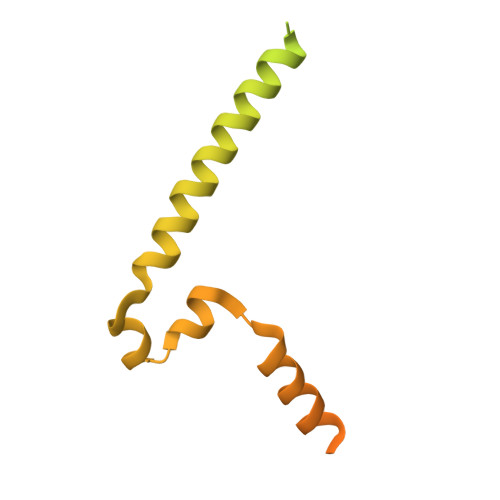
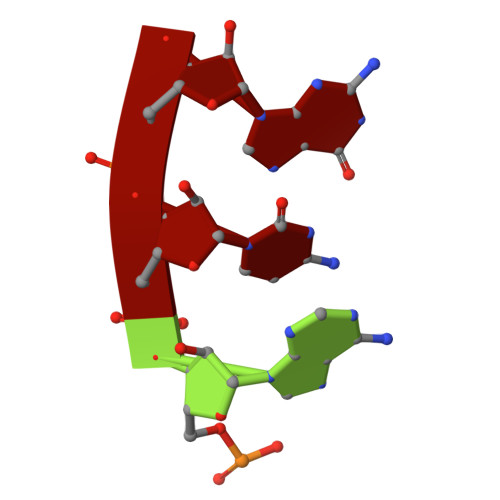
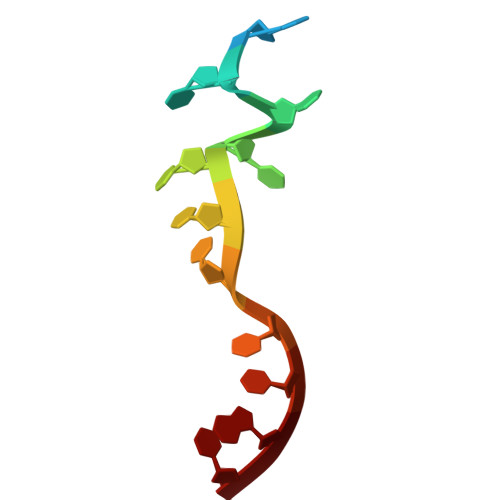
Respiratory syncytial virus (RSV) RNA synthesis relies on RNA-dependent RNA polymerase, a complex composed of the L and P proteins. We recently resolved four major structural states of the RSV nucleotide addition cycle (NAC), establishing a framework for viral RNA elongation. However, reaction-derived complexes are influenced by catalytic efficiency and intermediate occupancy and may incompletely sample the NAC conformational landscape. Here, we report two cryo-electron microscopy (cryo-EM) structures of unreacted RSV polymerase bound to a post-translocation RNA product mimic. One structure closely recapitulates the previously determined reaction-derived post-translocation state, demonstrating that the canonical architecture can be recovered independently of nucleotide incorporation. The second structure reveals an additional post-translocation intermediate that retains the same RNA register and vacant +1 product-binding site while adopting a two-domain L organization. Structural comparisons further identify localized rearrangements near the catalytic center, including changes in the motif A loop and supporting helix. Together, these findings expand the structural landscape of the RSV post-translocation stage and refine the current NAC model. More broadly, our results highlight unreacted state-matched complexes as a complementary approach to reaction-derived structures for capturing more complete structural snapshots of dynamic reaction cycles.
- Department of Biochemistry, Emory University School of Medicine, Atlanta, GA 30322, USA.
Organizational Affiliation: