Download Mendeley
Higher-order assembly of a type IX retron enables exploitation for designer antimicrobials.
Hibshman, G.N., Wang, L., MacRae, N., Zhang, K., Florez, A., Shipman, S.L., Nogales, E.(2026) bioRxiv
- PubMed: 42523435 Search on PubMedSearch on PubMed Central
- DOI: https://doi.org/10.64898/2026.07.11.737809
- Primary Citation Related Structures:
36HT - PubMed Abstract:
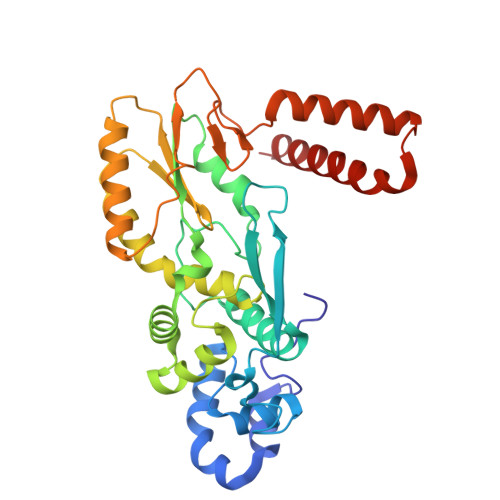
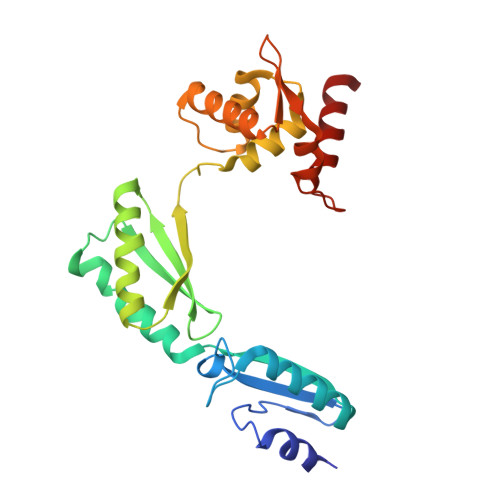
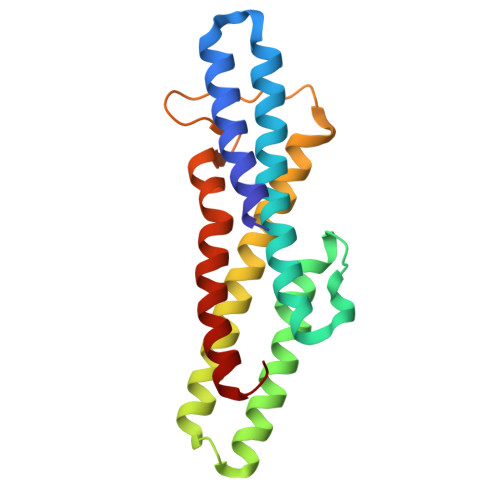
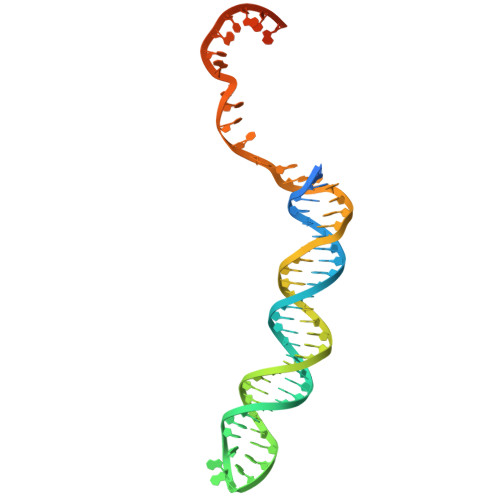
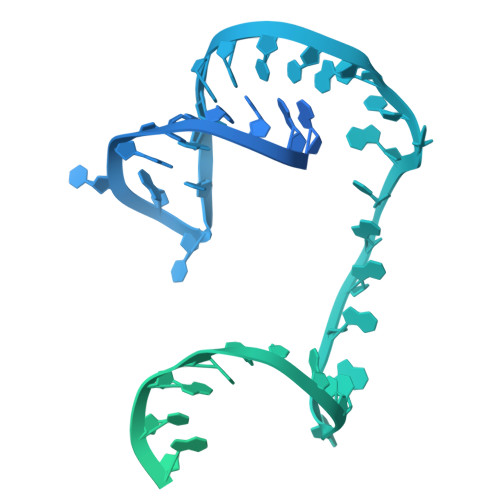
Bacterial defense systems provide a rich reservoir for biotechnological innovation. Retrons are tripartite abortive infection systems that detect phage invasion using reverse-transcribed DNA (msDNA), but how they structurally couple threat detection to effector activation remains poorly understood. Here, we determine the cryo-EM structure and activation mechanism of retron-Kva2, a type IX retron from the human pathogen Klebsiella variicola . We reveal that retron-Kva2 assembles into an asymmetric, higher-order ribonucleoprotein complex that sequesters a toxic dimeric HEPN RNase at its core. We identify a natural phage trigger as the phage T5 protein D5, which activates the retron through structural mimicry. Mirroring the retron-Kva2 winged-helix protein, the helix-turn-helix fold of D5 binds the msDNA sensor, driving conformational remodeling that unleashes HEPN-mediated tRNA cleavage and growth arrest. Because retron-Kva2 surveils a structural fold via msDNA binding, rather than a primary sequence, this recognition mechanism provides a broadly exploitable pathway for programmable activation. Harnessing this structure-based logic, we computationally designed de novo synthetic triggers that activate retron-Kva2-mediated bacterial growth arrest in vivo . Our findings reveal the architectural basis of type IX retron immunity and establish a structure-guided paradigm for repurposing bacterial defense systems into precision-honed antimicrobial therapeutics.
- California Institute for Quantitative Biosciences and Department of Molecular and Cell Biology, University of California, Berkeley, CA, USA.
Organizational Affiliation: