35ZV | pdb_000035zv

yeast 26S proteasome base assembly intermediate, Rpn14-Rpt6


Experimental Data Snapshot

  • Method: ELECTRON MICROSCOPY
  • Resolution: 3.11 Å
  • Aggregation State: PARTICLE 
  • Reconstruction Method: SINGLE PARTICLE 

wwPDB Validation 3D Report Full Report

Validation slider image for 35ZV

This is version 1.0 of the entry. See complete history

Literature

Chaperones shape the conformational landscape of 26S-proteasome-base assembly for allosteric ATPase motor activation.

Hsieh, H.H.Martin, A.

(2026) bioRxiv 

  • DOI: https://doi.org/10.64898/2026.06.01.729410
  • Primary Citation Related Structures: 
    35ZR, 35ZV, 35ZW, 36AX, 36BD, 36BL, 36BM

  • PubMed Abstract: 

    Protein homeostasis depends on the 26S proteasome, the most complex ATP-dependent protease in eukaryotic cells. The proteasome base subcomplex is responsible for mechanical substrate unfolding and translocation into an internal degradation chamber. It contains three non-ATPase subunits, Rpn1, Rpn2, and Rpn13, and a heterohexameric AAA+ motor with six distinct ATPases, Rpt1 - Rpt6. Correct base assembly requires four dedicated chaperones that initially form the Hsm3 module (Hsm3-Rpt1-Rpt2-Rpn1), the Rpn14/Nas6 module (Rpn14-Rpt6-Nas6-Rpt3-Rpn2-Rpn13), and the Nas2 module (Nas2-Rpt5-Rpt4). However, the mechanisms underlying module assembly and formation of the mature base remain unknown. Here, we in vitro reconstitute the base subcomplex of the S. cerevisiae 26S proteasome from recombinant modules. Using biochemical assays, mass photometry, single-molecule fluorescence measurements, and single-particle cryo-EM, we reveal how the chaperones direct the conformational transitions through several intermediates toward the ATP-hydrolysis-active base. The Nas2 and Rpn14/Nas6 modules associate first, and binding of the Hsm3 module creates a state in which the chaperones stabilize an open ATPase ring that lacks hydrolysis activity. Sequential chaperone release then leads to a gradual ATPase-ring closure, whereby Hsm3's unstructured C-terminal tail mimics a substrate polypeptide in the central channel and induces a processing motor state with a spiral-staircase arrangement of Rpt subunits and a closed ATPase site at Rpt4. Inaugural ATP hydrolysis in Rpt4 is subsequently required to eject Hsm3 and transition to the Nas6-bound base that is ATPase active and competent for 26S-proteasome incorporation. Our studies thus provide exciting insights into how chaperones assure correct assembly, guide the complex through an intricate conformational landscape, and thereby prevent premature ATP-hydrolysis activation or incorporation of faulty assemblies into holoenzymes.


  • Organizational Affiliation
    • California Institute for Quantitative Biosciences, University of California at Berkeley, Berkeley, CA 94720, USA.

Macromolecule Content 

  • Total Structure Weight: 249.84 kDa 
  • Atom Count: 6,397 
  • Modeled Residue Count: 807 
  • Deposited Residue Count: 2,243 
  • Unique protein chains: 4

Macromolecules

Find similar proteins by:|  3D Structure
Entity ID: 1
MoleculeChains  Sequence LengthOrganismDetailsImage
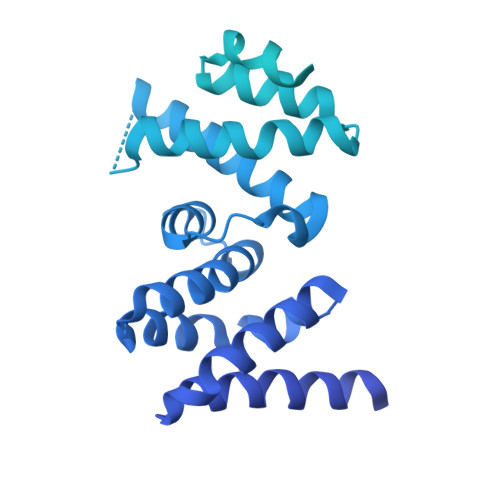
26S proteasome regulatory subunit RPN1A [auth C]993Saccharomyces cerevisiaeMutation(s): 0 
Gene Names: RPN1HRD2NAS1RPD1YHR027C
UniProt
Find proteins for P38764 (Saccharomyces cerevisiae (strain ATCC 204508 / S288c))
Explore P38764 
Go to UniProtKB:  P38764
Entity Groups
Sequence Clusters30% Identity50% Identity70% Identity90% Identity95% Identity100% Identity
UniProt GroupP38764
Sequence Annotations
Expand
Reference Sequence
Find similar proteins by:|  3D Structure
Entity ID: 2
MoleculeChains  Sequence LengthOrganismDetailsImage
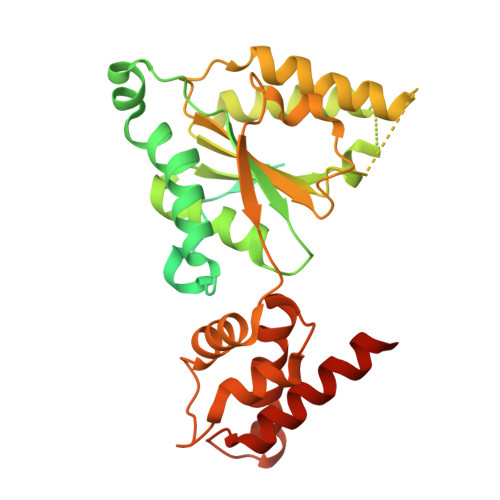
26S proteasome regulatory subunit 8 homologB [auth I]405Saccharomyces cerevisiaeMutation(s): 0 
Gene Names: RPT6CIM3CRL3SUG1TBPYTBY1YGL048C
UniProt
Find proteins for Q01939 (Saccharomyces cerevisiae (strain ATCC 204508 / S288c))
Explore Q01939 
Go to UniProtKB:  Q01939
Entity Groups
Sequence Clusters30% Identity50% Identity70% Identity90% Identity95% Identity100% Identity
UniProt GroupQ01939
Sequence Annotations
Expand
Reference Sequence
Find similar proteins by:|  3D Structure
Entity ID: 3
MoleculeChains  Sequence LengthOrganismDetailsImage
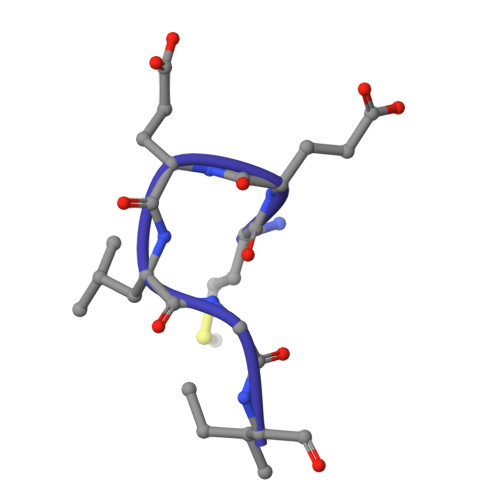
26S proteasome regulatory subunit 6B homologC [auth J]428Saccharomyces cerevisiaeMutation(s): 0 
Gene Names: RPT3YNT1YTA2YDR394WD9509.14
UniProt
Find proteins for P33298 (Saccharomyces cerevisiae (strain ATCC 204508 / S288c))
Explore P33298 
Go to UniProtKB:  P33298
Entity Groups
Sequence Clusters30% Identity50% Identity70% Identity90% Identity95% Identity100% Identity
UniProt GroupP33298
Sequence Annotations
Expand
Reference Sequence
Find similar proteins by:|  3D Structure
Entity ID: 4
MoleculeChains  Sequence LengthOrganismDetailsImage
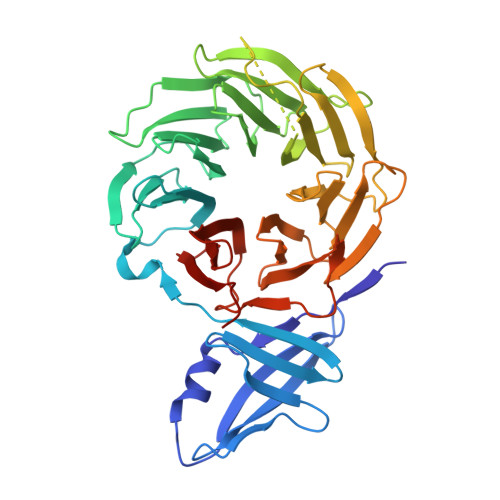
26S proteasome regulatory subunit RPN14D [auth M]417Saccharomyces cerevisiaeMutation(s): 0 
Gene Names: RPN14YGL004C
UniProt
Find proteins for P53196 (Saccharomyces cerevisiae (strain ATCC 204508 / S288c))
Explore P53196 
Go to UniProtKB:  P53196
Entity Groups
Sequence Clusters30% Identity50% Identity70% Identity90% Identity95% Identity100% Identity
UniProt GroupP53196
Sequence Annotations
Expand
Reference Sequence

Small Molecules

Ligands 1 Unique
IDChains Name / Formula / InChI Key2D Diagram3D Interactions
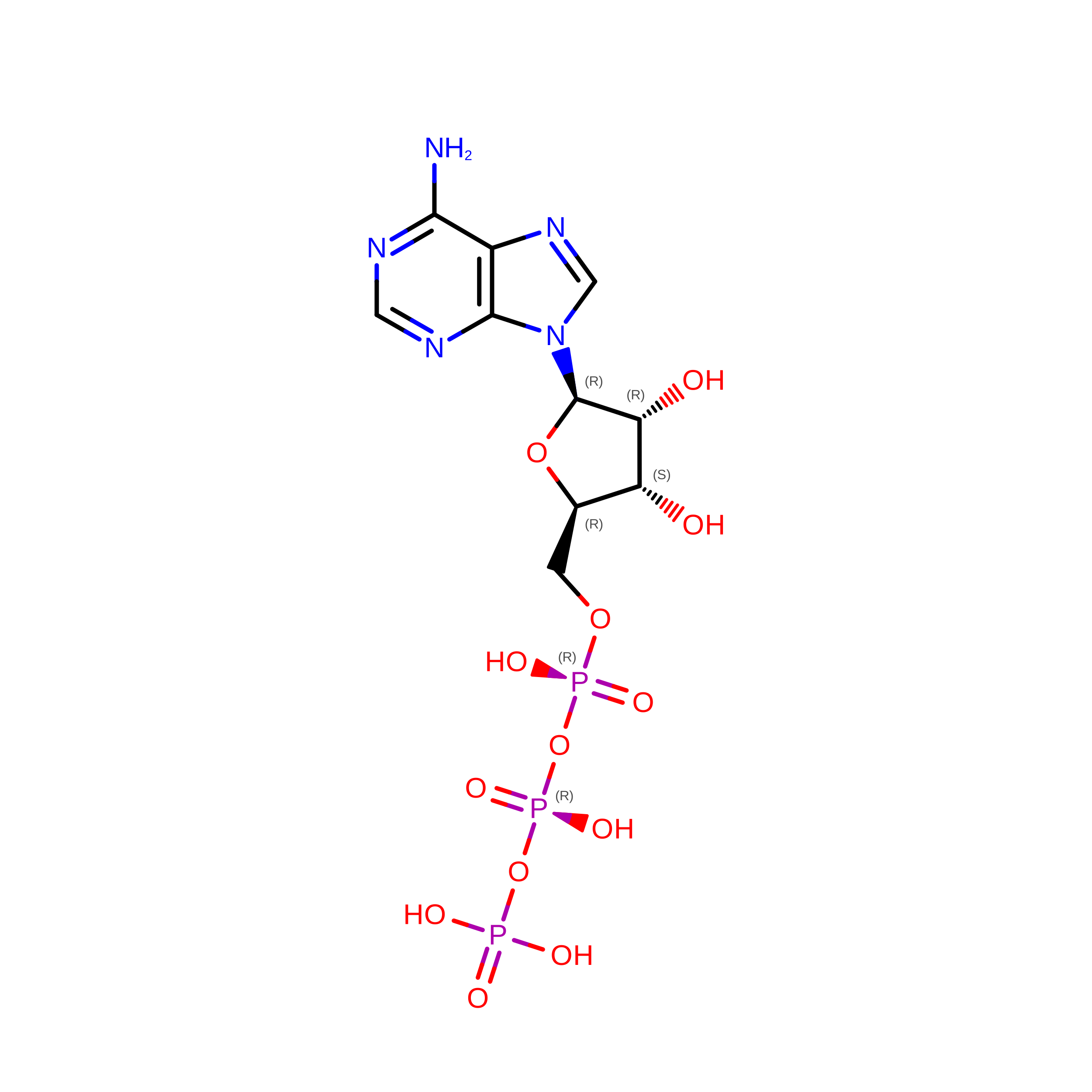
ATP
(Subject of Investigation/LOI)

Query on ATP


Download:Ideal Coordinates CCD File
E [auth I]ADENOSINE-5'-TRIPHOSPHATE
C10 H16 N5 O13 P3
ZKHQWZAMYRWXGA-KQYNXXCUSA-N

Experimental Data & Validation

Experimental Data

  • Method: ELECTRON MICROSCOPY
  • Resolution: 3.11 Å
  • Aggregation State: PARTICLE 
  • Reconstruction Method: SINGLE PARTICLE 
EM Software:
TaskSoftware PackageVersion
MODEL REFINEMENTPHENIX2.0_5936
RECONSTRUCTIONcryoSPARC5.0

Structure Validation

View Full Validation Report


Entry History 

& Funding Information

Deposition Data


Funding OrganizationLocationGrant Number
Howard Hughes Medical Institute (HHMI)United States--
National Institutes of Health/National Institute of General Medical Sciences (NIH/NIGMS)United StatesR01-GM094497

Revision History  (Full details and data files)

  • Version 1.0: 2026-08-19
    Type: Initial release