31OX | pdb_000031ox

Cryo-EM structure of the CO dehydrogenase (CODH) subcomplex from Methanosarcina acetivorans


Experimental Data Snapshot

  • Method: ELECTRON MICROSCOPY
  • Resolution: 3.55 Å
  • Aggregation State: PARTICLE 
  • Reconstruction Method: SINGLE PARTICLE 

Starting Model: in silico
View more details

wwPDB Validation 3D Report Full Report

Validation slider image for 31OX

This is version 1.0 of the entry. See complete history

Literature

Interface swapping orchestrates carbon transfer in the archaeal acetyl-CoA decarbonylase/synthase.

Zimmer, E.Reif-Trauttmansdorff, T.Ciancone, A.Appelgren, S.Kahnt, J.Deobald, D.Abendroth, F.Vazquez, O.Hochberg, G.K.A.O'Reilly, F.J.Schuller, J.M.

(2026) bioRxiv 

  • DOI: https://doi.org/10.64898/2026.07.07.736967
  • Primary Citation Related Structures: 
    31OX

  • PubMed Abstract: 

    The Wood-Ljungdahl pathway is one of biology's most ancient routes for carbon fixation and energy metabolism, used by organisms such as methanogenic archaea. One of its central metabolic complexes is the acetyl-CoA decarbonylase/synthase (ACDS) complex, catalyzing acetyl-CoA synthesis and cleavage through the coordinated action of carbon monoxide dehydrogenase (CODH), acetyl-CoA synthase (ACS), and corrinoid iron-sulfur protein (CoFeSP). Unlike bacterial CODH/ACS, archaeal ACDS lacks a stable bifunctional CODH-ACS architecture, raising the question of how reactive CO and methyl intermediates are efficiently transferred between catalytic modules. Using cryo-electron microscopy, crosslinking mass spectrometry, small-angle X-ray scattering, and biophysical analyses, we resolved the organization and dynamics of the ~2 MDa archaeal ACDS supercomplex from Methanosarcina acetivorans . We identified CoFeSP as a central architectural scaffold that self-assembles into hexa- to octameric oligomers via a conserved N-terminal region of the CdhD subunit. This scaffold likely tethers CODH and ACS through conserved disordered terminal regions, positioning the catalytic modules in the complex's periphery. We propose a mechanism in which ACS transiently alternates between CODH and CoFeSP, enabling efficient CO and methyl-group transfer without stable binary complexes. This dynamic organization represents a fundamental difference to the stable bifunctional CODH/ACS in bacteria, highlighting how transient interactions enable efficient acetyl-CoA metabolism in archaea.


  • Organizational Affiliation
    • Philipps-University Marburg, Department of Chemistry and Center for Synthetic Microbiology (SYNMIKRO), Karl-von-Frisch-Strasse 14, Marburg, Germany.

Macromolecule Content 

  • Total Structure Weight: 216.37 kDa 
  • Atom Count: 14,212 
  • Modeled Residue Count: 1,848 
  • Deposited Residue Count: 1,950 
  • Unique protein chains: 2

Macromolecules

Find similar proteins by:|  3D Structure
Entity ID: 1
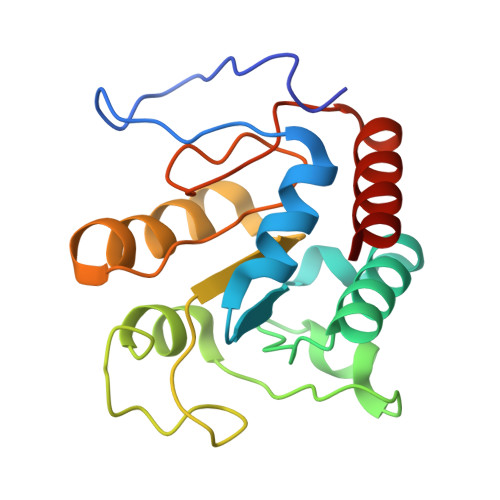
MoleculeChains  Sequence LengthOrganismDetailsImage
Acetyl-CoA decarbonylase/synthase complex subunit epsilon 2A [auth 2],
B [auth 3]
170Methanosarcina acetivoransMutation(s): 0 
UniProt
Find proteins for Q8TJC5 (Methanosarcina acetivorans (strain ATCC 35395 / DSM 2834 / JCM 12185 / C2A))
Explore Q8TJC5 
Go to UniProtKB:  Q8TJC5
Entity Groups
Sequence Clusters30% Identity50% Identity70% Identity90% Identity95% Identity100% Identity
UniProt GroupQ8TJC5
Sequence Annotations
Expand
Reference Sequence
Find similar proteins by:|  3D Structure
Entity ID: 2
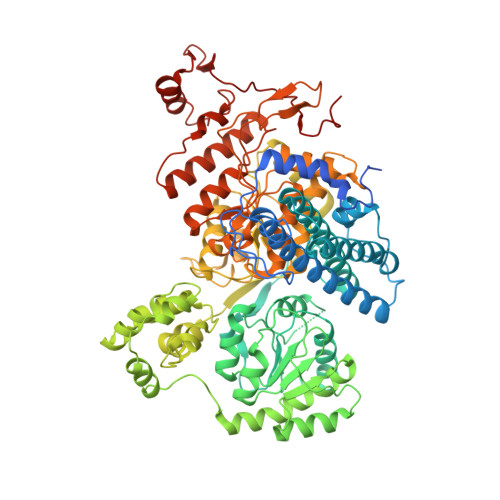
MoleculeChains  Sequence LengthOrganismDetailsImage
Acetyl-CoA decarbonylase/synthase complex subunit alpha 2
C, D
805Methanosarcina acetivoransMutation(s): 0 
EC: 1.2.7.4
UniProt
Find proteins for Q8TJC6 (Methanosarcina acetivorans (strain ATCC 35395 / DSM 2834 / JCM 12185 / C2A))
Explore Q8TJC6 
Go to UniProtKB:  Q8TJC6
Entity Groups
Sequence Clusters30% Identity50% Identity70% Identity90% Identity95% Identity100% Identity
UniProt GroupQ8TJC6
Sequence Annotations
Expand
Reference Sequence

Small Molecules

Ligands 2 Unique
IDChains Name / Formula / InChI Key2D Diagram3D Interactions
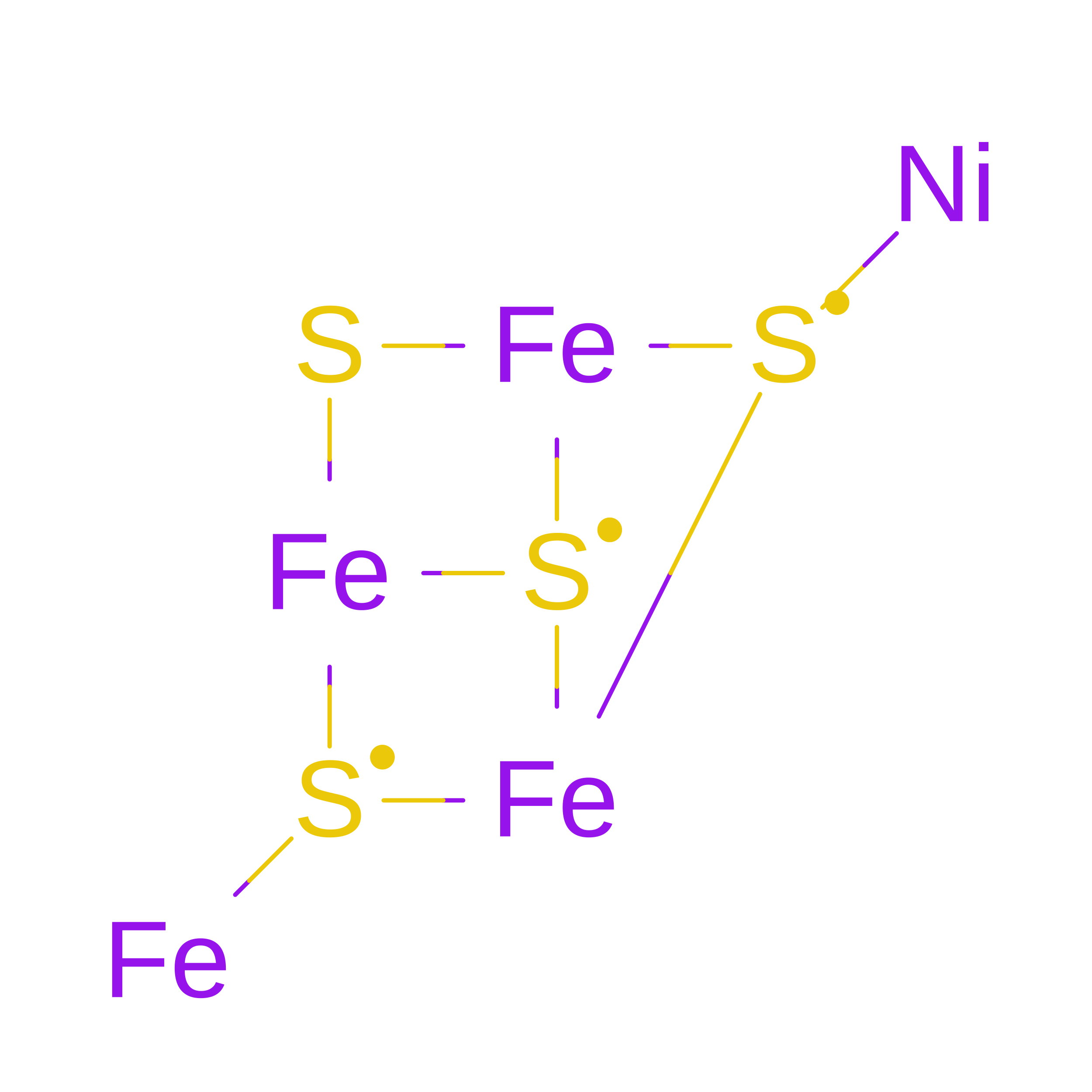
RQM
(Subject of Investigation/LOI)

Query on RQM


Download:Ideal Coordinates CCD File
F [auth C],
K [auth D]
Fe(3)-Ni(1)-S(4) cluster
Fe4 Ni S4
QGLWBXDZIHZONR-UHFFFAOYSA-N
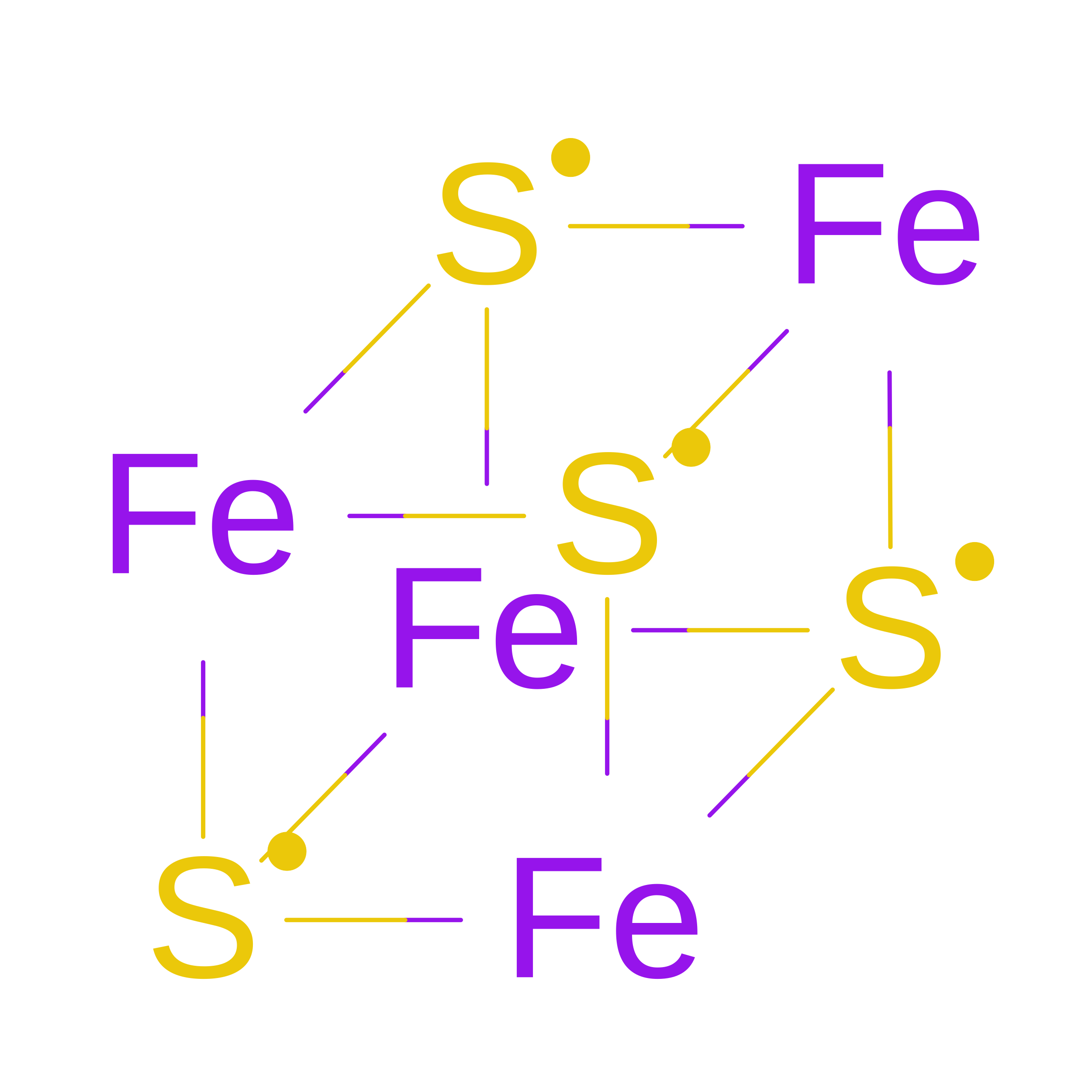
SF4
(Subject of Investigation/LOI)

Query on SF4


Download:Ideal Coordinates CCD File
E [auth C]
G [auth C]
H [auth C]
I [auth C]
J [auth D]
E [auth C],
G [auth C],
H [auth C],
I [auth C],
J [auth D],
L [auth D],
M [auth D]
IRON/SULFUR CLUSTER
Fe4 S4
LJBDFODJNLIPKO-UHFFFAOYSA-N

Experimental Data & Validation

Experimental Data

  • Method: ELECTRON MICROSCOPY
  • Resolution: 3.55 Å
  • Aggregation State: PARTICLE 
  • Reconstruction Method: SINGLE PARTICLE 
EM Software:
TaskSoftware PackageVersion
RECONSTRUCTIONcryoSPARC5
MODEL REFINEMENTPHENIX2.0_5936

Structure Validation

View Full Validation Report


Entry History 

& Funding Information

Deposition Data


Funding OrganizationLocationGrant Number
European Research Council (ERC)European Union101075992
German Research Foundation (DFG)GermanyRTG 2937

Revision History  (Full details and data files)

  • Version 1.0: 2026-07-29
    Type: Initial release